
 CC-BY 4.0
Introduction
Livestock and animal health represent both opportunities and challenges for the sustainability in many regions of the world, especially in developing countries (Calicioglu et al., 2019; Poupaud, 2022a). Indeed, millions of people worldwide depend on agriculture and livestock activities for their livelihoods. On the other hand, livestock represents a significant driver of land use and feed crops. However, the impacts of animal diseases on the livestock industries, farming animal welfare, and public health are a cause for concern (Bennett, 2012).
The optimisation of surveillance, prevention, and control systems for infectious and zoonotic diseases is a crucial feature in ensuring good animal health. Veterinary services are professional bodies dedicated to protecting animal health and welfare (WOAH, 2015). They ensure public health by controlling zoonotic diseases and food safety, support animal production, secure safe trade of animal products, protect wildlife, and enforce animal welfare laws. Different means can be developed to enhance the Veterinary Services, such as public-private partnerships (PPPs). The ongoing support by the World Organisation for Animal Health (WOAH) to various countries over the past 17 years through the Performance of Veterinary Services programme has highlighted the significant role and importance of the private sector in delivering quality veterinary services (WOAH, 2019).
PPP is defined as “a joint approach in which the public and private sectors agree on responsibilities and share resources and risks to achieve common objectives that deliver benefits.» (WOAH, 2019). In 2019, Galière et al. emphasised the heterogeneity of public-private partnerships in the field of veterinary services and their substantial contribution to control infectious animal diseases, a goal that is closely aligned with their mission. It has been demonstrated that public–private partnerships are capable of delivering services that generate greater benefits and impacts than what the public or private sector could achieve independently. For example, they allow the execution of large-scale vaccination campaigns and help extend veterinary health coverage (WOAH, 2019; N’Guessan et al., 2022). This is of particular importance in remote areas, where public veterinary services, especially in low- and middle-income countries, often face major financial, human, and infrastructural constraints. In such contexts, they may rely on private veterinarians, who often have better logistical means and stronger ties with local livestock farmers, to reach these underserved regions. By extending veterinary coverage, PPPs implemented under best practices could improve disease surveillance and control. Thus, ensuring that even the most isolated regions can access essential veterinary care (WOAH, 2019).
Three categories of PPPs in the veterinary domain have been described, each characterised by its governance structure, the type of private partners involved, and the mechanisms for funding and initiation (Galière et al., 2019). Transactional PPPs, involves delegating specific animal health services to private providers such as veterinarians or veterinary paraprofessionals. The public sector initiates and funds these partnerships through formal contracts. Collaborative PPPs, involves cooperation between veterinary services and the producer associations (the producers usually representing the final beneficiaries); to achieve mutually agreed-upon national policies or results. The governance structures within these partnerships can vary from a formal legislative framework to more informal arrangements like consultative processes for animal health policy developments. Transformative PPPs, focuses on establishing sustainable capacities to implement large-scale programmes that would otherwise be inaccessible. These partnerships are typically initiated by private sector entities (national or international associations) seeking a long-term return on investment and/or public welfare. They are conducted under joint governance frameworks with veterinary services, and formalised through Memoranda of Understanding to align private sector goals with public health priorities (Galière et al., 2019; WOAH, 2019).
To maximise the PPPs’ potential while minimising their drawbacks, monitoring and evaluation are critical components. Evaluation is a critical step in any programme cycle. It provides a structured framework to plan, and refine strategies. It also helps optimise resources and implement necessary adjustment measures to optimise performance and impacts (Allen et al., 2002; Allen, 2019; Peyre et al., 2022). It is imperative that PPPs are subject to regular evaluations throughout their implementation phase (in itinere). Such evaluations complement monitoring to ensure services are delivered to the agreed standards and quality (WOAH, 2019). Evaluation, thus, supports decision-making by assessing the context, results, and processes of programmes (Brousselle & Champagne, 2011). It is a powerful tool for ensuring the effectiveness of actions and the success of PPP initiatives (Scriven, 1986).
In the context of PPPs, participatory evaluation approaches are particularly valuable, as they actively engage stakeholders who are directly impacted by or involved in the project (Catley et al., 2012; Goutard et al., 2022). By incorporating their perspectives, these evaluations address the limitations of top-down or vertical decision-making (Debevec et al., 2019). This approach fosters a shift in the perception of roles among project partners, promoting shared responsibility in decision-making. Consequently, it enhances stakeholders’ sense of ownership and their commitment to implementing strategies and activities effectively.
Over the past two decades, methodologies have been developed for integrated evaluation in the veterinary domain (Hendrikx et al., 2011; Goutard et al., 2015; Bordier et al., 2019; Peyre et al., 2022). These frameworks included focus on mechanisms for coordination and collaboration between stakeholders (Bordier et al., 2022). In 2021, Poupaud et al. developped a tool for assessing the quality of a PPP process in the veterinary domain. This tool allows a precise description of a PPP’s functioning, an analysis of its strengths and weaknesses, and an analysis on how the PPP process influences its performance.
Traditional top-down evaluations often provoke resistance from stakeholders. This can limit the general acceptability of research outputs, particularly when external parties dominate the process (Champagne et al., 1993; Taut and Brauns, 2003; Musa et al., 2016). These methods typically prioritise intervention effectiveness but often overlook practical feasibility and stakeholder needs. Consequently, they may lead to resource-intensive or impractical solutions that fail to address real-world challenges (Chen & Garbe, 2011).
Combining bottom-up and participatory approaches addresses these limitations by emphasising relevance, feasibility, and alignment with stakeholder priorities. Bottom-up approaches focus on early feasibility assessments, ensuring realistic and adaptable interventions (Chen & Garbe, 2011). Participatory methods, on the other hand, enhance evaluation quality by integrating diverse perspectives, fostering ownership, and improving contextual validity (Cousins & Whitmore, 1998; Estrella & Gaventa, 1998; Chouinard, 2013). These approaches reshape perceptions of partner roles, and promote shared responsibility in decision-making (Debevec et al., 2019). They also help build trust, transparency, and engagement—key elements for sustainable outcomes (Funtowicz & Ravetz, 1993). This involvement fosters ownership of the results and their application, encouraging a more open and reflective analysis of past challenges and successes (Aubel, 1999; Zukoski & Luluquisen, 2002; Bryson et al., 2011; Calba et al., 2015, Goutard et al., 2022).
Tunisia Sanitary Mandate (SM), is a transactional PPP which was initiated in 2006 (Drira & Le Brun, 2005; Zrelli & Zargouni, 2019). In accordance with the terms of this partnership, the public national Veterinary Services accredit private veterinarians, known as mandated veterinarians, to carry out specific prophylactic programmes such as vaccination campaigns against contagious diseases.These efforts focus primarily on foot-and-mouth disease (FMD) in cattle and small ruminants, and sheeppox (Clavelée) in small ruminants, which are considered priority diseases in Tunisia. Other targeted diseases include brucellosis in female small ruminants, rabies, and camel pox in dromedaries.These campaigns are planned and fully subsidised by the public Veterinary Services, which oversees logistics, vaccine distribution, and campaign monitoring. Meanwhile, veterinarians who have been mandated to provide services are remunerated for their efforts (averaging 18,000 Tunisian dinars, approximately €5,400 based on the 2019 exchange rate).
The present study aims to evaluate the PPP collaborative process of the the sanitary mandate transactional PPP in Tunisia using participatory and bottom-up evaluation.
Material and Methods
Data collection and Study area
The sanitary mandate’s collaborative process evaluation was conducted at governorate and regional levels. A double-stage sampling was elaborated. In the first selection stage, the Central region was selected based on herd size (cattle and sheep), the number of mandated veterinarians, and the vaccine coverage made by the mandated and public veterinarians. This region was used as the primary study area for the evaluation. Although the Northern region had a similar number of mandated veterinarians (116) and comparable livestock composition, the Central region was prioritised for its epidemiological relevance, as well as better accessibility and availability of key actors (see Limitations for details).The Central region of Tunisia accounted for the largest livestock populations of sheep and cattle in 2020 (44% and 34% of the national sheep and cattle livestock, respectively) and had 107 mandated veterinarians in 2019 and 2020. These data sources were the 2019 and 2020 sanitary mandate databases in the Animal Health Department of the Veterinary Services. In the second stage, two governorates were selected based on the same selection criteria, plus their comparability of geographical characteristics and livestock composition: Sidi Bouzid and Sfax. For the study period, the average livestock population in Sidi Bouzid consisted of approximately 81% sheep, 9% goats, and 8.4% cattle, while in Sfax, the corresponding average composition was about 83% sheep, 10% goats, and 7% cattle. For additional data about the study area, please refer to Supplementary Material 1 (Appendix1: Study Area Description).
Evaluation method
A participatory evaluation was performed using Poupaud et al. (2021)’s tool, which assesses the collaborative process of a PPP. This tool is structured into ten sections, each representing different aspects of the PPP’s organisational process, with a total of 44 evaluation criteria. The evaluation also considers six quality attributes that influence the overall performance of the PPP, namely its operational functionality, stability, relevance, adaptability to varying contexts and objectives, acceptance, and inclusiveness (cf. Appendices, Box 1). Each quality attribute’s outcome is derived from the combined scores of its corresponding evaluation criteria. Specifically, for each attribute, the total score is calculated as the sum of the products of each evaluation criterion’s score and its level of influence. This value is then divided by the sum of the products of the maximum possible score (i.e., 3) for each criterion and its respective level of influence, and the final result is expressed as a percentage. The tool generates two types of graphical outputs, both presented in spreadsheet format: (i) Pie charts illustrating the strenghts and weaknesses of the PPP process based on scores of each evaluation criterion across the corresponding sections and (ii) a spider chart depicting the quality of the PPP process based on six quality attributes (Poupaud et al., 2021). Semi-structured interviews were performed to support this participatory evaluation based on four types of Interview guides developed. Each guide was adapted from the tool’s 44 evaluation criteria, and designed for the different categories of stakeholders (Appendix 2), i.e., impacted stakeholders, influential stakeholders, major stakeholders, and the mandated veterinarians and veterinary inspectors.
Five steps were carried out to implement the participatory evaluation of the SM.
Step1: Defining priority evaluation questions for the veterinary services
Two interviews were held to identify the needs and priorities of the Veterinary Services concerning the evaluation of the sanitary mandate, and to identify the stakeholders to be involved in the evaluation process. These interviews were conducted with the WOAH representative for North Africa, the head of the sanitary mandate dossier, and the head of the Animal Health Department at the Veterinary Services.
They were interested in addressing different evaluation questions. The points including a cost-effectiveness evaluation of the SM, an assessment of the possibility of extending its activities and creating an independent special health fund for its funding. Additionally they aimed to evaluate the functioning and collaboration process of the sanitary mandate.
Step 2: Mapping of the stakeholders
The mapping of stakeholders was performed following the ImpresS method (Barret et al., 2017).
To identify the stakeholders directly or related to the PPP, two rounds of interviews with the head of the sanitary mandate were conducted. The first was to identify the PPP stakeholders and the second to validate their classification. This identification was also consolidated by secondary data related to the different stakeholders involved in the partnership. Stakeholders were, then, classifiedinto four main categories, i.e., major stakeholders of the PPP, stakeholders who influence(d) its adoption and development, and lastly the stakeholders impacted by it. The stakeholders can be in more than one category. Major stakeholders were the key members of an intervention and with whom it is important to have direct interaction, whether or not they are formal/contractual partners. The influential stakeholders were likely to have a positive or negative influence on the intervention (including the products and the generation of desirable changes) without having a direct or active role in the process. The impacted stakeholders were likely to be positively or negatively impacted by the intervention, whether they are major, influential or none of these categories.
Step 3: Data collection for the evaluation
Period and targeted population: The evaluation, including individual and focus group interviews, was conducted during the COVID-19 lockdown between March and June 2021, with results being presented in mid-July 2021. The participants represented a variety of stakeholders directly or indirectly involved in the PPP between the private sector and the public veterinary services. These stakeholders operated at international, national, and regional (governorate and district) levels. The participants were selected from the different categories identified during the mapping stage (Step 2), i.e., the major stakeholders involved in the conception and adoption of the sanitary mandate initiative, the stakeholders impacted by the PPP, and the stakeholders influencing it.
Stakeholders’ sampling strategy: Based on the identification of the key type of stakeholder in step 2, an exhaustive list of those key stakeholders was established for both national and regional scales. At the regional level, this list covered two governorates in the Centre of Tunisia - Sidi Bouzid and Sfax. Key stakeholders interviewed in both selected governorates helped identify the remaining major stakeholders (mandated veterinarians and inspectors). All listed stakeholders (n=69) were contacted for participation at the various levels and sectors. At the international level, one stakeholder was contacted, and at the national level, seven. At the regional level, 61 participants were contacted: 25 were from the public sector (17 in Sidi Bouzid and 8 in Sfax), and 36 were from the private sector (20 in Sidi Bouzid and 16 in Sfax).
Data collection:
Semi-structured interviews were conducted gathering information on the Tunisian partnership’s context, history, and collaborative process. Historical and contextual elements (Appendix 3) were specifically discussed with key informants such as the Veterinary Services (Animal Health Division), the Veterinary Statutory Body, the Private Veterinary Syndicate, influential stakeholders, and a national consultant (Table 1).
The interviews were conducted remotely via Skype* or Zoom* applications due to the COVID-19 lockdown, either individually or in focus groups. The individual semi-structured interviews lasted between 1h30 and 2 hours. The focus groups, limited to a maximum of six participants to ensure effective discussion, lasted around 1h30. All the interviews were facilitated/ performed by a Tunisian female veterinarian epidemiologist (AD) previously trained in participatory approaches. All the interviews at the international and national levels were given in French. Interviews at governorate and district levels were given in French or the Tunisian dialect, depending on the interviewee’s preference. The discussions were recorded with the interviewees’ oral consent and detailed notes were also taken.
Table 1 - Themes Covered by the Different Interview guides and the Stakeholders Adressed
Theme covered in the different Interview guide | impacted stakeholders | influential stakeholders | major stakeholders | mandated veterinarians and veterinary inspectors |
|---|---|---|---|---|
General presentation of the stakeholder | X | X | X | X |
Roles of the stakeholder in the SM | X | |||
Elements of the Context and History of the SM* | X** | X | ||
functioning of the PPP | X | X | ||
Benefits and impacts of the SM | X | |||
Limitations, and areas for improvement of the SM | X | X | X | X |
*: For the contextual and historical elements, data was further enriched with secondary sources, including relevant literature and reports recommended by a key stakeholder in the design and implementation of the PPP. **: Certain stakeholders who influenced the PPP (whether its adoption or development) were considered for this element, but not all of them. SM: Sanitary Mandate. PPP: Public-Private Partnership.
Study Participants
A total of 15 semi-structured interviews were conducted, involving 22 stakeholders. Indeed, due to the COVID-19 lockdown, poor internet coverage in certain areas, compounded by the overlap with the SM vaccination campaigns and a structural reorganisation of the Veterinary Services; some stakeholders could not participate in the study (approximately 57 individuals).
The interviewees included stakeholders at the international (n=1), national (n=7), and regional levels within Tunisia’s central region (n=14), including Governorate-level (n=10: Sidi Bouzid = 7, Sfax = 3) and district-level stakeholders (n=3). Both public (n=14) and private (n=7) sectors were represented, ensuring a comprehensive and balanced sample (Table 2). More interviews were conducted in the Governorate of Sidi Bouzid (n=5 interviews, covering eleven stakeholders) compared to the Governorate of Sfax (n=2 interviews, covering four stakeholders) (Table 2).
Step 4: Data processing and analysis
The recorded interviews and the handwritten notes were transcribed on Word documents in French or Tunisian dialect. The Transcripts in the Tunisian dialect were, then, translated by the facilitator (AD). A unique number was given to each of the transcripts to ensure the anonymity of the interviewees.
To analyse this qualitative data, an Excel spreadsheet was prepared addressing the criteria for evaluating the collaborative process, based on the structure of the tool developed by Poupaud et al. (2021). Each column of the spreadsheet corresponded to an evaluation criterion.
The qualitative data derived from the transcripts were then categorised and assigned to their corresponding column in the spreadsheet. This ensured that each piece of information was accurately classified under the relevant criterion or question.
The data initially classified were organised into four evaluation grids using the PPP process evaluation tool, based on the scale (national, regional) and types of stakeholders (public or private partners) (Poupaud et al., 2021).
At the national level, two separate grids were created for public partners and private veterinarians. At the regional level, an initial set of grids was developed for each governorate (Sidi Bouzid and Sfax), distinguishing between public and private stakeholders.
Next, the scoring process was carried out by the research team for each of the grids to evaluate the collaborative process. The criteria assigned to each evaluation grid were scored on a scale from 0 to 3, where 0 indicated that the criterion was not functioning and 3 signified optimal performance. Decimal scores were used when necessary (e.g., a score of 2.5 was given when one criterion received a score of 2 and another received a score of 3, based on stakeholders’ feedback).
Since the evaluation scores for mandated veterinarians and public veterinarians in both governorates were nearly identical across all sections, the grids were aggregated at the regional level by stakeholder type rather than by governorate. The four initial regional grids were then merged into two final grids, i.e., one for public veterinarians and one for private veterinarians.
Ultimatly, the final analysis was based on four evaluation grids: two at the national level (one for public and one for private stakeholders) and two at the regional level (one for mandated veterinarians and one for public veterinarians).
The scores for each evaluation grid were then used to generate the final graphical results, which were subsequently interpreted and analysed.
Table 2 - Participants interviewed for the evaluation of the Tunisian Sanitary Mandate from March to May 2021
Stakeholders | Administrative level | Number of existing stakeholders | Semi-structured interview | Number of participants | |
|---|---|---|---|---|---|
Individual | Focus groups | ||||
Public partners | |||||
Responsible for the SM dossier at the Animal Health Division of the Veterinary Services | National (VS) | 1 | 1 | - | 1 |
Responsible for the Administrative and Financial Affairs Division | National (VS) | 1 | 1 | - | 1 |
Veterinary inspectors of the Veterinary Services | National | 2 | - | 2 | |
National consultant | National (independent stakeholder) | 1 | 1 | - | 1 |
Vice-President of the Veterinary Statutory Body | National | 1 | 1 | - | 1 |
North Africa Regional Representative of the WOAH | International | 1 | 1 | - | 1 |
Veterinary inspectors of the Veterinary Services | Governorate of Sfax | 5 | 1 | 2 | |
Governorate of Sidi Bouzid | 8 | 1 | 2 | ||
Head of Animal Production Service at the Agriculture Development Office of the Veterinary Services | Governorate of Sfax | 1 | - | - | 0 |
Governorate of Sid Bouzid | 1 | 1 | - | 1 | |
Head of Animal Production Service at the Animal Production District Division of the Veterinary Services | District in Sfax government | 2 | - | - | 0 |
District in Sidi Bouzid government | 8 | - | 1 | 3 | |
Private partners | |||||
President of Veterinary Syndicate | National | 1 | 1 | - | 1 |
Mandated veterinarians | Governorate of Sfax | 16 | - | 1 | 2 |
Governorate of Sid Bouzid | 20 | - | 2 | (2+2) | |
Total | 9 | 6 | - | ||
15 | 22 | ||||
VS: Veterinary Services
To provide a structured representation of these findings, the results were expressed separately, highlighting the perspective of the four stakeholders’ groups (public and private stakeholders at the national and regional levels) within their respective scales. A comparative analysis was then conducted to explore the dynamics between national and regional perspectives. A final evaluation report was then written.
While this article focuses solely on the comparative results, detailed results for each stakeholder group and scale can be found in Appendix 4.
Step 5: Presentation / Restitution of the results to the study participants
The evaluation report was sent to the national Veterinary Services at the end of June 2021. A meeting was held in July 2021 for presentation and discussion of the results between the research team (the WOAH principal PPP consultant and the facilitator AD) and the stakeholders of the SM (the Chief Veterinary Office, the head of the sanitary mandate dossier and the representative of veterinary inspectors (responsible too of the training programmes within the SM)).
Ethics
This study did not concern human health and medical research or animal research, hence, no ethics committee was consulted for study approval.
This study methodology and implementation was co-designed and approved by the Tunisian Veterinary Services. The semi-structured interviews were conducted after presenting the objective to the participants, obtaining their verbal consent for participation, and recording of the interview. The interviewees could stop the interview whenever they wished. The names and contact details of interviewees were kept in a secure database that was only accessible to the research team. The privacy rights of participants were fully protected, and all data were anonymised.
Results
Stakeholder roles in the Conception, Development, Adoption, and Impact of the Sanitary Mandate
The partnership involves both the public and private sectors, each with a structured presence at the national and regional levels. The public sector, represented by Veterinary Services, operates through the Animal Health Division at the national level and the Animal Production Services within the Regional Agricultural Development Commissions (CRDAs) at the governorate and district levels. The private sector consists of private veterinarians, represented by the Veterinary Statutory Body and the Veterinary Syndicate. These organisations also maintain representatives at the regional level (Figure 1).
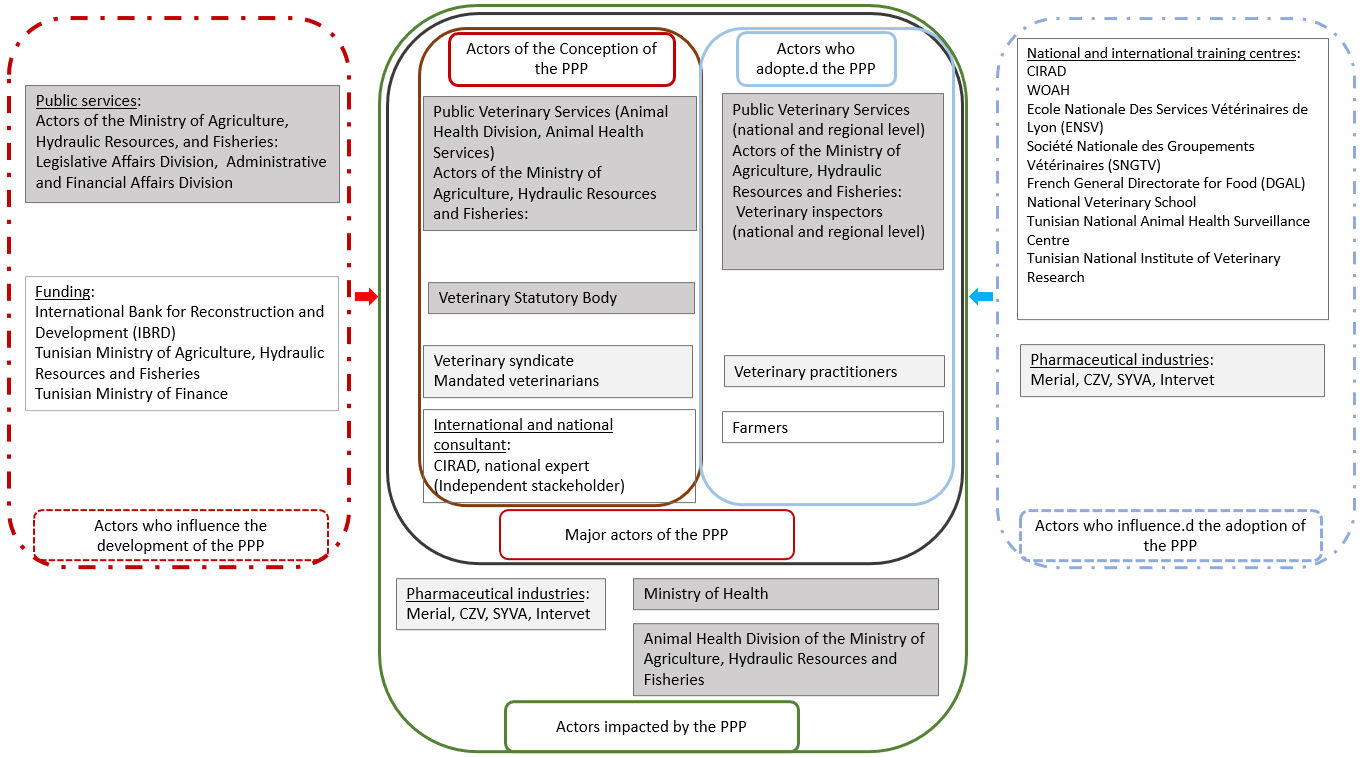
Four categories of stakeholders were identified: (i) those involved in the conception and adoption of the sanitary mandate; (ii) stakeholders influencing (ed) the mandate development, (iii) stakeholders influencing its adoption, and (iv) stakeholders impacted by it (Figure 2). Some stakeholders may belong to more than one category.
The key contributors to the conception of the sanitary mandate included the Veterinary Services (i.e., the Animal Health Division at the national level and Animal Production Services at the regional level), the Ministry of Agriculture, Hydraulic Resources, and Fisheries, the Veterinary Statutory Body, and the Veterinary Syndicate (Figure 2). Additionally, a national and international consultant from CIRAD played a key role in the conceptualisation and planning of the PPP.
The PPP model was adopted by stakeholders involved in its conception, alongside the veterinary inspectors (public) and the mandated veterinarians (private). The farmers were considered adopting stakeholders, as they must voluntarily enrol in the programme to benefit from the vaccination services.
Stakeholders who influenced the development of the PPP model—whether intentionally or unintentionally—did not play a direct role in its conception. This group included public service stakeholders and national and international funding partners (Figure 2). The stakeholders influencing the adoption of the PPP model comprised national and international training centres, as well as private sector entities such as pharmaceutical companies responsible for providing the vaccines (Figure 2).
Stakeholders impacted—positively or negatively—by the PPP model included both public and private stakeholders such as those involved in its adoption and conception, those influencing the model’s adoption (e.g., pharmaceutical companies), and two key ministries: The Ministry of Health (indirectly affected) and the Ministry of Agriculture, Hydraulic Resources, and Fisheries (Figure 2).
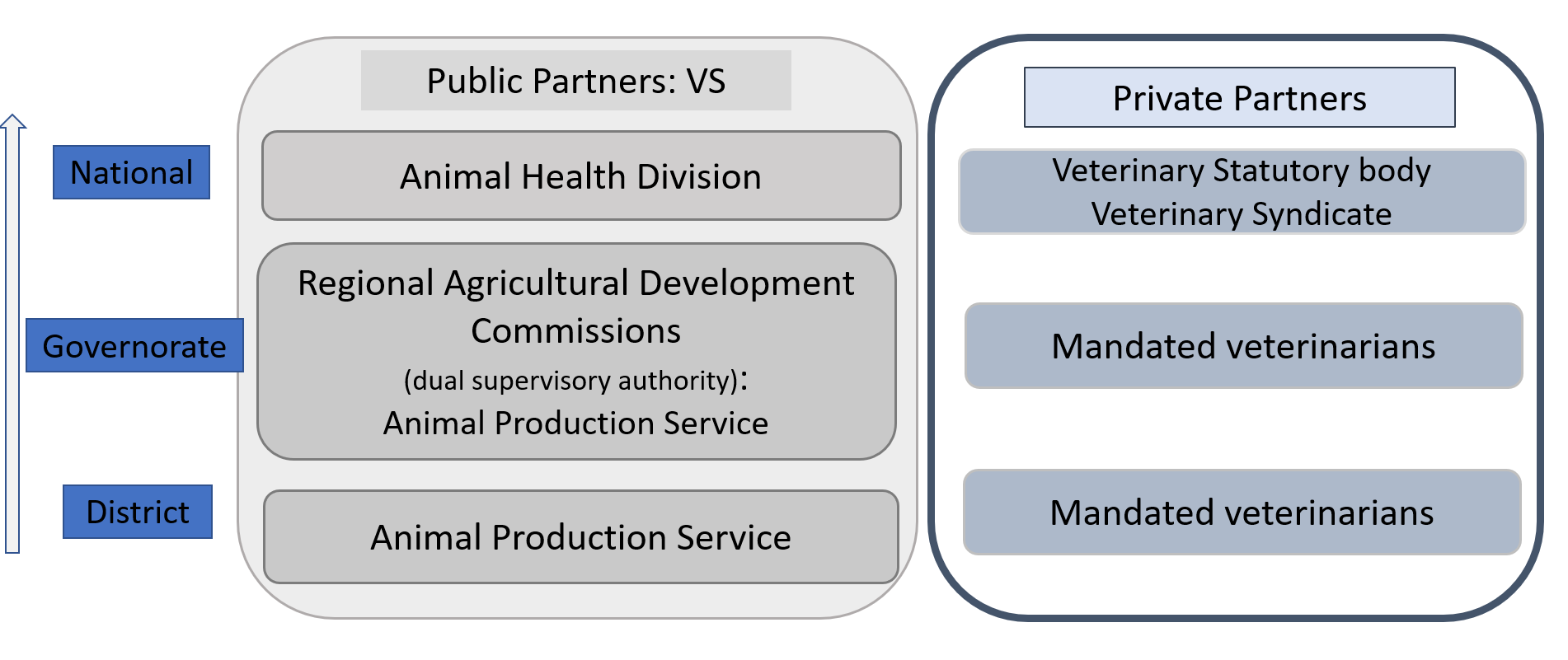
Figure 1 - The public (in grey) and private (in blue) partners of the Sanitary Mandate in Tunisia at the National, governorate and district levels.
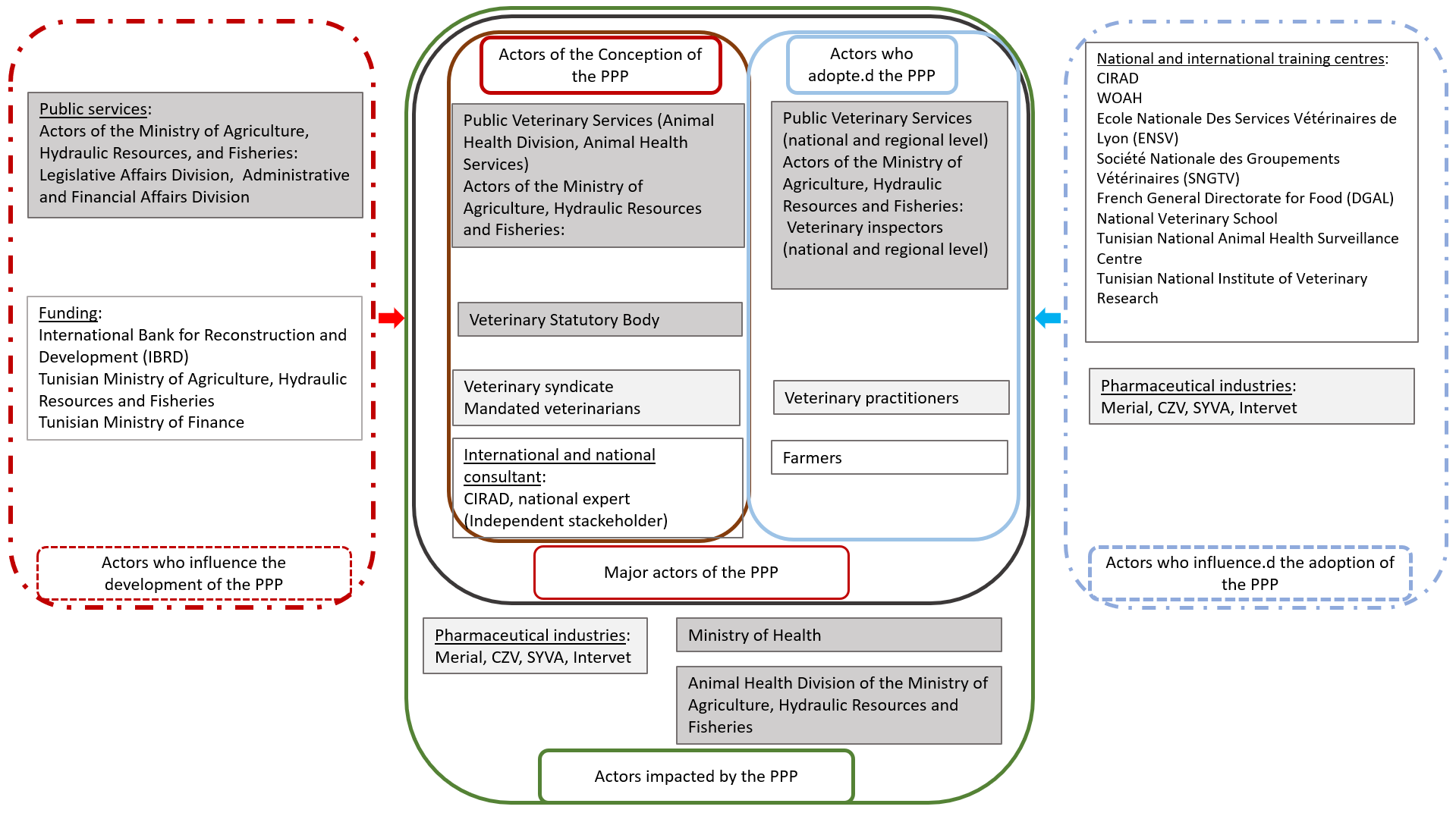
Figure 2 - Mapping of the categories of stakeholders involved directly or indirectly in the Partnership between the Veterinary Services and the Private Veterinarians. The dark grey rectangles indicate the public stakeholders. The light grey rectangles indicate the private stakeholders. CIRAD: French Agricultural Research Centre for International Development, WOAH: World Organisation for Animal Health, ENSV: Ecole Nationale des Services Vétérinaires de Lyon, DGAL: French General Directorate for Food, IBRD: International Bank for Reconstruction and Development
Results of the Sanitary Mandate Collaborative Process Evaluation
Strengths and Weaknesses of the PPP
This section provides a comparative analysis focusing on the stakeholders’ viewpoint on the strengths and weaknesses of the collaborative process within the sanitary mandate. It specifically examines how these aspects were perceived by the public and private stakeholders at the national and regional levels. The analysis revealed both converging and diverging perspectives.
At both the national and regional levels, public and private stakeholders, uniformly agreed that the PPP is a key asset for the elaboration of Veterinary Services strategies. They also, identified the clarity of the SM’s objectives as a primary strength, facilitating alignment with Veterinary Services strategies.
The clarity of the objective was recognised as instrumental in fostering cooperation among stakeholders. This was further supported by the high scores assigned to the definition and understanding of these objectives (section 1), typically above 75% (Figure 3). However, stakeholders at both the national and regional levels called for its expansion to adapt to the evolving epidemiological context of the country (i.e., including tuberculosis and peste des petits ruminants (PPR) due to their health and economic impacts).
Stakeholders highlighted the significance of this public-private collaboration in enhancing service quality, particularly in disease control and vaccination coverage. They also emphasised its role in generating employment opportunities for the young, reinforcing the value attributed to the PPP.
“Yes, the collaboration with private veterinarians has increased vaccination coverage while reducing the time allocated to campaigns. Moreover, it has improved farmers’ awareness, thereby strengthening veterinary support and guidance” [ interview with public stakeholder at the national level]
“There has been a stabilisation of veterinary practices. Indeed, in 2006, the private veterinary profession was not experiencing significant growth, as there were few private veterinary practices. Fortunately, the sanitary mandate helped provide a guaranteed minimum income for these veterinarians. This contributed to the establishment and sustainability of these practices in remote areas.” [ interview with private stakeholder at the national level]
Both groups, also, agreed that key aspects of the PPP, including governance (section 5), planning, and the allocation of responsibilities (section 6), are strong elements of the collaborative process. These sections achieved scores over 75% (Figure 3). This positive evaluation was primarily attributed to the satisfaction with the division of roles and responsibilities between the partners. There was also a perceived equity of opportunities for private stakeholders’ involvement, and the general acceptance of funding and human resources allocation within the partnership.
However, the results highlighted several critical aspects that stand out as particularly important for the partnership’s functioning and sustainability. These include the structural organisation of governance, divergent perceptions around decision-making processes within the PPP, communication challenges, and dissatisfaction regarding the remuneration of mandated veterinarians.
Decision-making and communication
The main point of divergence between public and private stakeholders concerns dissatisfaction with decision-making processes (criterion 5.3, section 5). This is particularly related to the level of participation and influence in governance.
While public veterinarians acknowledged some degree of consultation in the decision-making process, private veterinarians expressed lack of shared decision-making power. They also reported feeling being marginalised in critical discussions. Strategic decisions within the PPP are made by the National Sanitary Mandate Commission, which includes representatives from both the private sector (e.g., the Private Veterinary Syndicate and the Veterinary Statutory Body) and public actors (e.g., officials from Veterinary Services, the Legislative Affairs Division, and training institutions). Despite this formal representation, private veterinarians feel their views are insufficiently reflected, while mandated veterinarians believe their proposals are frequently overlooked.
This perceived disconnect in governance is compounded by challenges in communication within the partnership. Communication was perceived as an area needing improvement, especially at the regional leve (section 8). Private veterinarians rated communication lower than public veterinarians, with scores of 50% nationally and 46% regionally for private veterinarians, compared to 67% nationally and 52% regionally for public veterinarians (Figure 3). Key concerns included the lack of a well-defined communication plan and conflict resolution mechanisms. While public stakeholders generally found the communication plan effective, private stakeholders, particularly at the regional level, expressed the need for greater clarity and more frequent regional meetings.
Challenges in Public Structural Governance
There was consensus on the challenges posed by the public governance structure at the regional level (criterion 4.4, section 4). These governance issues influenced lower scores observed for this section (Figure 3). The analysis of the external environment (section 4) that may hinder the long-term sustainability of the partnership was identified as a limit of the PPP process.
Respondents highlighted issues such as the dual supervisory control and potential overlapping chains of command at the regional level. The regional representatives of the Veterinary Services at the CRDAs (Figure 1) operate under the technical direction of the Veterinary Vervices but they respond to the Directorate-General for Agricultural Production (DGPA) regarding their financial and administrative operation. According to interviewees, the DGPA may hesitate to fully support some Sanitary Mandate activities, especially those requiring investment from the CRDA.
The participants reported in the interviews that these structural challenges have been further complicated by the recent establishment of the National Authority for Food; which has led to a reorganisation of responsibilities within Veterinary Services. Stakeholders have voiced concerns that the recent reorganisation could impact the stability of the SM programme. This was particularly due to differing interpretations of the PPP’s goals. The leadership of the new authority viewed the PPP, according to the interviewees, primarily as a tool for enhancing animal production. However, the sanitary mandate stakeholders emphasised its critical role in controlling infectious and zoonotic animal diseases and protecting both animal and public health.
Performance and Evaluation
Participants in both evaluations also identified the absence of established performance indicators and structured evaluation mechanisms (section 10) as significant shortcomings. This section scored 0 across all stakeholder types and levels. The lack of regular evaluations, which was emphasised in both assessments as a critical element, was perceived as hindering the ability to assess and enhance the effectiveness of the SM.
Ressource allocation in the SM: Remuneration of mandated veterinarians
All interviewees across scales and sectors raised concerns about the funding allocation for the private partners. While the overall funding and human resource allocation were generally accepted, the level of remuneration of mandated veterinarians was perceived as a significant limitation over time, given their central role in the partnership’s implementation.
“Yes, overall it is fair [...] but it is becoming a heavy financial burden for the mandated veterinarians” [ Interview with the stakeholder at the regional level].
Stakeholders across all levels and sectors unanimously recognised that the sanitary mandate provides financial stability to mandated veterinarians, particularly benefiting young practitioners. However, both public and private stakeholders at national and regional levels have highlighted the need to ensuring equitable resource allocation as originally envisioned during the partnership’s implementation.
Training
Capacity-building efforts were generally viewed as satisfactory (section 6) receiving a score of 83% from national stakeholders and 67% from regional stakeholders. This evaluation was especially related to continuous training for mandated veterinarians. This divergence reflects a perception—particularly at the regional level—that training efforts, while appreciated, still require further improvement. Mandated veterinarians emphasised the need for more frequent sessions, as well as the development of training programmes tailored to their evolving professional needs. Similarly, public veterinarians at the regional level expressed the need for specialised training opportunities aimed at experienced veterinary inspectors.
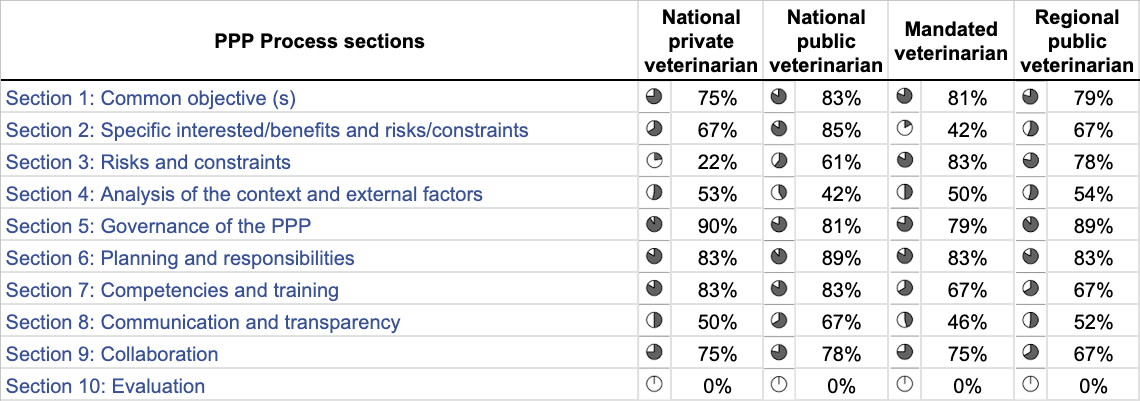
Figure 3 - Strengths and weaknesses of the SM process as perceived by national private veterinarians, national public veterinarians, mandated veterinarians, and regional public veterinarians.
Quality of the PPP Process
The following section examines six key quality attributes, i.e., Operationality, Relevance, Acceptability, Inclusiveness, Adaptability, and Stability; to identify both converging and diverging viewpoints. The scoring of these attributes revealed notable differences across both national and regional levels, and between public and private stakeholders.
Operationality: Stakeholders reported contrasting perceptions regarding the functioning of the sanitary mandate. The scores in operationality highlighted a gap between public and mandated veterinarians. Public veterinarians, both at national and regional levels, and national private veterinarians, viewed more favourably the functioning of the sanitary mandate. Their average score was 52%compared to 28% for mandated veterinarians (Figure 4). This difference in perceptions was primarily due to varying assessments of criteria 4.4 and 5.5 addressing respectively the structural organisation of public governance and the funding and source allocation between the partners.
Relevance: At the national level, both private and public veterinarians saw the PPP as relevant. They scored it 69% and 74%, respectively. However, at the regional level, public veterinarians rated it as average (50%), and mandated veterinarians rated it as low (28%) (Figure 4). At the regional level, perceptions were less positive. This difference mainly stemmed from the ratings of criteria 2.1 and 2.2. These criteria address the identification of interests and the allocation of benefits among the partners within the partnership respectively. Mandated veterinarians especially indicated that the interests and benefits of certain partners were not clearly identified.
Acceptability: Trust in the sanitary mandate system was relatively consistent across all groups. The average score was 59.5%. The acceptability score was particularly affected by ratings of criteria 8.2, 10.2, and 10.3. These criteria highlighted the absence of conflict resolution strategies and the lack of both internal and external evaluations of the MS.
Inclusiveness: All groups showed a high level of commitment to the partnership. Yet, significant variation in the scores revealed differing perceptions of engagement. At regional level, the score was the lowest. Mandated veterinarians scored at 48% and public veterinarians at 54%. At national level, national private veterinarians scored at 57%, and public veterinarians at 72%. The higher national scores, especially among public stakeholders, could be attributed to confidence in decision-making mechanisms and the effective constraint management, as reflected in strong scores for criteria 5.3 and 3.2. In contrast, the lower scores at the regional level, particularly among regional private partners, highlighted deficiencies in these areas and emphasised the need for greater inclusion in governance mechanisms, especially in decision-making processes.
Adaptability: Adaptability of the partnership to contextual and governance changes emerged as a point of concern. Mandated veterinarians rated it at 26%, regional public veterinarians at 30%, and national private veterinarians at 31% (Figure 4). The aforementioned stakeholders identified the absence of a well-defined communication plan, a lack of strategic decision-sharing mechanisms and the absence of evaluation mechanisms as shortcomings (criteria 8.1, 5.3, 10.1 and 10.2). In contrast, national public veterinarians rated the adaptability slightly higher at 43%, due to a better scoring of decision-sharing mechanisms.
Stability: it was assessed with an average score of 55.25% across all groups. This moderate score was largely influenced by low ratings of the internal evaluation of the SM (criterion 10.1), and the organisational structure of the public sector (criterion 4.4).
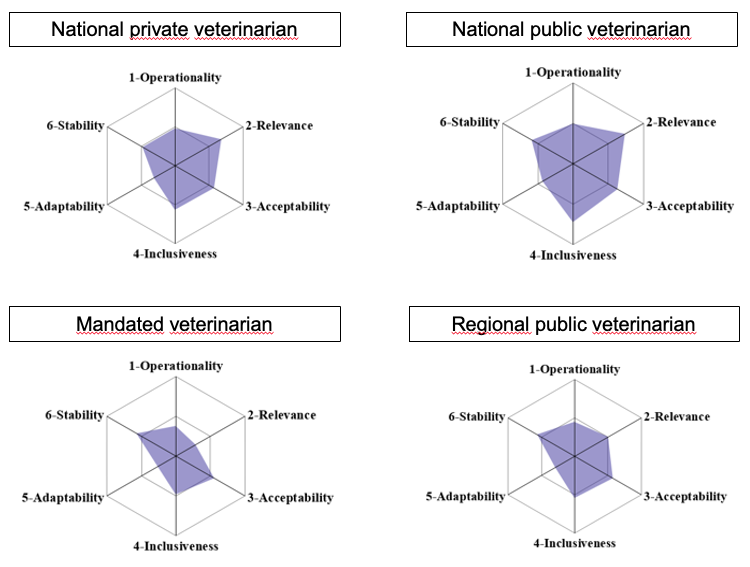
Figure 4 - Perceived quality attributes influencing the sanitary mandate process, assessed by four stakeholder groups: national private veterinarians, national public veterinarians, regional mandated veterinarians, and public veterinarians in Sidi Bouzid and Sfax. Each spider chart shows percentage scores for six quality attributes, calculated by weighting each evaluation criterion’s individual score by its influence level on the attribute. Scores were obtained by summing these weighted values (numerator) and dividing by the maximum possible weighted score (denominator), as described in the Methods section.
Discussion
The results of this study encompass a detailed mapping of the stakeholders in this PPP, and an evaluation of its collaborative process. Using a tool especially designed for PPPs process evaluation in the veterinary domain, this work allowed to gather the diverse perspectives of important public and private stakeholders in the SM from national and regional scales. This approach provided a comprehensive view of the partnership in Tunisia.
Added value of participatory evaluation
Participatory evaluation methods, such as the one applied in this study, are increasingly recognised for their ability to enhance both the evaluation process (Calba et al., 2015; Goutard et al., 2022) and partnership effectiveness. These methods go beyond assessing technical aspects by integrating stakeholder perspectives to ensure meaningful engagement and sustainable outcomes.
In line with these authors, our study showed that engaging stakeholders from the public and private sectors across regional and national level, enabled a comprehensive understanding of the partnership dynamics. During the evaluation, stakeholders actively participated in discussions at both regional and national levels, sharing expectations, reflecting on their roles, and prioritising evaluation needs. These findings are consistent with Goutard et al. (2022) observation that the participatory approaches are important for actively involving stakeholders in the assessment process. Thus, enabling a critical reflection and context-specific recommendations.
This inclusive nature of the approach in the evaluation of the SM, allowed stakeholders not only to assess the partnership’s strengths and limitations but to propose strategies for improvement grounded in field realities. Additionally, it helps deepen their confidence in the collaboration. This supports Calba et al. (2015) who, similarly, emphasize that such engagement increases stakeholder ownership and commitment to partnership improvement.
A key step in this participatory evaluation was the stakeholder mapping to identify key stakeholders and define their roles within the PPP system. Mathevet & Bousquet (2014) and Poupaud (2022a) noted that system boundaries (here, the PPP) whether spatial, temporal, or social, depend on the individuals defining them. This, in turn, shapes stakeholder inclusion. The initial selection of key stakeholders interviewed is, thus, crucial, as it determines subsequent inclusion. Our approach took this insight into account by carefully identifying relevant actors. This was a critical step that shaped the inclusiveness of the entire evaluation process. In this study, a detailed stakeholder list was established, identifying interactions and power dynamics among them. Stakeholders were then categorised following the ImpresS methodology (Barret et al., 2017). This approach clarified their contributions and roles within the PPP and helped determine their level of involvement at different evaluation stages. It also acknowledges that not all stakeholders remain equally invovled throughout the evaluation process (Aubel, 1999). The influence of stakeholders involved and the surrounding power dynamics on the results, emphisised by Aubel (1999), Zukoski and Luluquisen (2002) and Poupaud (2022a), was evident in our evaluation, where stakeholders’ perspectives and dynamics significantly shaped the results.
The participatory method also facilitated quantifying the PPP’s added value, adressing a known challenge in such evaluations (Barlow et al., 2013). Through stakeholder discussions measurable outcomes emerged. The SM partnership allowed an enhanced vaccination coverage for priority diseases, a 50% reduction in vaccination campaign durations, from 120 to 60 days, and improved territorial coverage with private veterinarians. This expansion, according to the interviewed stakeholders, would not have been possible without the partnership, demonstrating its critical role in addressing gaps that neither public nor private initiatives could bridge independently.
To our knowledge, no evaluations of Public-Private Partnerships in livestock health have utilised participatory approaches before (Poupaud, 2022b) and this study represents the first evaluation of a transactional PPP. While PPP initiatives are widespread, evaluations remain scarce and tend to focus on outcomes (Taylor, 2013; Asseldonk & Bergevoet, 2015; Bardosh, 2016). They less frequently adress the long term impacts (WOAH, 2019) and the core aspects of partnerships. In contrast, participative approaches have been more frequently applied in public health PPP evaluations (Poupaud, 2022b). Buse & Harmer (2004) analysed the political dimensions of global health PPPs by examining power dynamics through participatory methods. Kamya et al. (2016) developed a conceptual framework incorporating participative approaches (i.e. semi-structural interviews) alongside other techniques to evaluate the perceptions of partnerships’ added value.
By combining participatory approaches with stakeholder categorisation, this evaluation not only enriched the quality of data collected but also revealed concrete impacts of the partnership as perceived by those involved. Categorising stakeholders helped clarify their roles and contributions. This supported a more nuanced analysis of how the partnership functions and where improvements are needed. Beyond enhancing the rigour and contextual relevance of the evaluation process, these insights offer valuable guidance for policy and practice. Specifically, they support the growing consensus that participatory approaches should be institutionalised in animal health PPPs—not just to strengthen stakeholder engagement, but also to inform more responsive, context-sensitive policies. Additionally,they also help shaping future partnership models grounded in field realities. In the Tunisian context, this implies the need to embed participatory mechanisms within the design, implementation, and evaluation of veterinary public service delivery, particularly where private actors play a front-line role in executing public services.
Advantages of the PPP tool for strengthening the collaborative process
The use of a PPP-specific evaluation tool enables a targeted assessment of critical partnership dynamics such as risk-sharing, governance, accountability, stakeholder alignment, and key areas of divergence between public and private objectives. This approach fosters a constructive dialogue and resolution (Koppenjan, 2005).
By focusing on the “how” and “why” of PPP results, this tool designed for PPP’s quality of collaboration assessment, identifies process limitations and enables targeted recommendations to enhance outcomes. Since the quality of a PPP’s outcomes heavily depends on the quality of its collaborative process (Prasanth, 2011; Barret et al., 2017), this tool offers a valuable alternative to conventional evaluation methods that often overlook these dynamics (Poupaud, 2022b).
Uniquely, this tool comprehensively evaluates all critical elements of the collaborative process through its 44 criteria. These include assessing the context of PPP implementation, defining of objectives, analysing power dynamics between partners, and identifying key success factors and obstacles (Barr, 2007; Kamya et al., 2016; Salve et al., 2018). To our knowledge, this is the first tool to provide such a thorough framework for assessing collaborative processes of PPPs in both public and livestock health. While existing evaluations in livestock-related PPP initiatives focused primarily on outcomes (Lembo et al., 2011; Taylor, 2013; Swedish FAO Committee, 2018); in public health PPPs, a few frameworks have been developed addressing partially key elements of the collaboration process. Some studies focused on contextual factors (Barr, 2007; Vrangbæk*, 2008; Kamya et al., 2016), while others highlighted collaboration, governance, and objectives (Vrangbæk*, 2008; Rieker, 2011; Kamya et al., 2016; Kostyak et al., 2017).
In this study, the PPP tool addressed critical elements of the collaborative process within the sanitary mandate, clarifying stakeholders’ expectations and identifying opportunities for improvement. This process paved the way for actionable strategies to strengthen the mandate; including recommendations to enhance structural governance within the public sector, align PPP objectives with the epidemiological context, and improve communication. Key proposals included regular training, performance indicators, and a sustainability strategy through collaborative restructuring. Improved communication via meetings and clear plans was essential for fostering collaboration. Stakeholders also recommended creating an independent animal health fund and revising veterinarian remuneration to ensure the sanitary mandate’s sustainability and expansion. Ultimately, this process transformed the tool into a platform for mediation, helping to resolve disagreements and strengthen partnerships.
This tool could be used for the evaluation of PPP initiatives in public health given the similarities in missions (prevention and control of infectious diseases and access to public health services) (Barr, 2007; Poupaud, 2022a).
A challenge of the use of such participatory tool is the time-intensive of the approach. Indeed, the approach requires significant effort for preparation (i.e. interview guides, identifying and contacting the targeted stakeholders, execution (conducting the interviews), and analysis (transcription and data analysis) (Aubel, 1999). However, any evaluation requires time. The advantages of participatory approaches regarding stakeholder involvement in the evaluation process, relevance and acceptability of the recommendations overcomes such limitations as these are required to ensure sustainability and implementation of the recommended changes.
Discussion of the sanitary mandate collaborative process evaluation results
The evaluation of the sanitary mandate in Tunisia highlighted its significant contributions to the Tunsian animal health system. The SM is widely recognised as needed for public and regional Veterinary Services, achieving key national public health objectives, improving vaccination coverage, extending veterinary services to underserved regions, and facilitating professional integration for young veterinarians (Zargouni et al., 2020). This is consistent with similar findings/ successes observed in other PPPs. In Paraguay, a collaboration between private associations and veterinary authorities led to the country achieving the FMD-Free status with vaccination (WOAH, 2019). Likewise, in Afghanistan a sanitary mandate partnership involving paraveterinary professionals enabled the country achieve via vaccination, the second stage of the FAO and WOAH progressive control pathway for PPR control and eradication (WOAH, 2019).
However, the evaluation also revealed that some initial objectives of the sanitary mandate are no longer fully aligned with the country’s evolving epidemiological context. This drift echoes observations by Buse & Harmer (2004), who note that without regular, inclusive evaluation mechanisms, PPPs may stray from their original goals towards administrative or financial priorities. Similarly, WOAH also stresses on the need for implementation of PPPs monitoring mechanisms in order to evaluate the achivement of agreed-upon activities (WOAH, 2019). As evaluation enables the refinement of strategies and adjustment of actions (Allen et al., 2002; Allen, 2019; Peyre et al., 2022).
The SM evaluation also revealed a dissatisfaction, among mainly regional stakeholders, regarding their limited involvement in decision-making process; reflecting a broader perception of centralisation at the national level. These findings resonate with observations from other contexts such as those of Brinkerhoff & Brinkerhoff (2011), who note that PPPs may reproduce hierarchical structures that constrain the influence of private or regional actors. In the Tunisian case, regional mandated veterinarians play an essential role in field-level implementation. However, their contribution, according to the interviewees, to higher-level strategic planning appears more consultative than directive. Such dynamics are common in low- and middle-income countries, where PPPs often rely on contractual models with governments retaining control over funding and direction while delegating service delivery to private or non-profit actors (Brinkerhoff & Brinkerhoff, 2011). However, the Tunisian experience also points to a potential shift. Interviewees emphasised the high level of trust and strong collaboration between public and private actors as a key strength. This foundation may support the gradual evolution towards a more balanced and durable parnership; aligning with Bovaird (2004) notion of a “relational contract” based on mutual commitement and long-term collaboration.
The importance of addressing this issue is reinforced by evaluation frameworks that emphasise the need for inclusiveness in all phases of a partnership—objective setting, decision-making, and protocol development (Buse & Harmer, 2004; Rieker, 2011; Poupaud, 2022b). Poupaud (2022b) also underlines that private-public collaboration’s success depends on building an inclusive network that recognises the value of all stakeholders.
The study also highlighted the need for improvement of communication plans within the partnership. This aligns with WOAH guide on best practices for Public-Private Partnerships in the veterinary sector. The guide further stresses that developing a communication strategy agreed upon by all stakeholders is a fundamental principle for ensuring effective collaboration (WOAH, 2019). This is also supported by Ricks et al. (2013), who demonstrated through an evaluation of a healthcare PPP in South Africa, that clear communication, mutual accountability, and strong stakeholder rapport are pivotal for enhancing collaboration and achieving impactful outcomes in public-private partnerships.
The structural governance of the public sector, according to all interviewees, remains a critical challenge. This finding contrasts with the principles of good governance outlined by Sabry (2015), who emphasises the importance of bureaucratic efficiency, collaborative approaches in decision-making, strong regulations, adherence to the law, and corruption control. Ensuring a good governance process not only fosters PPP efficiency but also serves as critical factor for their success (Sabry, 2015; Poupaud, 2022b).
Finally, adressing the evolving concern of mandated veterinarians regarding their remuneration is important to ensure their durable commitment, which represent a milestone for the PPP’s sustanibility. This aligns with the principles of collaborative governance as defined by Ansell and Gash (2008), who emphasise transparency, trust, and shared engagement as key factors for successful institutional partnerships. Indeed, the satisfaction with the allocation of resources and benefice between the partners is a key factor for the good functioning and stability of a PPP. A principle that was highlighted in both Barr (2007) framework for PPP evaluation in healthcare and the WOAH guideline for PPP good practice (WOAH, 2019).
Limitations of the study
While the participatory approach enabled a nuanced understanding of stakeholder perspectives, several methodological limitations must be acknowledged. The subjective nature of participatory evaluation relies on participants’ willingness to engage and respond (Aubel, 1999). In this study, 22 out of 69 invited actors ultimately participated, resulting in an unbalanced sample across stakeholder types (public vs. private) and governorates. This imbalance may have limited data saturation in some stakeholder categories. This outcome reflects not a shortcoming in recruitment strategy but external constraints—including COVID-19 disruptions (shift to remote evaluation), institutional reorganisations (structural reorganisation of the Veterinary Services), and overlapping vaccination campaigns—that hindered participation despite exhaustive outreach efforts.
Although the final participant sample was not fully exhaustive, the consensus on SM process strengths and limitations among regional and national stakeholders interviewed support robustness of the evaluation. Moreover, this study ensured a comprehensive representation of the PPP by interviewing stakeholders from the various functions within the partnership, capturing the diversity of roles involved.
These abovementioned constraints also shaped the geographical scope of the study; leading to a pragmatic prioritisation of the Central region intented to be studied alongside the North. Both regions had similar numbers of mandated veterinarians in 2019–2020 (116 and 107, respectively), while the South had significantly fewer (49). Consequently, making the North and Centre particularly relevant for exploring PPP dynamics. The choice to focus on the Centre was further justified by its functional and epidemiological significance. It alone helds about half of the national sheep population and, along with the North, accounted for most of the national bovine herd. Sidi Bouzid, also plays a key role in livestock trade and cross-border animal movements, making it a strategically important area for evaluating the sanitary mandate. Nevertheless, Future research encompassing the other regions (North and South), would provide a more comprehensive evaluation by revealing potential regional variations in the SM’s collaborative process dynamics.
Farmers, specifically those responsible for livestock management within family-run farms, were unable to participate in this study. In many cases, this role is shared or alternated among family members, whose collective perspective remains underrepresented. This absence leaves an important perspective missing. However, this limitation reflects the institutional design of the sanitary mandate. The PPP is constructed as a formal collaboration between public authorities and private veterinarians, positioning farmers as service beneficiaries rather than active co-constructors. While farmers are central to vaccination campaign success, their role within PPP collaborative process, i.e, governance remains peripheral, lacking formal decision-making avenues. This structural constraint shaped the evaluation’s focus on institutional actors.
Use of recommendations by the PPP stakeholders
The restitution phase is a crucial aspect of any evaluation. It ensures the engagement of all programme collaborators and fosters a collaborative review and interpretation of the results and recommendations (Aubel, 1999; Catley, 2005). In this study, the restitution of results was initially planned to include both national and regional levels, but only the national-level meeting was held limited to representatives from national public partners; due to the COVID-19 crisis. Although this limited stakeholder diversity, the process still revealed points of consensus and disagreement. These divergences opened a window for dialogue, allowing the underlying sources of disagreement to be explored.
As highlighted in the literature, despite qualitative data being equally rigorous, it is often seen as less convincing compared to quantitative data (Kohn & Christiaens, 2014). This is particularly pronounced in technically oriented sectors like veterinary services, where quantitative evidence is privileged. Nonetheless, creating space for open dialogue, especially around contested findings, is critical for building trust and shared understanding. Consequently, better articulation between national and regional levels, and establishing durable dialogue bodies could strengthen the effectiveness and legitimacy of the SM partnership.
Importance of economic evaluation of the sanitary mandate: Perspectives
The economic evaluation of the sanitary mandate, especially its cost-effctiveness, was identified as the second-highest priority among the evaluation needs expressed by the Tunisian Veterinary Services. A cost-benefit analysis of the PPP would provide valuable insights for decision-makers. offering a clear understanding of its stability and potential for long-term sustainability (Drummont et al., 2015).
Conclusion
To the best of our knowledge, this is the first evaluation of a PPP in the veterinary domain in Tunisia and North Africa. It provided a solid foundation for future evaluations that could help sustain the PPP’s relevance and effectiveness. By establishing routine evaluations, the PPP could continuously adapt, quickly addressing any bottlenecks and improving the overall impact of the programme in line with best practices recommended by the WOAH for Public-Private Partnerships.
PPPs in the veterinary domain are complex and dynamic systems widely spread (Galière et al., 2019). Limited data are available on their performances and support to the veterinary domain. Promoting their evaluation is key to limit their risk, ensure their efficacy and the sustainability of animal health programmes.
Author Contributions
Conceptualisation: Anissa Dhaoui, Mariline Poupaud, Marisa Peyre.
Data curation: Anissa Dhaoui,
Data collection:Anissa DHAOUI, Salma Zargouni,
Formal analysis: Anissa Dhaoui,
Investigation: Anissa Dhaoui,
Methodology: Anissa Dhaoui, Mariline Poupaud, Marisa Peyre.
Project administration: Isabelle Dieuzy-Labaye, Marisa Peyre.
Resources: Isabelle Dieuzy-Labaye, Marisa Peyre
Supervision: Marisa Peyre, Ahmed Ferchiou
Validation: Mariline Poupaud, Isabelle Dieuzy-Labaye, Marisa Peyre.
Writing – Original draft: Anissa Dhaoui.
Review: Anissa Dhaoui, Mariline Poupaud, Ahmed Ferchiou, Marisa Peyre
Writing and editing after review: Anissa Dhaoui
Acknowledgments
The authors gratefully acknowledge the Tunisian Veterinary Services for their support and assistance in organising the work in Tunisia. Sincere thanks are also extended to all stakeholders of the sanitary mandate and participants for their time and for providing valuable information. Preprint version 2 of this article has been peer-reviewed and recommended by Peer Community In Animal Science (https://doi.org/10.24072/pci.animsci.100349; Meurens, 2025)
Funding
This work was support by the French Agricultural Research Centre for International Development (CIRAD) and the WOAH Public Private Progress project which is supported by the Bill & Melinda Gates Foundation under the grant number : OPP1159705
Data, scripts, code, and supplementary information availability
The supplementary information and data are available online (https://doi.org/10.18167/DVN1/CDL4O7; Dhaoui, 2025)
Conflict of interest disclosure
The authors declare that they comply with the PCI rule of having no financial conflicts of interest in relation to the content of the article.