

 CC-BY 4.0
Introduction
Since the mid-20th century, Western countries have experienced a shift towards diets high in fat, salt, sugar, and meat, raising both health and environmental concerns (Willett et al., 2019). Across the globe, diets are now linked to non-communicable diseases and obesity (Gakidou et al., 2017) and food systems significantly contribute to environmental threats as they are responsible for approximately one-third of global greenhouse gas emissions (GHGEs) (Crippa et al., 2021), highlighting the need to increase diets nutritional quality and decrease their environmental impacts (FAO & WHO, 2019; FAO, 2012). In France, cardiovascular diseases were the second most common cause of mortality in 1990 and 2019 (Francis-Oliviero et al., 2024) and 22% of GHGEs of the national demand derived from diets (Baude, 2022). Healthier and more environmentally friendly diets should be rich in whole grains, vegetables, fruit, legumes, and nuts – preferably in their raw or minimally processed forms – and low in salt, added sugars, refined grains, saturated fats and reduced in meat (Kesse-Guyot et al., 2020; Willett et al., 2019).
Collective catering can be seen as organisations that could favour such changes as they serve a large number of meals daily, have substantial influence over consumers’ diets and could help shift social norms towards more sustainable eating practices (Garnett & Balmford, 2022; Graça et al., 2023). In France, collective catering is present across various stages of life, including nurseries, schools, university campuses, workplaces, and retirement homes. This study focuses on university cafeterias, which play a crucial role in shaping French young adult’s diets. A study conducted in the city of Dijon in 2022, showed that more than half of the student population ate in these facilities at least once a week, with 17% eating there daily (Arrazat et al., 2023). French university catering also serves an important social function by providing meals at low prices: €3.30 or even €1 for financially disadvantaged students. This is all the more important than a rising food insecurity has been observed in the student population since the Covid-19 pandemic (Jehi et al., 2022). Consequently, university collective catering could support the adoption of sustainable food consumption habits among students from a broad range of sociodemographic backgrounds.
University students experience a period of empowerment and identity exploration (Nelson et al., 2008) and they become fully responsible for their food choices when leaving the family home. Consequently, it is also a critical period of decline in nutritional quality (Bernardo et al., 2017; Winpenny et al., 2018). Poor nutritional quality in the student population has been shown to be associated with reduced sleep quality and cognitive function, both of which impacting academic performance (Burrows et al., 2017; Deliens et al., 2013; Faris et al., 2022; Ramón-Arbués et al., 2022; Wang & Bíró, 2021; Whatnall et al., 2019). Maintaining a nutritious diet is crucial for both the health and academic success of university students.
Gaining insights into the nutritional quality and environmental impact of students’ food choices is essential to understand how to promote a shift towards more sustainable diets. In particular, on-campus food offer may have a great impact on their food choices. A study from the University of Pisa in Italy has highlighted different eating profiles at a university cafeteria, with only a minority of students making healthy food choices (11%) (Lorenzoni et al., 2021). These results suggest that students tend to make food choices with a low nutritional quality when eating on university campuses. This has been confirmed by other studies conducted in Western countries (USA and Australia) that have found that more frequent consumption of food on university campuses is correlated with low dietary nutritional quality (Pelletier & Laska, 2013; Roy et al., 2017; Whatnall et al., 2021). Finally, a study conducted in the south of France in 2005-2006 showed that students who more often ate at university cafeterias declared consuming higher amounts of fruit, vegetables, fish, and meat (Guagliardo et al., 2011). These results may be explained by the repeated publications of guidelines to improve the nutritional quality of the food offer in collective catering in France (GEMRCN, 2015). However, this study did not record food choices from university catering itself making it challenging to draw conclusions about the actual role of university catering in improving university students’ diet quality. In addition, none of these previous studies considered the environmental impact of food choices.
The present study aimed to unravel whether French university students make healthier and more environmentally friendly food choices when eating at university cafeterias compared to their own overall diets through the measure of actual food choices in this context and a global dietary assessment. The first analysis will compare the composition, nutritional quality, and environmental impact of foods chosen in a university cafeteria versus students’ overall diets (within-subject) in the light of international recommendations for healthy and sustainable diets (EAT-Lancet reference diet) (Willett et al., 2019). The second analysis will examine whether attendance at university catering is associated with nutritional quality and environmental impact in both students’ food choices in this setting and their overall diets.
Material and methods
Design
The data are derived from a cross-sectional study design measuring students’ food choices at university catering through repeated measurements in a large university cafeteria in Dijon, France, between October 2023 and February 2024. The study was entitled “Scan your meal tray” (“Scanne ton plateau” in French). Participants were informed that the aim of the study was to assess university students’ eating behaviours within the cafeteria. Participation involved taking pictures of their meal trays over a three-month period each time they ate at the university cafeteria. Additionally, participants completed two online questionnaires to provide further individual data.
The university cafeteria where data were collected operates on weekdays during lunch (11:20 am – 1:30 pm) and dinner (6:20 pm – 7:45 pm). It offers a variety of starters, desserts, and main courses across three floors. At lunchtime, students can choose from five or six main dish options (one or two vegetarian), while at dinner, there are typically two or three options available. The standard meal tray, which includes two starters and/or desserts, one main dish, and bread, is priced at €3.30 for university students and €1 for students receiving government scholarships, regardless of what they choose. Each day, a dietician highlights “the healthy meal of the day” on the menu displayed at the entrance of the cafeteria. During the period of this study, approximately 3,000 meals were served at lunchtime and 900 during dinner service.
Ethical aspects
This study was conducted in accordance with the Declaration of Helsinki, and the protocol for this study was approved from the Inserm Research Ethics Committee (reference: n◦23–976 bis, issued on September 12th, 2023). All participants in the study provided written informed consent. The protocol for this study was also preregistered prior to data collection (https://doi.org/10.17605/OSF.IO/37TFM; Arrazat et al., 2025a).
Participants and recruitment
Participants were recruited using a non-probability sampling method, with quotas based on gender and government scholarship status. The target distribution was 25% of women with a scholarship, 25% of women without a scholarship, 25% of men with a scholarship, and 25% of men without a scholarship to ensure variability in food choices at the university cafeteria and in terms of dietary patterns. Gender was chosen as a quota variable due to its established influence on students’ food choices in university cafeterias (Egeler & Baur, 2022; Garnett, 2020; Lorenzoni et al., 2021). Additionally, government scholarship status was included because it affects the price paid by students and may be linked to variations in eating behaviours based on financial resources.
Participant recruitment took place at the entrance of the university cafeteria from October 2nd, 2023, to November 22nd, 2023. A recruitment booth, staffed by one or two researchers, was set up during lunchtime daily and in the evenings twice a week. Students either came spontaneously at the booth to discuss with the research team or were approached by a member of the team while queuing for their meal. Students interested in participating could scan a QR code to access an online inclusion questionnaire hosted on the INRAE Lime Survey platform. Eligibility criteria included: eating at the university cafeteria at least once a week, being aged over 18, being enrolled in a higher education institution in Dijon, and having sufficient French language proficiency to complete the online questionnaires.
Participants were compensated up to €30 for full participation in the study. A €10 voucher was sent via email after completing the first online questionnaire, another €10 was provided after photographing their meal trays, and the final €10 voucher was given upon completion of the second online questionnaire.
A total of 460 participants consented to participate in this study and 253 were included in the analyses. Reasons for exclusions are detailed in the flow chart (Figure 1).
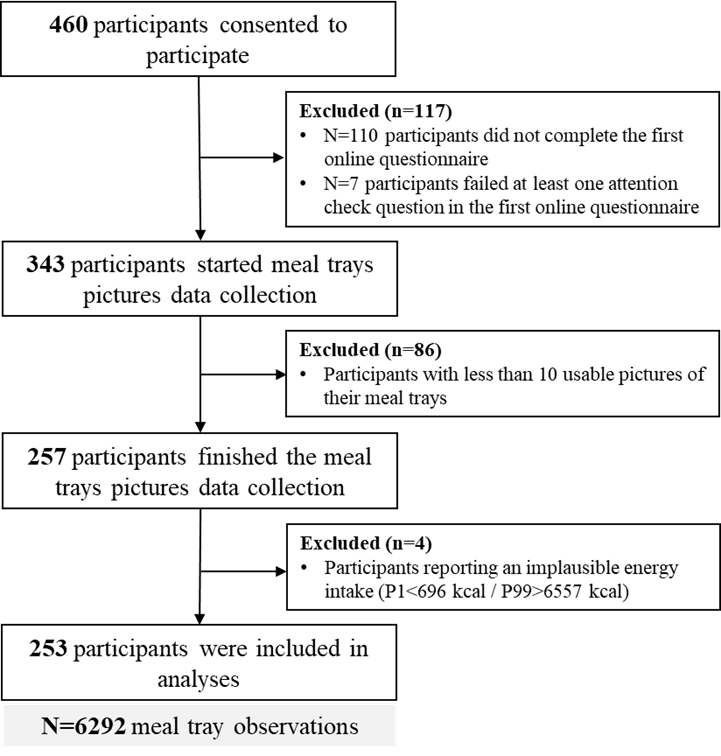
Figure 1 - Study flow chart
Data collection procedure
To participate in the study, students were first required to complete an online inclusion questionnaire. This questionnaire aimed to verify eligibility, provide information about the study, and obtain informed consent. Participants were also asked to provide their full name, email address, and phone number for follow-up purposes. Eligibility and quota criteria were automatically checked in the online questionnaire, and an ineligibility message was displayed if the eligibility criteria were not met. Eligible participants received an email instructing them to collect an envelope at the entrance of the university cafeteria. Inside the envelope, they found the study instructions manual and a laminated card with a personal QR code linked to their unique participant ID.
Following this, participants received an email containing a personalised link with their ID to the first online questionnaire, hosted on the Qualtrics platform. This questionnaire took approximately 35 minutes to complete and consisted of three sections. The first section assessed students’ usual dietary habits using a semi-quantitative food frequency questionnaire (FFQ). The second section explored behavioural factors influencing healthy and environmentally sustainable food choices at the university cafeteria (not included in this analysis, see Arrazat et al., 2025b). The third section gathered sociodemographic information from participants.
Once participants had picked up their QR code, they could begin taking pictures of their meal trays using three scanning devices set up on each floor of the cafeteria. These devices automatically captured an image upon recognizing the QR code on the tray. Participants were asked to photograph their meal trays each time they ate at the university cafeteria over a three-month period, with a minimum of 10 images required during this time to receive compensation. Researchers sent email reminders to participants every two weeks. At the end of the three-month period, participants were invited to complete a final feedback questionnaire, which was administered through the Qualtrics platform. This questionnaire, taking approximately 10 minutes to complete, assessed the frequency of students’ attendance at university catering and gathered data on their perceptions of cafeteria food (not included in this analysis).
Dietary assessment and indicators of nutritional quality and environmental impact
Dietary data
Participants reported the frequency and portion sizes of food items and beverages consumed in the month prior to survey completion in the first online questionnaire (months of September or of October 2023 depending on the date of inclusion in the study) using a validated semi-quantitative FFQ (Kadawathagedara et al., 2021). This questionnaire covered 109 foods, 12 non-alcoholic drinks, and 4 alcoholic drinks, with frequency assessed on a 6-item scale ranging from “Never” to “Several times a day”. Participants also estimated their portion sizes for 71 food items using photos from the SU.VI.MAX portion book (Hercberg et al., 2002), while standard portion sizes were used for the remaining 38 items. Daily frequencies of consumption were transformed into daily intake, calculated by multiplying the daily frequency by the estimated portion size, providing the average daily consumption of the 125 items in the questionnaire.
Ready-to-eat food items from the FFQ (N=13, meat-based or vegetarian alternatives) were broken down into ingredients and quantities using recipes from the university cafeteria. These ingredients were then categorised into thirteen food groups created by incorporating other items from the FFQ (excluding beverages): grains and bread, tubers, legumes, vegetables, fruit, nuts, red meat, poultry, fish and sea food, egg, dairy products, cream-based desserts and sugary foods. These groups were inspired by those that have specific French nutritional recommendations (Chaltiel et al., 2019).
We determined the daily intake of each of the thirteen food groups (in grams per day) by summing the quantities of each food item within the group and from ready-to-eat food items. We also computed the consumption of each food group for a 2000 kcal diet.
Nutritional quality of the overall diet
The nutritional quality of participants’ overall diets was assessed with the sPNNS-GS2 score that assesses the level of adherence to the French national dietary recommendations. We calculated, for each participant, the sPNNS-GS2 score for an isocaloric diet of 2000 kcal (Chaltiel et al., 2019, 2021). This score is composed of 13 components, each corresponding to a specific food intake recommendation. The scoring system differentiates components with negative scores (representing less healthy food groups whose consumption should be limited, such as red meat, processed meat, sugary foods, sweet-tasting beverages, alcoholic beverages, and salt) and components with positive scores (representing healthier food groups, including fruit and vegetables, nuts, legumes, whole-grain foods, milk and dairy products, and fish and seafood). Each participant is awarded points for adherence to recommended quantities or portions of food groups as per the French nutritional guidelines. The original sPNNS-GS2 score included a thirteenth dietary component related to added fat. However, as explained in prior studies (Marty et al., 2021, 2022), this factor could not be included due to limitations in recording added fat in our dietary survey. For each participant, a score was assigned for each of the 12 dietary components based on the frequency or quantities consumed. Indeed, participants provided food consumption frequencies in the FFQ, which were then converted into quantities. These quantities were summed to align with the food groups relevant to each component of the sPNNS-GS2 score. Moreover, quantities for each component were standardised to a 2000 kcal intake to account for variations in energy intake among participants. For components with guidelines specifying consumption frequency, such as fruit and vegetables, the consumed quantities were divided by the standard portion size (e.g., 80 g for fruit and vegetables). Finally, each component was assigned a weight based on the level of evidence regarding the association between consumption of food groups and health status. sPNNS-GS2 scores were calculated for each participant by summing the product of each component and its associated weight, then dividing by its maximum absolute value.
\(sPNNSGS2 = \sum_{i}^{}\left( {component}_{i} \times \frac{{weight}_{i}}{\max\left( abs\left( {component}_{i} \right) \right)} \right)\)
The resulting score, which spans from -17 to 11.5, represents the overall nutritional quality of the diet. Higher scores denote greater adherence to French nutritional guidelines.
Environmental impact of the overall diet
The environmental footprint of participants’ overall diets was assessed in terms of GHGEs. GHGEs values for the 125 items listed in the FFQ were sourced from the French food environmental impact database, compiled by the French Agency for Ecological Transition (Agribalyse 3.0, last updated in 2020), which provides GHGEs values in kg of eCO2/kg for 2480 foods (ADEME, 2020). Each item from the FFQ was paired with all corresponding food items listed in the Agribalyse 3.0 database. GHGEs values for each FFQ item were computed by averaging the GHGEs values of the individual foods linked to it in Agribalyse 3.0. Participants’ daily GHGEs for their diets per 2000 kcal (kg eCO2/2000 kcal) were determined by multiplying the daily intake of each food item per 2000 kcal of diet by its corresponding GHGEs per kilogram.
Actual food choices at the university cafeteria and indicators of nutritional quality and environmental impact
Annotation of meal trays pictures
We manually analysed each of the pictures taken by participants during the study. When a picture was captured by a scanning device, the date, time, and participant ID were automatically recorded. This allowed us to link each image with the corresponding daily menu and visually identify the food items on the meal trays. The food items that were present on meal trays included starters, desserts, bread, beverages, or components of the main dish, such as the protein or side dish. In total, participants took 6,655 meal tray pictures, containing 31,821 distinct food items. To ensure the accuracy of our manual annotations, we performed a quality check where two researchers independently reviewed a random sample of 100 images, encompassing 489 food items. They identified only five errors, resulting in an error rate of 1%, which was considered sufficiently low to carry the analyses.
Nutritional quality and environmental impact of meal trays
The 31,821 annotated food items corresponded to 593 distinct food items, for which we obtained the corresponding recipes from the university cafeteria’s database. These 593 recipes contained 573 different ingredients, which were subsequently classified into the following food 13 groups: cereals and bread, tubers, legumes, vegetables, fruit, nuts, red meat, poultry, fish, eggs, dairy products, cream-based desserts, and sugary foods. We then identified the nutrient content of each ingredient, notably energy content (kcal), using the national French food composition database CIQUAL 2020 (ANSES, 2020). The GHGEs (kg eCO2/ kg) for each ingredient were sourced from the French food environmental impact database, Agribalyse 3.0 (ADEME, 2020).
Each of the 593 recipes included a list of ingredients and their proportions, allowing us to calculate the quantities of each food group, the caloric content, and the GHGEs for one serving of each dish. We used standard serving sizes based on French national guidelines for adult collective catering (GEMRCN, 2015). Subsequently, we summed the quantities of each food group, along with the caloric content and GHGEs, for all food items on a meal tray.
For each participant, we averaged the quantities of each food group and GHGEs per 2000 kcal by analysing all meal tray pictures taken by one participant (with a minimum of 10 pictures per participant). This provided the quantities of each food group and the GHGEs per 2000 kcal for an average meal tray per participant.
To assess the nutritional quality of the meal trays, we adapted the sPNNS-GS2 scoring system. We used the gram quantities of each food group on an average meal tray per 2000 kcal to calculate this score as described above.
Additional measures
Attendance at university catering
Attendance at university catering was assessed in the second online questionnaire with two questions: one regarding attendance at lunchtime and the other for dinner. The attendance level for each question ranged from 0 (“never”) to 5 (“five times a week”). To calculate an aggregated attendance score, we summed the results from each question. The continuous attendance score thus had a theoretical range from 1 to 10 times per week, since we only included participants that ate at least once a week at the university cafeteria.
Individual characteristics of participants
The following sociodemographic characteristics were measured in the first online questionnaire: age (continuous variable), gender (man, woman, other), nationality (French or other than French). We also characterised students’ place of living at the time of the study (i.e., parents’ house, students’ house, boarding school, independent accommodation) and their living conditions (i.e., living alone, living with parents or living with a partner or flatmates). We measured the academic characteristics of students through three variables: current level of education, type of institution and field of study (categorical variables). Additionally, we characterised students’ financial status by measuring scholarship status and perceived financial status. Finally, to specify dietary characteristics we measured dieting status, willingness to gain muscle mass and declared diet (omnivore, flexitarian, meat-free diet). Participants also declared their height (in cm) and their weight (in kg), and we computed their BMI in kg/m2.
Statistical analyses
Sociodemographic characteristics were summarised using mean and standard deviation for continuous variables (age, BMI) and n and percentages for categorical variables (gender, nationality, place of living, living conditions, current level of education, type of institution, field of study, scholarship, perceived financial status, dieting status, willingness to gain muscle mass, declared diet).
For the first objective, we performed descriptive analyses using Students’ paired t-tests to compare the nutritional quality (sPNNS-GS2 score), environmental impact (kg eCO2), and food group content (g) for 2000 kcal of average food choices made at the university cafeteria versus 2000 kcal of the students’ overall diets. We then calculated the average contribution of food choices made at the university cafeteria to the overall diet’s energy intake (%). We also analysed the percentage deviation of food choices at the university cafeteria and in the overall diet for 2000 kcal compared to the EAT Lancet reference diet.
For the second objective we performed four linear regressions to examine if the attendance at university catering influenced the nutritional quality and the environmental impact of students’ overall diets and food choices at the university cafeteria. Additionally, we analysed the association between attendance at university catering and food group consumption (in g/2000 kcal) from both the overall diet and the food chosen at the university cafeteria (26 models). All of these models were adjusted for sociodemographic characteristics: age, gender, scholarship status, and living conditions.
Only the hypotheses and analytic plan for the second step were pre-specified before data collection (https://doi.org/10.17605/OSF.IO/37TFM; Arrazat et al., 2025a). All statistical analyses were conducted using SAS version 9.4 (SAS Institute, Inc., Cary, NC), with a significance level set at p<0.05 for all tests.
Sample size
The sample size for this study was initially calculated for a different objective than the one presented in this article: a multiple regression analysis looking at the association between frequency of choice of a vegetarian main dish and 17 behavioural determinants, adjusted for 4 sociodemographic characteristics (Arrazat et al., 2025b). We thus conducted a post-hoc power analysis for the purpose of the present study; i.e., the association between attendance at university catering, nutritional quality and environmental impact of students’ food choices and diets. We computed power for a medium effect size of attendance (f2=0.15) with an alpha level of 0.05, a total sample size of 253 participants, and 5 predictors in a linear multiple regression (i.e., attendance at university catering and the 4 sociodemographic control variables). This power analysis revealed that we would have sufficient power (0.99) to conduct the analyses presented in this study.
Results
Participants’ characteristics
Among the 460 participants who consented, gender and scholarship status quotas were almost met: 24% were women without a scholarship, 26% were women with a scholarship, 24% were men without a scholarship, 25% were men with a scholarship, and 1% identified as non-binary. However, the excluded participants were mainly men, resulting in a final sample comprising 43% men. Among the participants that had finished the meal trays pictures data collection, 17 did not complete the second online questionnaire. The characteristics of the 253 participants included in the analyses are detailed in Table 1.
Nutritional quality and environmental impact of students’ food choices at the university cafeteria and of their overall diets
The meal trays composed by students contained on average 4.7 (SD 0.6) different food items. Specifically, there were 1.0 (0.1) main protein components, 1.1 (0.4) side dishes, 0.7 (0.4) starters, and 1.2 (0.4) desserts on a meal tray. The comparison of nutritional quality scores adjusted to a 2000-kcal reference showed that both food choices at the university cafeteria (1.6 ± 2.4) and participants’ overall diets (1.7 ± 2.5) were similar in terms of adherence to French nutritional recommendations for 2000 kcal per day (see Table 2). However, the environmental impact of average food choices at the university cafeteria was significantly lower than that of participants’ average overall diets: 3.3 (0.8) kg eCO2/2000 kcal vs. 5.3 (1.7) kg eCO2/2000 kcal which can be notably explained by the lower consumption of red meat at the university cafeteria. Indeed, meal trays contained more grains, tubers, and poultry, but less fruit, nuts, red meat, fish, eggs, dairy products, and sugary foods than overall diets per 2000 kcal. There were no differences for legumes, vegetables, and cream-based desserts. Additionally, on average, university catering contributed to 33% of the total dietary energy intake in this population.
We represented graphically in Figure 2 the percentage of deviations of food choices at the university cafeteria and overall diets from the EAT-Lancet recommendations for 2000 kcal. At the university cafeteria and in overall diets, consumption of vegetables and fish seemed to be in line with the recommendations of the EAT-Lancet reference diet. However, students insufficiently consumed legumes, fruit, nuts, and dairy products in both contexts (but especially at the university cafeteria). Both food choices at the university cafeteria and overall diets show excessive consumption of poultry and tubers (but especially at the university cafeteria) and too many eggs and too much red meat (but especially in overall diets); the average overall diet contained 737% more red meat than is recommended in the EAT Lancet diet.
Table 1 - Participants’ sociodemographic characteristics (N=253)
Generic sociodemographic characteristics | |
Age, years, mean (SD) | 20.2 (2.6) |
Gender, n (%) | |
Women | 141 (56%) |
Men | 108 (43%) |
Other | 4 (1%) |
Nationality, other than French, n (%) | 17 (7%) |
Living conditions, n (%) | |
Living alone | 159 (63%) |
Living with parents | 50 (20%) |
Living with a partner or flat mates | 44 (17%) |
Academic characteristics | |
Current level of education, n (%) | |
First to third year of university (equivalent to bachelor) | 179 (69%) |
≥ 4 years of university (equivalent to masters) | 79 (31%) |
Type of institution a, n (%) | |
University | 189 (75%) |
Others | 64 (25%) |
Field of studies b, n (%) | |
Science | 176 (70%) |
Humanities | 77 (30%) |
Financial status |
|
Scholarship status, with scholarship, n (%) | 130 (51%) |
Perceived financial status c, n (%) | |
Good | 157 (62%) |
Difficult | 94 (37%) |
Do not wish to answer | 2 (1%) |
Dietary characteristics |
|
Dieting status, yes, n (%) | 19 (8%) |
Willingness to gain muscle mass, yes, n (%) | 28 (11%) |
BMI, body-mass index, kg/m2, mean (SD) | 22 (3.3) |
Declared diet, n (%) | |
Omnivore | 166 (66%) |
Flexitarian | 72 (28%) |
Meat-free diet | 15 (6%) |
a Type of institution responses grouped together in “others”: “engineering school”, “business school”, “art school”, “higher school preparatory classes”, “technician school” and “others”; b “Field of studies” responses grouped together in “Science”: “Industry”, “Health” and “Sciences” and “Humanities”: “art”, “business”, “law”, “teaching”, “humanities and languages”, “social sciences” and “political science”; c We assessed perceived financial status with a five-level question, then categorizing responses into “good” (“comfortable” and “it’s okay” responses) or “difficult” (“need to be careful,” “difficult to manage,” and “cannot make it to the end of the month without going into debt” responses).
Attendance at university catering, nutritional quality and environmental impact of students’ food choices at the university cafeteria and of their overall diets
The participating students declared eating at university catering 4.7 (2.3) times per week (lunch and dinner) on average. The distribution of attendance at university catering is presented in Figure 3.
Table 2 - Comparison of food groups composition, nutritional quality, and environmental impacts for food choices at the university cafeteria and overall diets for 2000 kcal, among a sample of French students (N=253)
Food choices at the university cafeteria a | Overall diet b | T-Test | |||
| Mean | SD | Mean | SD | |
Overall indicators | |||||
Nutritional quality (sPNNS-GS2 score / 2000 kcal) | 1.6 | 2.4 | 1.7 | 2.5 | 0.780 |
Environmental impact (kg eCO2/ 2000 kcal) | 3.3 | 0.8 | 5.3 | 1.7 | < 0.001 |
Food groups (g/ 2000 kcal) | |||||
Grains and bread | 447.8 | 74.9 | 279.7 | 132 | < 0.001 |
Tubers | 70.9 | 40.7 | 54.1 | 38.9 | < 0.001 |
Legumes | 22.9 | 19.8 | 28.5 | 44.6 | 0.067 |
Vegetables | 234.8 | 128.3 | 222 | 147.4 | 0.298 |
Fruit | 80 | 85.7 | 122.6 | 120.8 | < 0.001 |
Nuts | 0.9 | 0.8 | 3.4 | 5.5 | < 0.001 |
Red meat | 56.5 | 35.1 | 82.5 | 59.3 | < 0.001 |
Poultry | 38.9 | 29.4 | 25.8 | 30.8 | < 0.001 |
Fish and sea food | 20.7 | 20.9 | 25.4 | 30.7 | 0.043 |
Egg | 19 | 21.5 | 49.5 | 57.7 | < 0.001 |
Dairy products | 148.8 | 82.7 | 230.7 | 205.2 | < 0.001 |
Cream-based desserts | 39 | 37.6 | 35.1 | 40.5 | 0.253 |
Sugary foods | 43 | 26.3 | 88.5 | 48.1 | < 0.001 |
a Calculated from the average meal trays (n≥10) photographed at the university cafeteria; b Calculated from a food frequency questionnaire reflecting dietary choices over the past month.
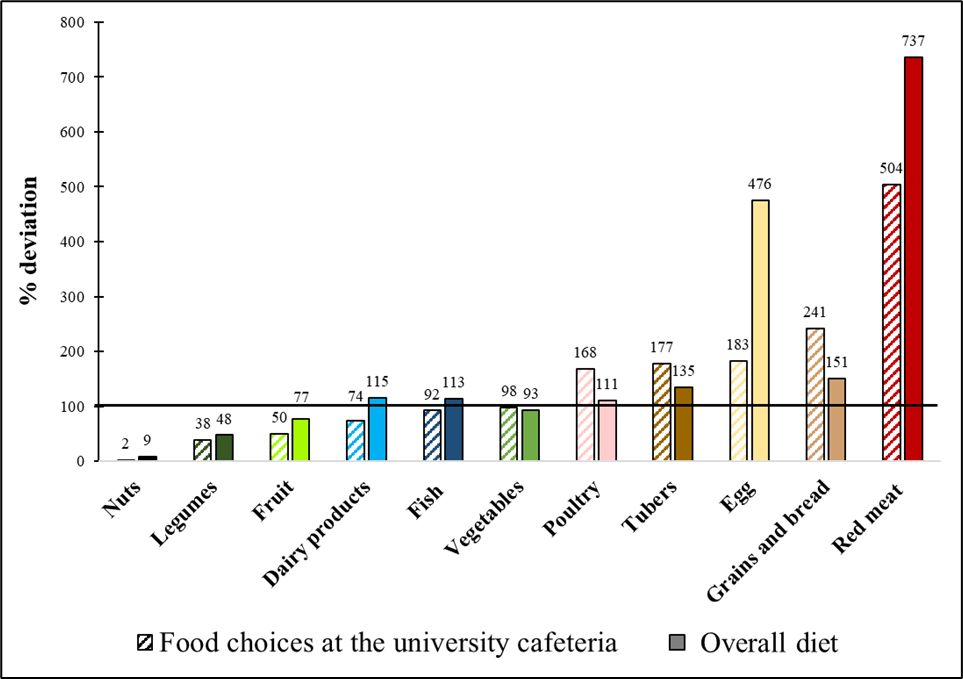
Figure 2 - Deviation of the food group content of 2000 kcal of food choices at the university cafeteria and overall diets from the recommendations of the EAT Lancet, among a sample of French students (N=253)
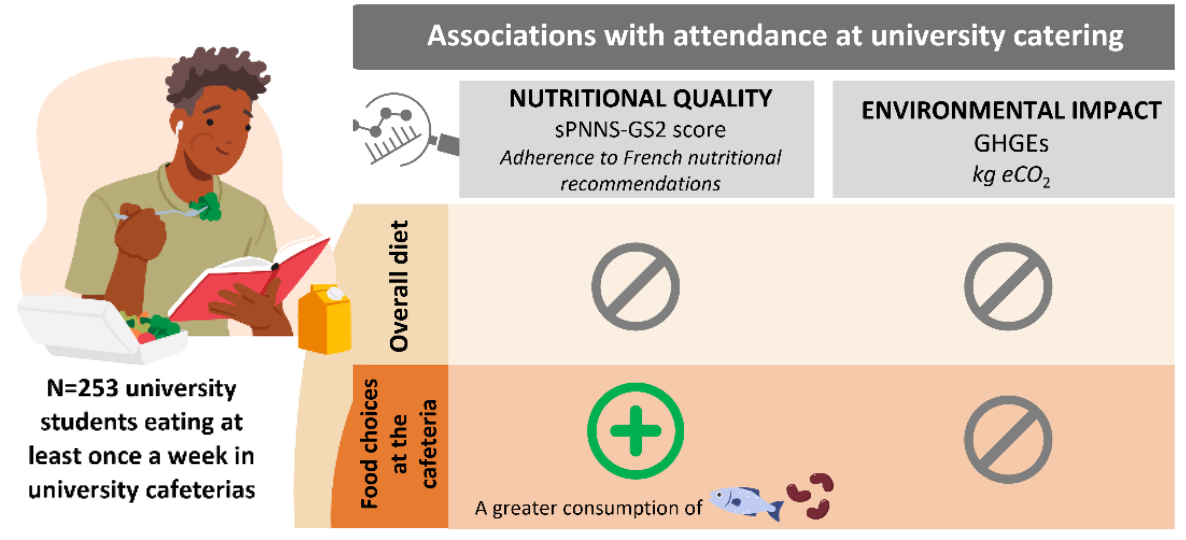
University students who had a more frequent attendance at university catering made healthier food choices in this setting there but no association was found with the environmental impact (Table 3). These healthier choice patterns are notably linked to higher consumption of legumes and fish and a tendency to eat more vegetables and fruit at the university cafeteria. However, attendance at university catering was not associated with the nutritional quality or environmental impact of students’ overall diets, although it was associated with a lower consumption of sugary foods and a tendency to eat more vegetables.
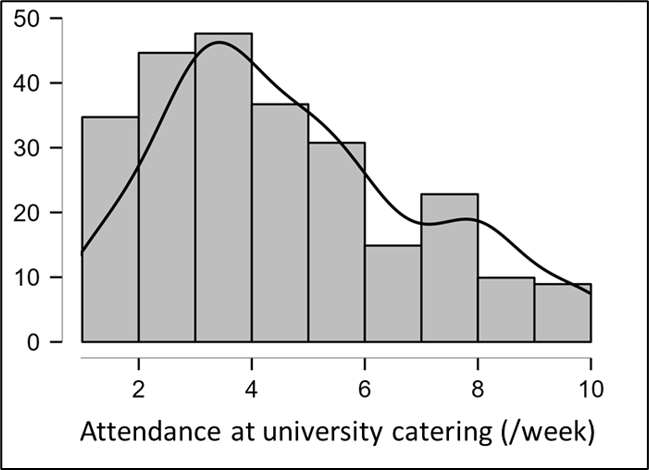
Figure 3 - Number of students based on their attendance at university catering in number of times per week (lunch and dinner) among a sample of French students (N=253). For the 17 participants who did not complete the feedback questionnaire, anticipated attendance at university catering measured in the initial online questionnaire was used.
Table 3 - Associations between attendance at university catering and the nutritional quality, environmental impact and food group consumption for food choices at the university cafeteria and overall diets respectively, standardised for 2000 kcal, among a sample of French students (N=249)
| Food choices at the university cafeteria | Overall diet | ||||
β | SE | p-value | β | SE | p-value | |
Overall indicators | ||||||
Nutritional quality (sPNNS-GS2 score / 2000 kcal) | 0.15 | 0.07 | 0.027 | 0.09 | 0.07 | 0.222 |
Environmental impact (kg eCO2/ 2000 kcal) | 0.03 | 0.02 | 0.170 | 0.05 | 0.05 | 0.291 |
Food groups (g/ 2000 kcal) | ||||||
Grains and bread | -1.61 | 2.08 | 0.439 | 5.97 | 3.87 | 0.125 |
Tubers | -0.30 | 1.16 | 0.795 | 1.19 | 1.16 | 0.308 |
Legumes | 1.55 | 0.56 | 0.007 | 0.12 | 1.33 | 0.929 |
Vegetables | 6.12 | 3.70 | 0.099 | 8.53 | 4.38 | 0.053 |
Fruit | 4.63 | 2.47 | 0.062 | 1.21 | 3.41 | 0.723 |
Nuts | -0.01 | 0.02 | 0.790 | -0.08 | 0.16 | 0.627 |
Red meat | 0.66 | 1.04 | 0.522 | 0.76 | 1.73 | 0.660 |
Poultry | 0.53 | 0.87 | 0.546 | 0.37 | 0.92 | 0.685 |
Fish and sea food | 2.00 | 0.61 | 0.001 | 1.05 | 0.92 | 0.255 |
Egg | -0.34 | 0.60 | 0.567 | -0.81 | 1.73 | 0.640 |
Dairy products | 1.54 | 2.48 | 0.535 | 1.24 | 6.15 | 0.840 |
Cream-based desserts | -1.11 | 1.11 | 0.319 | 1.60 | 1.20 | 0.186 |
Sugary foods | -0.94 | 0.77 | 0.226 | -3.03 | 1.39 | 0.030 |
Models are adjusted for age, gender, scholarship status and living conditions. Due to missing gender data for 4 participants who did not identify as a woman nor man, a sample of 249 participants was considered in each linear regression model.
Discussion
University catering plays a crucial role in student nutrition, contributing to 33% of the daily energy intake in the studied sample. As a public service, it also has the potential to promote more sustainable food choices among students, aligning with its mission to support student well-being and academic success. In this study, we aimed to quantitatively assess the nutritional quality and environmental impact of food choices made in a university cafeteria by comparing them with students’ overall diets. Our analysis revealed that the nutritional quality of food choices at the university cafeteria was comparable to that of students’ overall diets, with both meeting approximately 65% of French nutritional recommendations. However, the environmental impact was lower in the cafeteria. Despite this, the food choices at the university cafeteria were still far from the EAT-Lancet reference diet, which was designed to operate within planetary boundaries (Willett et al., 2019). Specifically, while fish and vegetable consumption at university catering met EAT-Lancet recommendations, there was excessive intake of poultry, eggs, tubers, cereals, and especially red meat, alongside insufficient consumption of legumes, nuts, dairy products, and fruit. An increased attendance at university catering was not significantly associated with the nutritional quality or environmental impact of students’ overall diets; although the students attending the cafeteria more frequently chose more fish and legumes within this context.
This sample of French university students did not make healthier food choices when eating at university cafeterias compared to their own overall diets meaning that this university cafeteria context did not effectively promote healthy eating among students. Although the lower consumption of red meat and higher consumption of poultry play a positive role on nutritional quality of the diet, the lower consumption of fruits and dairy products play a negative role. However, we observed that the students made more environmentally-friendly food choices when eating at university cafeterias compared to their own overall diets, notably due to the lower consumption of red meat; although still five times higher than the recommended intake by the EAT-Lancet. In addition, the fact that no association was found between university cafeteria attendance and nutritional quality (despite a positive association with fish and legumes food choices) or environmental impact of students’ overall diets (despite overall lower GHGEs) indicates that these positive effects of university catering on student’s diets were compensated when eating elsewhere. Collectively, these results highlight margins of progress to promote healthier and more environmentally-friendly diets within the context of this university cafeteria. This may be achieved both through increasing the availability of healthier and more environmentally-friendly options such as legume-based dishes and through information campaigns within the university cafeteria to avoid compensatory effects (e.g., eating more meat at home).
The present study revealed that students’ food choices at university collective catering were misaligned with French nutritional guidelines and the EAT-Lancet reference diet. This finding is consistent with results from a study conducted in an Italian university cafeteria, where only 11% of students adhered to a health-conscious eating pattern, with unhealthy foods such as meat, fried items, and pies being common on students’ trays (Lorenzoni et al., 2021). Moreover, the margins of progress regarding nutritional quality and environmental impact observed in food choices at the university cafeteria were reflected in students’ overall diets, echoing findings from previous research on the dietary habits of French students (Arrazat et al., 2023). Interestingly, although still suboptimal, meals chosen in university settings tended to have a lower environmental impact compared to students’ overall diets, notably due to lower consumption of red meat in this context (-32%) which is the food group with the highest GHGEs per kg based on life cycle assessment (Clark et al., 2019). The lower proportion of red meat in food choices made at the university cafeteria is somewhat surprising, as various studies suggest that meat consumption is generally higher when eating out of home. For instance, research on Albanian students found that meals consumed away from home contained more meat than those eaten at home (Llanaj et al., 2018). In France, the high meat consumption among younger generations is often attributed to fast foods like sandwiches and ready-to-eat meals, implying that most meat consumption occurs outside of home (Crédoc, 2018). This difference compared to existing literature may be explained by the fact that this university cafeteria recently increased the offer of vegetarian dishes, with 31% of students’ dishes selection being vegetarian (Arrazat et al., 2025b). It has indeed been shown that increasing the availability of vegetarian dishes within the context of university catering increased vegetarian dishes selection without altering students’ satisfaction and liking (Arrazat et al., 2024).
The analysis of the relationship between attendance at university catering and the nutritional quality and environmental impact of students’ diets provides deeper insights into the influence of a repeated exposure to a specific food environment on food choice behaviours . Studies from Anglo-Saxon countries have shown that students who frequently eat on university campuses tend to have diets of poorer nutritional quality mainly due to the particularly low quality of the food offer (Pelletier & Laska, 2013; Roy et al., 2017; Whatnall et al., 2021). In contrast to the findings from abroad, we did not observe any associations between attendance at university catering and either poorer nutritional quality nor higher environmental impact of students’ overall diet which may be attributed to a more diverse food offer in French collective catering. However, these findings do not align with the 2005-2006 study conducted in southern France showing that regularly attending university cafeterias was associated with higher consumption of fruits, vegetables, meat, and fish overall (Guagliardo et al., 2011). We did find an increase in fish intake among the students who more frequently attend the cafeteria but only when considering food choices within the context of university catering.
The positive relationship between attendance at university catering and the nutritional quality of food choices made in this context is noteworthy, and has never been documented before. In our study, this positive association was primarily linked to an increased consumption of fish and legumes. These items are served infrequently in the university cafeteria studied, so students who attend university catering more frequently may have simply had more opportunities to select these healthier options during the three-month data collection period. Another possible explanation may be that students who visit the cafeteria frequently view their choices as part of their daily routine rather than a special occasion, leading to more balanced food choice decisions and looking for variety within the available offer. In contrast, less frequent visitors may view eating at the university cafeteria as an opportunity to indulge, with a pizza or a burger. This behaviour would be consistent with existing literature on commercial dining, where meals selected when eating out are often of lower nutritional quality than home-cooked meals, due in part to the increased pleasure-seeking motivation when dining out (Baur et al., 2022; Claessens et al., 2023).
Finally, it is important to acknowledge the strengths and limitations of this study. A key strength lies in the joint analysis of dietary consumption at both the overall dietary level and within the specific context of university catering. Another key strength is the recording of actual meal trays in a university cafeteria of Dijon, allowing the analysis of actual food choices using repeated data collected over a three-month period. However, a limitation of these measures is that the data on food choices were not systematically recorded at the cash registers but instead captured through an ad hoc tray-scanning device. This means that students might have forgotten to take a picture of some of their meal trays or deliberately avoided doing so to hide their choices on a given day. As a result, our findings may be subject to some social desirability bias. Additionally, dietary data were collected using a FFQ, which did not allow us to determine whether the reported dietary intake came from meals at the university cafeteria or elsewhere, limiting our ability to analyse the university cafeteria’s contribution to students’ overall diet. Regarding participant recruitment, a notable strength is the use of quota-based sampling, which ensured a diverse range of profiles in our final sample. Finally, it is important to note that the study was conducted in a single university cafeteria in Dijon and on a cohort of limited size (253 students). Despite the quota-based recruitment method, this raises questions about the generalizability of the results to the broader population of students in Dijon and to other contexts – particularly in university cafeterias where the quality of the food offer might be different from the one studied.
University catering largely contribute to student nutrition but its full potential in shaping healthy and sustainable eating habits among students has yet to be realised. To unleash this potential, researchers could play a role in accompanying the implementation of a food offer that is nutritionally adequate for young adults, environmentally friendly and acceptable culturally and economically. For instance, future research should aim to investigate the effect of an improvement in the food offer on students’ food choices across different universities and considering potential compensatory effects when eating elsewhere. For future research, the food consumption measures could be improved by dissociating what is consumed within university catering and in other contexts (at home, family home, restaurants, take-aways, etc.) and by capturing actual food consumption in those contexts (e.g., photography-based dietary assessments).
Conclusion
The present findings provide critical insights into whether university catering can serve as an opportunity for students to adopt nutritionally balanced and environmentally sustainable diets. The analysis revealed that food choices in the university cafeteria significantly deviated from the EAT-Lancet reference diet, with an overconsumption of poultry, eggs, and red meat, and a lack of legumes, nuts, dairy, and fruit. However, students who frequently ate at the university cafeteria tended to make healthier choices within that setting, particularly by consuming more legumes and fish. Despite this positive trend within the cafeteria, no overall improvement in the nutritional quality of students’ diets was observed suggesting compensation in other contexts. These findings suggest that while university catering holds potential as a place for promoting healthier and more sustainable eating habits on university campuses, it is not yet fully realised, probably due to both the structure of the food offer and students’ motivations when eating there. We recommend that as public institutions French university cafeterias better align their food offer with the EAT-Lancet reference diet, notably by increasing the availability of nuts, legumes, and fruit, and by reducing the availability of red meat and poultry. While the food offer at university catering is changing, we also recommend that universities develop sustainable eating promotional campaigns targeting university students’ food literacy to avoid compensatory effects when eating elsewhere.
Acknowledgements
The authors would like to thank Emilie Szleper and Valérie Feyen for their help with participant recruitment. We also thank the members of the Crous Bourgogne-Franche-Comté, especially Fernando Monteiro and Céline Cunin, for their help during the recruitment and installation of the meal tray scanning terminals. We thank Lucile Bois and Thierry Fragnet for their help in the creation of the feedback questionnaire. We would like to thank Audrey Lemart who helped in the manual annotation of the meal tray pictures. Finally, we would like to thank Michel Tavan and the company Yumain (https://www.yumain.fr/) who created the meal tray scanning terminals. Preprint version 3 of this article has been peer-reviewed and recommended by Peer Community In Nutrition (https://doi.org/10.24072/pci.nutrition.100001; Fernandez, 2025).
Ethical statement
The study was approved by the ethical evaluation committee for research of INSERM (reference: n°23–976 bis, issued on September 12th, 2023). The Data Protection Officer from CNRS ensured compliance of the data collection procedure with the European General Data Protection Regulation (registration number: 2–23006). All participants were informed that the purpose of the study was to investigate students’ eating habits at the university cafeteria. Information was given orally and via a written information sheet. Participants gave written informed consent before participating in the study. They were able to withdraw from the study at any time without giving a reason. They were financially compensated for their participation in the amount of €30 maximum.
Author contributions
LA: conceptualization, investigation, data curation, formal analysis, writing – original draft; FT: conceptualization, investigation, data curation, writing – review and editing; SN: funding acquisition, conceptualization, investigation, writing – review and editing; LM: conceptualization, investigation, writing – review and editing. All the authors read and approved the final manuscript.
Funding
This research was funded by grants from the Dijon Municipality (in the frame of the “Dijon Alimentation Durable 2030” initiative), from the Caisse des dépôts (“Territoires d’innovation” funding scheme), the Regional Council of Bourgogne-Franche-Comté and the AlimH scientific division/SYALSA metaprogramme of INRAE (PhD fellowship to L.A.). Funders had no role in the design, analysis or writing of this article.
Conflict of Interest
The authors declare that they comply with the PCI rule of having no financial conflicts of interest in relation to the content of the article.
Trial registration
The study protocol was preregistered prior to data collection (https://doi.org/10.17605/OSF.IO/37TFM; Arrazat et al., 2025a)
Data, scripts, code, and supplementary information availability
Data and statistical scripts are available on OSF repository (https://doi.org/10.17605/OSF.IO/37TFM; Arrazat et al., 2025a)