
Section: Ecology
Topic:
Ecology
Population size estimation when multiple samples carrying the risk of misidentification are taken within the same capture occasion from the same individual

Corresponding author(s): Fraysse, Remi (rem.fraysse@gmail.com)
10.24072/pcjournal.711 - Peer Community Journal, Volume 6 (2026), article no. e41
Get full text PDF Peer reviewed and recommended by PCI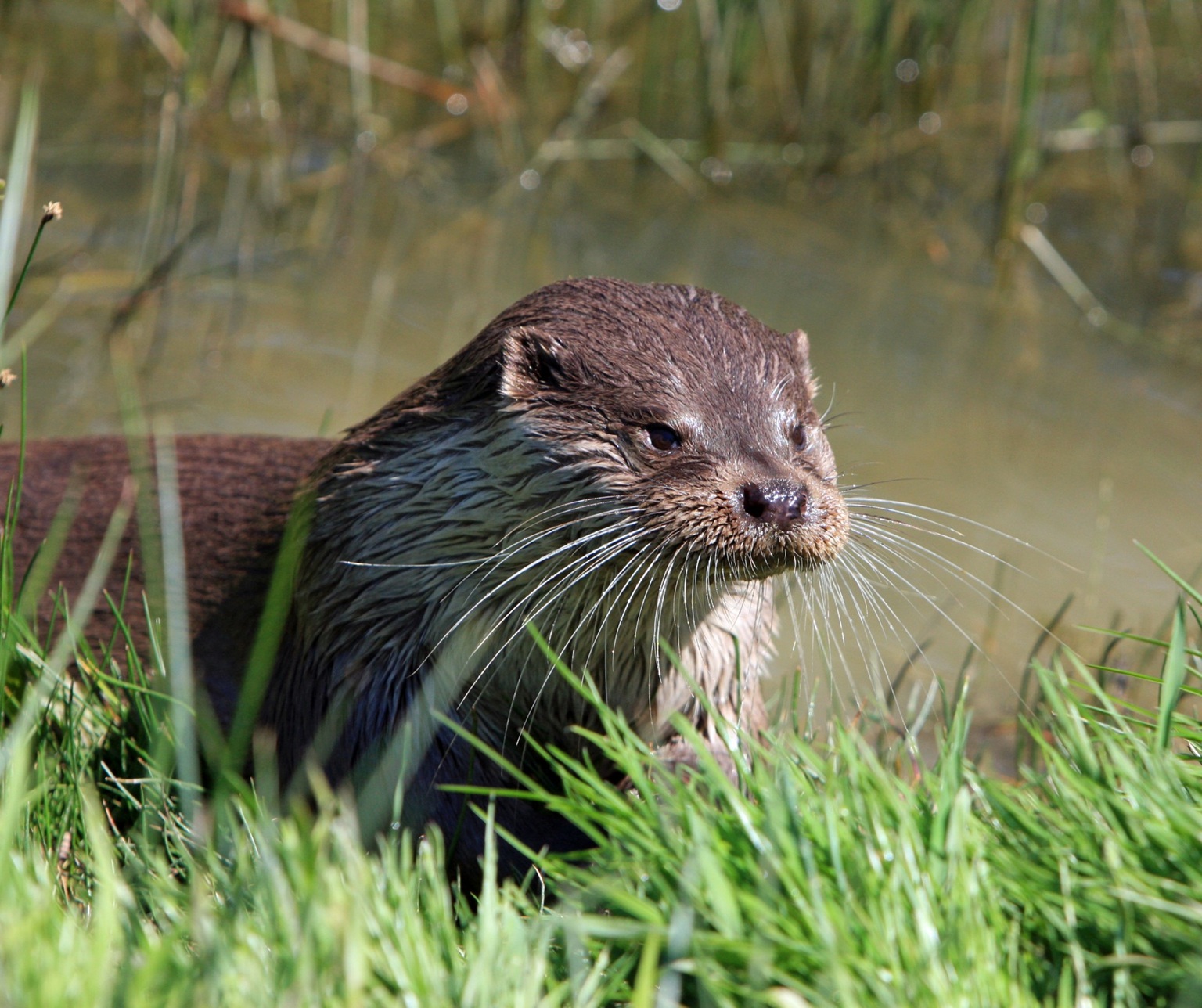
Although non-invasive sampling is increasingly used in capture-recapture (CR) monitoring, it carries a risk of misidentification that, if ignored, causes an overestimation of population size. Models that deal with misidentification have been proposed. However, these models assume that only one sample can be collected per individual at one occasion. This is not true for several monitoring programs based on DNA, for example for those that extract the DNA from faecal samples. The models do not take repeated observations into account, leading to biased estimates. In this paper, we develop an approach that extends the latent multinomial model (LMM) of Link et al. (2010) using a Poisson distribution to model the number of samplings of the same individual on a given occasion. We then conduct simulations to test how our new model performs. As an illustration, we applied the new Poisson model to a collection of Eurasian otter faeces (Lampa et al., 2015). Our model yields unbiased estimates of population size when the expected number of samples per individual ($\lambda$) is sufficiently high: simulations with $\lambda \geq 0.36$ and five capture occasions or with $\lambda \geq 0.23$ and seven or more occasions. In contrast, when $\lambda = 0.11$ (corresponding to about 42%, 53% and 62% of the individuals being detected with respectively 5, 7 and 9 occasions), the population size is consistently underestimated. Applying the model to the otter dataset confirms the presence of misidentifications, consistent with the authors’ expectations. Our findings indicate that repeated observations can be modelled without bias. The application on otters shows that our model is necessary to accurately estimate population size in presence of misidentification and repeated observations.
Type: Research article
Fraysse, Remi 1 ; Choquet, Remi 1 ; Pradel, Roger 1
 CC-BY 4.0
Fraysse, R.; Choquet, R.; Pradel, R. Population size estimation when multiple samples carrying the risk of misidentification are taken within the same capture occasion from the same individual. Peer Community Journal, Volume 6 (2026), article no. e41. https://doi.org/10.24072/pcjournal.711
@article{10_24072_pcjournal_711,
     author = {Fraysse, Remi and Choquet, Remi and Pradel, Roger},
     title = {Population size estimation when multiple samples carrying the risk of misidentification are taken within~the same capture occasion from the same individual
},
     journal = {Peer Community Journal},
     eid = {e41},
     year = {2026},
     publisher = {Peer Community In},
     volume = {6},
     doi = {10.24072/pcjournal.711},
     language = {en},
     url = {https://peercommunityjournal.org/articles/10.24072/pcjournal.711/}
}
TY  - JOUR
AU  - Fraysse, Remi
AU  - Choquet, Remi
AU  - Pradel, Roger
TI  - Population size estimation when multiple samples carrying the risk of misidentification are taken within the same capture occasion from the same individual

JO  - Peer Community Journal
PY  - 2026
VL  - 6
PB  - Peer Community In
UR  - https://peercommunityjournal.org/articles/10.24072/pcjournal.711/
DO  - 10.24072/pcjournal.711
LA  - en
ID  - 10_24072_pcjournal_711
ER  -
%0 Journal Article
%A Fraysse, Remi
%A Choquet, Remi
%A Pradel, Roger
%T Population size estimation when multiple samples carrying the risk of misidentification are taken within the same capture occasion from the same individual

%J Peer Community Journal
%] e41
%D 2026
%V 6
%I Peer Community In
%U https://peercommunityjournal.org/articles/10.24072/pcjournal.711/
%R 10.24072/pcjournal.711
%G en
%F 10_24072_pcjournal_711
PCI peer reviews and recommendation, and links to data, scripts, code and supplementary information: 10.24072/pci.ecology.100744
Conflict of interest of the recommender and peer reviewers:
The recommender in charge of the evaluation of the article and the reviewers declared that they have no conflict of interest (as defined in the code of conduct of PCI) with the authors or with the content of the article.
[1] Extending the latent multinomial model with complex error processes and dynamic markov bases, The Annals of Applied Statistics, Volume 10 (2015) no. 1, pp. 246-263 | DOI
[2] Population size estimation in Yellowstone wolves with error-prone noninvasive microsatellite genotypes, Molecular Ecology, Volume 12 (2003) no. 7, pp. 2003-2009 | DOI
[3] The Multiple-recapture census: I. estimation of a closed population, Biometrika, Volume 45 (1958) no. 3/4, pp. 343-359 | DOI
[4] Programming With Models: Writing Statistical Algorithms for General Model Structures With NIMBLE, Journal of Computational and Graphical Statistics, Volume 26 (2017) no. 2, pp. 403-413 | DOI
[5] Estimating population size from non-invasive sampling: an improvement of models accounting for misidentification risk with repeated captures over the same occasion, Peer Community in Ecology, Volume 1 (2026), p. 100744 | DOI
[6] Noninvasive estimation of black bear abundance incorporating genotyping errors and harvested bear, The Journal of Wildlife Management, Volume 71 (2007) no. 8, pp. 2684-2693 | DOI
[7] Population size estimation when multiple samples carrying the risk of misidentification are taken within the same capture occasion from the same individual: Code, Zenodo, 2025 | DOI
[8] Population size estimation when multiple samples carrying the risk of misidentification are taken within the same capture occasion from the same individual, bioRxiv (2026) | DOI
[9] Otters: Ecology, behaviour and conservation, Oxford University Press, 2006 | DOI
[10] Nationwide abundance and distribution of African forest elephants across Gabon using non-invasive SNP genotyping, Global Ecology and Conservation, Volume 32 (2021), p. e01894 | DOI
[11] How to overcome genotyping errors in non-invasive genetic mark-recapture population size estimation—A review of available methods illustrated by a case study, The Journal of Wildlife Management, Volume 77 (2013) no. 8, pp. 1490-1511 | DOI
[12] Non-Invasive Genetic Mark-Recapture as a Means to Study Population Sizes and Marking Behaviour of the Elusive Eurasian Otter (Lutra lutra), PLOS ONE, Volume 10 (2015) no. 5, p. e0125684 | DOI
[13] Uncovering a latent multinomial: analysis of mark–recapture data with misidentification, Biometrics, Volume 66 (2010) no. 1, pp. 178-185 | DOI
[14] Estimating population size from DNA-based closed capture-recapture data incorporating genotyping error, The Journal of Wildlife Management, Volume 69 (2005) no. 1, pp. 396-403 | DOI
[15] Probit models for capture-recapture data subject to imperfect detection, individual heterogeneity and misidentification, arXiv, Volume 1401 (2014)
[16] dropout: a program to identify problem loci and samples for noninvasive genetic samples in a capture-mark-recapture framework, Molecular Ecology Notes, Volume 5 (2005) no. 3, pp. 716-718 | DOI
[17] Efficient single-survey estimation of carnivore density using fecal DNA and spatial capture-recapture: a bobcat case study, Population Ecology, Volume 60 (2018) no. 3, pp. 197-209 | DOI
[18] Statistical inference from capture data on closed animal populations, Wildlife Monographs, Volume 62 (1978) no. 62, pp. 3-135
[19] An empirical exploration of data quality in DNA-based population inventories, Molecular Ecology, Volume 12 (2003) no. 6, pp. 1375-1387 | DOI
[20] Estimating bobcat population sizes and densities in a fragmented urban landscape using noninvasive capture–recapture sampling, Journal of Mammalogy, Volume 90 (2009) no. 1, pp. 129-135 | DOI
[21] Connecting the latent multinomial, Biometrics, Volume 71 (2015) no. 4, pp. 1070-1080 | DOI
[22] Non-invasive genetic sampling and individual identification, Biological Journal of the Linnean Society, Volume 68 (1999) no. 1-2, pp. 41-55 | DOI
[23] Noninvasive genetic sampling: look before you leap, Trends in Ecology & Evolution, Volume 14 (1999) no. 8, pp. 323-327 | DOI
[24] Noninvasive genetic sampling tools for wildlife biologists: a review of applications and recommendations for accurate data collection, The Journal of Wildlife Management, Volume 69 (2005) no. 4, pp. 1419-1433 | DOI
[25] Program MARK: survival estimation from populations of marked animals, Bird Study, Volume 46 (1999) no. sup1, p. S120-S139 | DOI
[26] Estimating Sonoran pronghorn abundance and survival with fecal DNA and capture—recapture methods, Conservation Biology, Volume 30 (2016) no. 5, pp. 1102-1111 | DOI
[27] Incorporating genotype uncertainty into mark-recapture-type models for estimating abundance using DNA samples, Biometrics, Volume 65 (2009) no. 3, pp. 833-840 | DOI
[28] Modeling misidentification errors that result from use of genetic tags in capture–recapture studies, Environmental and Ecological Statistics, Volume 18 (2011), pp. 27-55 | DOI
Cited by Sources: