


 CC-BY 4.0
Introduction
Obesity has doubled over the past 30 years, reaching 16% of adults worldwide in 2022 (Phelps et al., 2024). It is associated with disordered eating behaviors (e.g., emotional eating or external eating) (Benbaibeche et al., 2023), or even established eating disorders (e.g., binge eating disorder) (Agüera et al., 2021). People living with obesity also seem to experience hedonic alterations with a greater liking for sweet and/or fatty foods than people with a normo-weighted body mass index (BMI) (Bartoshuk et al., 2006). Some individuals encounter sensory alterations, often reflected in a reduction in gustatory and/or olfactory performances (Peinado et al., 2023; Peng et al., 2019). Taste sensitivity to sweetness and fatty perception has been recently suggested as a potential mediator in the relationship between food choices and BMI (Abeywickrema et al., 2024), highlighting the key role of taste and smell perceptions in food choices in the context of obesity. Together, these findings suggest that obesity-related eating patterns should not be considered only through the quantity of food consumed, but also through the type of foods selected, the hedonic value attributed to food, sensory processing, and disordered eating behaviors.
In this context, gastric mechanical and nervous functions may represent an additional physiological level linking peripheral digestive processes to eating-related outcomes. As reviewed elsewhere, these functions play an important role in the regulation of food intake in obesity (Cifuentes et al., 2021). Gastric mechanical and nervous functions are interrelated and together enable gastric digestion of food. Mechanical functions include gastric accommodation, gastric emptying and gastric motility, being closely linked to a gastric nervous function, gastric electrical activity (Cifuentes et al., 2021). Obesity seems to be associated with altered gastric emptying, but conflicting results are opposing rapid and delayed gastric emptying in this population. A larger fasting gastric volume and a greater gastric capacity have also been reported with more consensual results (Cifuentes et al., 2021). The activity of the vagus nerve, which plays a major role in several gastric mechanical functions (e.g., gastric tone during fasting, postprandial gastric electrical activity, gastric emptying, satiation (Goyal et al., 2019), is indirectly measured through heart rate variability (Besson et al., 2020; Laborde et al., 2017), and shows a negative correlation with several anthropometric markers of obesity, such as BMI, body fat, or waist circumference (Strüven et al., 2021). These alterations could plausibly influence eating-related outcomes through several pathways, including changes in satiation, interoceptive signals, gastric-brain communication, and the reinforcing value of foods. Some reviews summarized the effect of mechanical gastric functions on food intake in terms of quantity (Camilleri, 2024; Cifuentes et al., 2021), but none explored food choices, food reward, sensory functions, or eating behavior.
Metabolic and bariatric surgery (MBS) provides a particularly relevant clinical model to examine these questions. As one of the most effective obesity treatments currently available, it involves modifying the digestive tract to reduce the amount of food consumed and/or absorbed, depending on the type of surgery (Lecerf et al., 2021). Interestingly, MBS not only does it lead to a reduction in the amount of food consumed but also to changes in food choices. Two systematic reviews (Guyot et al., 2021; Redpath et al., 2021) showed that patients who had MBS tended to consume more vegetables, poultry and unsweetened dairy products after the surgery at the expense of fatty and sugary foods (Guyot et al., 2021), at least during the first year after surgery (Redpath et al., 2021). These changes in food choices could be linked to alterations in food reward and sensory perceptions, as MBS appears to diminish the liking for fatty and/or sugary foods (Aukan et al., 2022; Nielsen et al., 2019), and improve gustatory and olfactory functions in some patients postoperatively (Peinado et al., 2023; Shoar et al., 2019; Ahmed et al., 2018). Beyond these dietetic, hedonic and sensory considerations, eating behavior is also modified via an increase in restrictive eating behavior and a decrease in eating disinhibition (Legendre et al., 2024; Hubert et al., 2019), and reduced binge eating behavior, even though it re-increases over time following MBS (Aylward et al., 2022). The mechanisms underlying these post-MBS dietary, hedonic, sensory, and behavioral changes remain incompletely understood.
To date, research has mainly focused on postoperative changes in gastrointestinal hormones and their potential effects on food choices and taste functions. For instance, gastrointestinal hormones such as GLP-1 may bind to taste receptors and influence food palatability and macronutrient intake (Loper et al., 2015) through the gut-brain axis (Guerrero-Hreins et al., 2022). In contrast, the mechanical and nervous gastric modulation of food choices, food reward, sensory functions and eating behavior has received very little attention. Yet, MBS impacts these mechanisms, as Sleeve Gastrectomy (SG) and Roux-en-Y gastric bypass (RYGB), the two most common types of surgery performed worldwide (Welbourn et al., 2019), induce a reduction in gastric volume and are accompanied by an acceleration of gastric emptying (Steenackers et al., 2021). Postoperative restructurings in vagal structure have been observed in murine models after SG and RYGB (Stefanidis & Oldfield, 2017). Assuming that these nerve restructurings also occur in humans, we can hypothesize that the post-operative increase in heart rate variability (Benjamim et al., 2021), may be partly associated with the increased satiety after MBS (Miras & Le Roux, 2013). However, the impact of mechanical and nervous gastric modifications after MBS remains to be studied in humans. Therefore, we propose to explore the potential associations between gastric functions and food choices, food reward, gustatory and olfactory functions, and eating behavior in obesity, and following MBS.
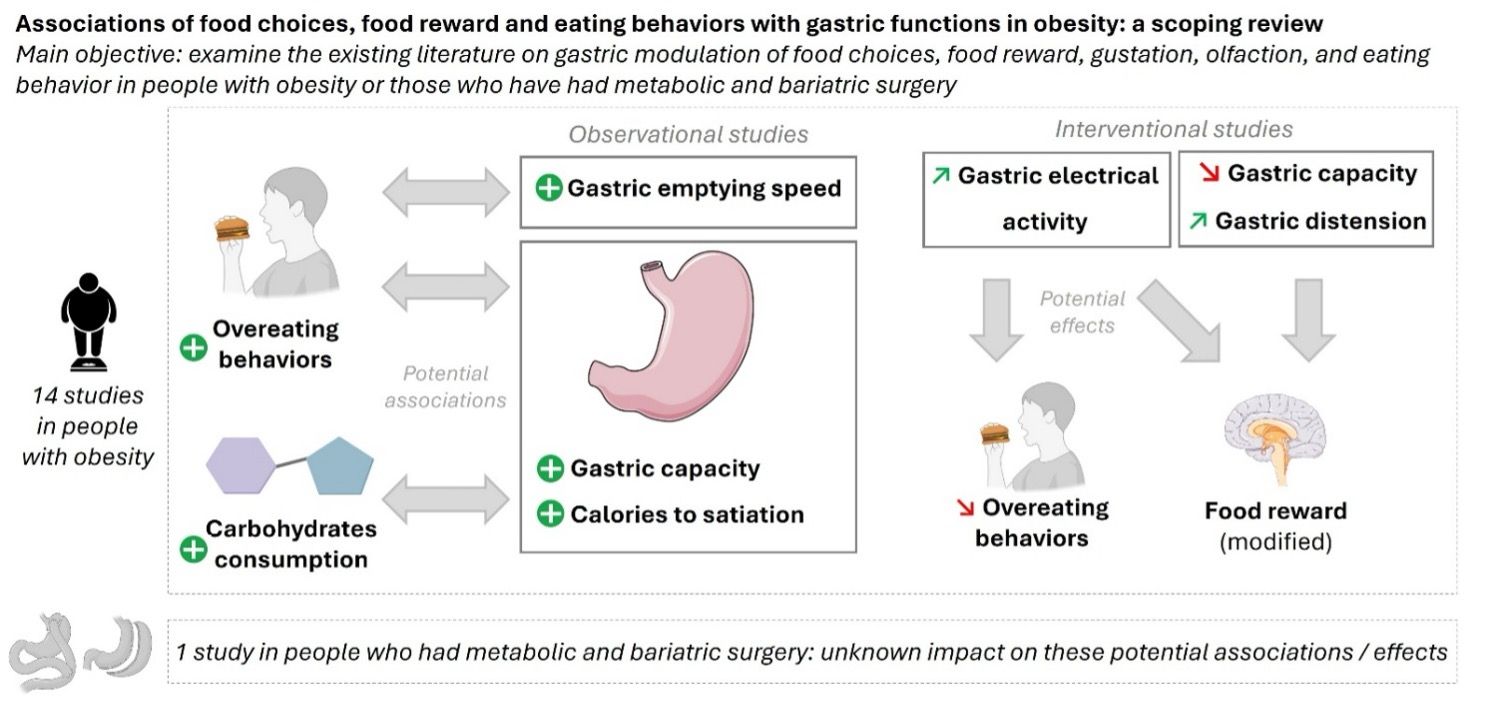
The primary objective of this scoping review is to systematically examine the existing literature on gastric modulation of food choices, food reward, gustatory and olfactory functions and eating behavior in people with obesity or those who have had MBS. Specifically, it examines i) the modulation related to gastric mechanical functions (e.g. capacity, accommodation, motility, emptying); and ii) the modulation related to gastric innervation (e.g. gastric electrical activity, gastric tone). A secondary aim of this review is to determine whether MBS can have an impact on these mechanisms.
Methods
Review protocol
The proposed scoping review was conducted in accordance with the Preferred Reporting Items for Systematic Reviews and Meta-Analyses extension for Scoping Reviews (PRISMA-ScR) guidelines (Tricco et al., 2018). PRISMA-ScR was selected because the objective of the review was to map a heterogeneous and emerging body of evidence, clarify how key concepts have been studied together, and identify knowledge gaps rather than estimate a pooled effect size. This scoping review project’s protocol was first registered on The Open Science Framework website on 2023/09/18 and is available at https://osf.io/mdx9t/. The protocol specified the population-concept-context framework, the search strategy, eligibility criteria, and screening and extraction procedures.
Search strategy
A three-stage research strategy was developed. First, the research team identified a series of terms that could be used to launch the initial search in PubMed. The original search was conducted on 2023/08/30 and updated on 2024/09/05. Using data mining software (PubReMiner v1.31), an analysis of the words contained in the titles and abstracts of the articles, as well as the indexing terms, was conducted. The final search strategy was formulated according to the PCC elements: population, concepts, and context (Table S1). These terms were selected to capture three conceptual blocks. The target population was people living with obesity (BMI ≥ 30 kg.m-2) and people who had MBS (e.g., Obesity OR Bariatric Surgery OR Sleeve Gastrectomy OR Roux-en-Y Bypass). The concepts of interest were food choices, food reward, sensory functions and eating behavior (e.g., Food Choices OR Food Preferences OR Food Reward OR Liking OR Wanting OR Olfact* OR Taste OR Gustat* OR Eating Behavior). The context focused on gastric-related terms (Gastr* OR Stomach OR Gastric Distension OR Gastric Emptying).
During the second step, the final search strategy was adapted and performed in the following databases: Medline (Ovid), Embase, (Embase.com), CINAHL (EBSCO), PsycInfo (Ovid) and Web of Science. In addition, Google Scholar search engine and Hal Documentation (https://hal.science/) were searched to retrieve grey literature. No restrictions were applied to ensure that no relevant sources were missed. All languages were included to reduce the risk of missing relevant sources. Languages other than English were translated through Google Translate.
Finally, reference lists of all included articles were screened to identify additional relevant articles. If key authors publishing on the review topics were identified, a specific search was conducted on these authors.
Study eligibility criteria
This scoping review included studies that explored the modulation or control of food choices, food reward, sensory functions and eating behavior by the stomach in its mechanical and nervous aspects, whether these concepts were studied together or separately in studies. Only studies in humans were considered. Participants of any age were eligible a priori to avoid excluding potentially relevant studies in children or adolescents, since age-related differences in eating behavior, hormonal regulation, and gastric physiology could have been informative for mapping the field. However, as reported in the Results section, all included studies were ultimately conducted in adult populations. Eligible populations included participants with obesity (BMI ≥ 30 kg.m-2) and participants who underwent MBS.
We considered peer-reviewed quantitative, qualitative, and mixed methods study designs and relevant grey literature if it met the inclusion criteria. Observational studies, including prospective and retrospective cohort studies, case-control studies and cross-sectional studies, were considered for inclusion, as well as controlled experiments. Interventional studies on gastric mechanical or nervous functions were considered. Interventional studies investigating the effect of a nutritional intervention (whether acute with a test meal or chronic with dietary modifications) on gastric function were not considered, as these interventions are not a measure of participants' food choices per se.
This scoping review included studies conducted in all countries and territories. The review excluded study protocols, opinion articles, letters to the editor, book chapters, oral or poster abstracts, and systematic reviews. Systematic reviews were excluded because the objective was to map primary studies in which gastric-related and food-related outcomes were measured concomitantly; however, relevant reviews were used to contextualize the background and, when appropriate, to check reference lists for additional primary studies.
Study Selection
Following the search, all identified citations were collated and uploaded into EndNote 20.0 (Clarivate Analytics, PA, USA), and duplicates were removed using Covidence. The remaining studies were analyzed using a two-stage procedure with the AS Review Lab v1.2.1 python package (Van De Schoot et al., 2021).
In the first stage, screening was conducted independently on titles and abstracts by two coders (NR and CB) with an AI-assistant tool, AS Review, which adopted the Natural Language Processing technique (Van De Schoot et al., 2021). A coder could end the screening if AS Review yielded 1% of the total number of abstracts continuously as irrelevant abstracts (with a minimum of 10% of total abstracts screened). The first round of screening used default as Review parameters (i.e., Term Frequency-Inverse Document Frequency as a feature extraction technique and Naive Bayes as a classifier) and each reviewer used a different set of records as prior knowledge. The consistency of the two coders’ decisions had to exceed 75% (Aromataris et al., 2024). As the best active learning criterion remains controversial, we provided a more heuristic approach by using a ‘switching strategy’. To do so, a third reviewer (SI) proceeded to a new screening round using a more advanced and intense computational active learning model (Doc2Vec as a feature extraction technique and the fully connected neural network with 2 hidden layers as a classifier). The 20 relevant and 20 irrelevant abstracts were labeled in the first screening round as the prior knowledge set. The same stopping criterion was used.
The second stage focused on the full-text screening and was conducted on Covidence by two reviewers (NR and SI). Inclusive/exclusive decisions in the pilot stage of two coders were compared until a 90% agreement rate was obtained. Any disagreements that arose between the reviewers at each stage of the selection process were resolved through discussion or with an additional reviewer (AD or JAN experts in obesity and food reward).
Data extraction and analysis
Data were extracted from papers included in the scoping review by one reviewer (NR) using Covidence as a data extraction tool, and the validity of the extraction was checked by 3 independent reviewers (SI, JAN, AD). Any disagreements between the reviewers were resolved through discussion between the four reviewers. The data extracted included specific details about the participants, concept, context, and study methods. Food-related outcomes (i.e., food choices, food reward, gustatory and olfactory functions, eating disorders) and gastric-related outcomes (i.e., gastric capacity and accommodation, gastric tone and vagal activity, satiation, gastric motility and postprandial electrical activity, gastric emptying) are defined in the supplemental material (Table S2). In accordance with guidance for the development of scoping reviews, no quality assessment was performed (Peters et al., 2022).
Results
Literature search and selection
The search strategy identified 8029 publication records after deduplication. After two successive screening phases based on titles and abstracts, then on full texts, 15 studies were included in the review (Figure 1). The very small final yield highlights the fragmentation of the evidence base and the rarity of studies that concurrently assess gastric-related outcomes and food-related outcomes in populations with obesity or after MBS.
Characteristics of Studies
The studies were published between 1997 and 2024 and conducted in different countries: 8 in the USA (Acosta et al., 2024; Gonzalez‐Izundegui et al., 2021; Vijayvargiya et al., 2020; Odunsi et al., 2010; Tomasi et al., 2009; Wang et al., 2006; Geliebter et al., 2004; Geliebter & Hashim, 2001); 5 in Europe, including Germany (Berthold et al., 2008), Italy (Albani et al., 2005), Greece (Papakostas et al., 2024), Sweden (Näslund et al., 1997), and Austria (Bohdjalian et al., 2006); 1 in China(Liu et al., 2009); 1 in Saudi Arabia (Abulmeaty et al., 2022). These articles comprise 8 observational studies, including 7 cross-sectional (Abulmeaty et al., 2022; Acosta et al., 2024; Geliebter et al., 2004; Geliebter & Hashim, 2001; Gonzalez‐Izundegui et al., 2021; Liu et al., 2009; Vijayvargiya et al., 2020) and 1 prospective longitudinal (Näslund et al., 1997) and 7 interventional studies, including 3 single-session (Berthold et al., 2008; Tomasi et al., 2009; Wang et al., 2006) and 4 longitudinal (Albani et al., 2005; Bohdjalian et al., 2006; Odunsi et al., 2010; Papakostas et al., 2024). The interventional studies included 2 randomized controlled trials (Berthold et al., 2008; Odunsi et al., 2010), 1 of which was a cross-over study (Berthold et al., 2008). It should be noted that 1 study (Papakostas et al., 2024) was a secondary analysis of a previous interventional study (Kotzampassi et al., 2012). Almost all the studies were carried out in a population living with obesity, while only one study involved a population that had MBS, a jejuno-ileal bypass (Table S3) (Näslund et al., 1997).
Among the gastric interventions performed in the selected studies were 2 studies with implantable gastric stimulators (Bohdjalian et al., 2006; Wang et al., 2006). These implantable gastric stimulators, which require surgery for implantation, are considered reversible MBS that do not alter the structure of the digestive tract. One implantable gastric stimulator involves continuous stimulation (worn for 1-2 years at the time of the study) (Wang et al., 2006), while the other uses intermittent stimulation to amplify existing gastric waves (worn for 1 year starting from the start of the study) (Bohdjalian et al., 2006). Other interventions included single-dose cellulose capsules (Berthold et al., 2008), 10 days of cellulose + alginate capsules (Odunsi et al., 2010), an injection of botulinum toxin into the gastric wall with a 4-month follow-up (Albani et al., 2005), and an intragastric balloon worn twice for 30 seconds (Tomasi et al., 2009), or for 6 months before removal (Papakostas et al., 2024).
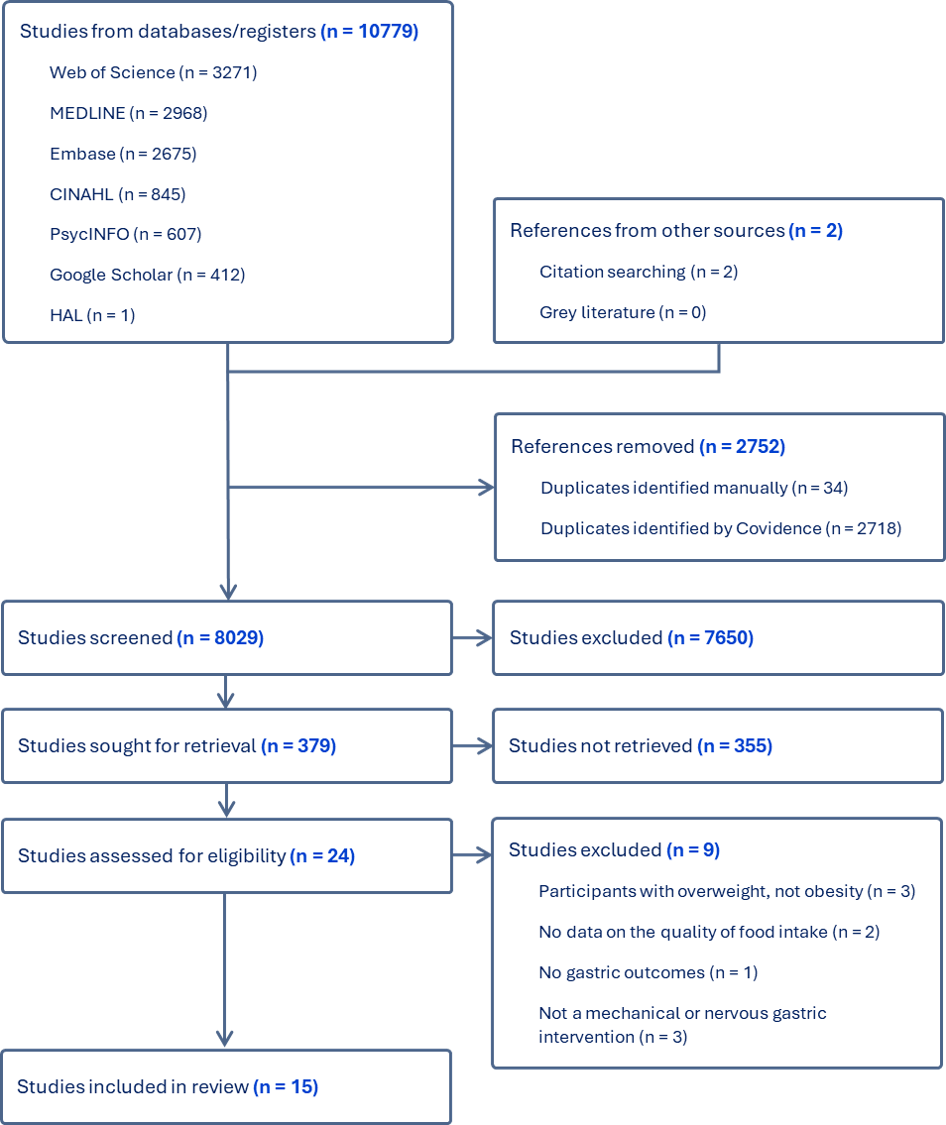
Figure 1- PRISMA-ScR flow diagram of the studies screened for the scoping review
Participants’ characteristics
The participants’ characteristics for each included study are summarized in Table 1. All these trials were conducted in adult populations, with mean ages ranging from 25.8 (Geliebter & Hashim, 2001) to 54.7 years old (Berthold et al., 2008). The biological sex of participants was systematically reported, with the majority being women in 10 of the 15 studies and only women in 2 studies (Geliebter et al., 2004; Geliebter & Hashim, 2001). The presence of diabetic patients is not systematically reported, with 4 studies failing to mention it in their population description or study inclusion criteria (Gonzalez‐Izundegui et al., 2021; Liu et al., 2009; Odunsi et al., 2010; Papakostas et al., 2024). Of the studies that did mention it, only 1 did not include it as an exclusion criterion, and it accounted for 6% of patients with diabetes (Acosta et al., 2024). The definition of obesity is systematically based on BMI, which is reported in all studies. Other anthropometric parameters are less often mentioned, such as weight, total body fat, waist circumference, and waist/hip ratio (Table S3).
Study methodologies to assess food-related outcomes
The selected trials showed considerable diversity in the food-related outcomes studied (Table S4; Table S5). With regard to food choices, only 1 study observed food choices in terms of food types, using a food frequency questionnaire (Papakostas et al., 2024). The other 6 studies that measured food choices only reported macronutrient intakes via a 7-day food diary (Albani et al., 2005; Näslund et al., 1997), 24-hour recalls,(Abulmeaty et al., 2022) or a standardized ad-libitum buffet (Gonzalez‐Izundegui et al., 2021; Odunsi et al., 2010; Vijayvargiya et al., 2020).
Food reward in terms of wanting was observed in 2 studies using different methods: one used food preference questionnaires (Näslund et al., 1997), and one used visual analogue scale measurements for a desire to eat fatty, sweet, salty, or savory foods (Berthold et al., 2008). In connection with this topic, 2 studies looked at cerebral activity in areas dedicated to reward (Tomasi et al., 2009; Wang et al., 2006).
There was no study which explored concomitantly gustatory and/or olfactory functions and gastric functions in a population with obesity or after MBS.
Finally, half of the selected studies addressed the question of eating behavior: several types of disordered eating behaviors, mainly leading to overeating, were measured using validated questionnaires (Acosta et al., 2024; Bohdjalian et al., 2006; Vijayvargiya et al., 2020; Wang et al., 2006), (i.e., Three-Factor Eating Questionnaire – 51 items (Stunkard & Messick, 1985), Three-Factor Eating Questionnaire – Reduced 21 items (Tholin et al., 2005), Weight Life Efficacy Questionnaire (Clark et al., 1991)). Binge eating disorder, the only eating disorder observed in the selected studies, was assessed through interviews with medical doctors only (Geliebter et al., 2004), through interviews with medical doctors and a validated questionnaire (Questionnaire on Eating and Weight Patterns (ZelitchYanovski, 1993)) (Geliebter & Hashim, 2001), or using an unspecified method (Liu et al., 2009).
Study methodologies to assess gastric-related outcomes
The gastric mechanical and nervous functions studied are just as diverse as the food-related outcomes (Table S4; Table S5). Fasting and postprandial gastric volumes were observed in 3 studies, all of which used single photon emission computed tomography imaging (SPECT) on an empty stomach and after a liquid meal (Acosta et al., 2024; Odunsi et al., 2010; Vijayvargiya et al., 2020). Among them, 2 studies deduced gastric accommodation by subtracting fasting gastric volume from postprandial volume (Odunsi et al., 2010; Vijayvargiya et al., 2020). Also, 2 studies observed gastric capacity and gastric accommodation via an intragastric inflatable balloon filled with water (Geliebter et al., 2004; Geliebter & Hashim, 2001), and 1 study observed the gastric capacity by drinking water (Abulmeaty et al., 2022).
Satiation, measured via food volume to achieve comfortable gastric fullness, was studied once using solid food (Acosta et al., 2024), and once using a liquid meal (Vijayvargiya et al., 2020). Maximum satiation, judged to be uncomfortable, measured via food volume to achieve maximum stomach filling, was studied twice with a liquid meal (Odunsi et al., 2010; Vijayvargiya et al., 2020).
Gastric electrical activity was explored in 2 studies using an implantable gastric stimulator (Bohdjalian et al., 2006), or via electrogastrography (EGG) (Abulmeaty et al., 2022).
Table 1 - Characteristics of participants of the studies included in the review
Study | Population description | N | ♀ (%) | Age (years) | BMI (kg.m-2) | Weight (kg) | Weight loss after intervention (if any) |
|---|---|---|---|---|---|---|---|
Adults with class I-III obesity | 717 | 75 | 41.1 ± 11.4 | 37.0 ± 7.1 | 105.6 ± 22.9 | - | |
Adults with class I-III obesity | 320 | 73 | 40.8 ± 11.8 | 44.3 ± 8.4 (Kotzampassi et al., 2012) | 127.7 ± 28.5 (Kotzampassi et al., 2012) | After intragastric balloon: 6 months, ∆ weight = -27.0 ± 7.0 6 months, ∆ BMI = -9.3 ± 2.0 | |
Adults with: - class III obesity - class I-II obesity - overweight - normal weight | 115 21 41 29 24 | 44a 24 41 41 71 | 29.9 ± 10.0a 34.9 ± 11.3 31.0 ± 10.7 29.1 ± 9.8 24.5 ± 7.4 | 32.2 ± 2.9a 44.1 ± 4.1 35.3 ± 3.4 27.7 ± 1.2 21.9 ± 1.9 | - | - | |
Adults with class I-III obesity: - female - male | 134 90 44 | 67a 100 0 | 39.0 ± 9.9a 38.6 ± 8.5b 39.8 ± 10.6b | 37.9 ± 5.8a 37.8 ± 5.7b 38.2 ± 5.8b | 110.2 ± 20.4a 103.9 ± 18.0b 123.1 ± 24.5b | - | |
Adults with class I-III obesity | 62 | 92 | 38.0 ± 10.1 | 36.8 ± 4.8 | - | - | |
Adults with class I-III obesity or overweight with: - cellulose capsules - placebo capsules | 48 25 23 | 56a 56 57 | 39.8 ± 12.1a 41.5 ± 12.5b 37.9 ± 11.5b | 31.1 ± 8.5a 31.8 ± 10.0 30.3 ± 6.7 | - | - | |
Adults with: - class I-III obesity + BE - class I-III obesity - normal weight | 114 42 32 40 | 48a 48 47 50 | 26.8 ± 8.2a 28.2 ± 9.3 29.1 ± 8.5 23.5 ± 5.2 | 28.3 ± 5.0a 31.6 ± 1.5 31.7 ± 1.6 22.1 ± 2.4 | - | - | |
Adults with: - obesity - overweight - normal weight | 24 5 8 11 | 17 NA NA NA | 32.2 ± 7.0 NA NA NA | 26.8 ± 5.8 NA NA NA | - | - | |
Adults with class I-III obesity or overweight | 19 | 63 | 54.7 ± 9.4 | 31.1 ± 4.6 | 90.0 ± 12.9 | - | |
Adults with class II-III obesity | 12 – 8 | 75 | 36.1 ± 2.8 | 43.2 ± 2.7 | 128.8 ± 5.2 | After implantable gastric stimulator installation: 12 months, weight = 112.4 ± 3.8 | |
Adults with class I-III obesity | 7 | 86 | 47.8 ± 6.3 | 40.7c | - | Before implantable gastric stimulator installation (1-2 years prior to the study): BMI = 46.0 ± 6.2 After implantable gastric stimulator (on the day of the study): ∆ BMI = -11.6 ± 7.7 % cCalculated average BMI = 46.0 – 11.6% = 40.7 | |
Adults with class II-III obesity | 8 | 50 | 46* (35-57)* | 47.1* (38.2-56.7)* | 125.8 ± 20.2a | After botulinum toxin intragastric injection: 1 month, weight = 121.6 ± 21.5 4 months, weight = 124.1 ± 15.5 | |
Adult women with: - class I-III obesity + BED - class I-III obesity + BE - obesity | 37 11 13 13 | 100a 100 100 100 | 30 ± 8a 29 ± 8 29 ± 7 32 ± 9 | 35.8 ± 5.5a 36.6 ± 6.2 35.8 ± 5.5 35.1 ± 5.3 | 95.4 ± 16.3a 97.8 ± 18.8 98.2 ± 15.7 90.6 ± 14.6 | - | |
Adult women with: - class I-III obesity - bulimia nervosa - normal weight | 31 11 10 10 | 100a 100 100 100 | 25.8 ± 5.6a 28.4 ± 4.8 24.6 ± 4.4 24.1 ± 7.2 | 29.0 ± 9.6a 40.3 ± 6.8 22.1 ± 3.1 23.6 ± 2.0 | 77.3 ± 24.6a 106.1 ± 16.3 57.8 ± 7.8 64.1 ± 6.0 | - | |
Adults with: - class III obesity + JIB - sex-matched control - age-matched control | 24 8 8 8 | 62a 62 62 ? | 38.5 ± 12.4 38.5 ± 12.4 37.8 ± 8.3 40.6 ± 6.6 | 28.9 ± 10.5a 42.9 ± 4.0 21.3 ± 2.0 22.4 ± 1.4 | ? 127.2 ± 8.2 ? ? | After jejuno-ileal bypass (JIB): 9 months, weight = 90.5 ± 11.7 9 months, BMI = 30.4 ± 3.7 |
Data presented as mean ± SD, unless otherwise specified. As 1 study is a secondary analysis of a previous interventional study (Papakostas et al., 2024), some presented data are extracted from the first publication related to the study. *Median (minimum-maximum). aCalculated mean and SD using the “combined mean” and “combined SD of several groups” formulas. bCalculated SD based on the given SEM using the dedicated formula (Table S6).
BE: Binge eating; BED: Binge eating disorder; BMI: Body Mass Index; JIB: Jejuno-Ileal Bypass; SD: Standard Deviation; SEM: Standard Error of the Mean.
Gastric emptying is the most studied gastric parameter, with 8 trials measuring it. The most common method is scintigraphy after ingesting a solid meal containing 99mTc-radiolabeled eggs (Acosta et al., 2024; Gonzalez‐Izundegui et al., 2021; Liu et al., 2009; Näslund et al., 1997; Odunsi et al., 2010). Other examples include the use of a 13C-octanoic acid breath test after a solid meal (Berthold et al., 2008), and blood tracer monitoring (acetaminophen) after a liquid meal (Geliebter et al., 2004).
Associations between food choices and gastric functions
All results regarding the potential links between food choices, food reward and eating behavior with gastric functions are summarized in Table 2 and Table 3 for observational and interventional studies, respectively.
Among the observational studies, 4 trials jointly investigated gastric functions (mechanical or electrical) and food choices (Abulmeaty et al., 2022; Gonzalez‐Izundegui et al., 2021; Näslund et al., 1997; Vijayvargiya et al., 2020). Carbohydrate and fiber consumption were most often linked to gastric functions. Carbohydrate intake was found to be positively correlated with gastric capacity (Abulmeaty et al., 2022) and positively associated with the volume consumed to achieve maximum satiation (Vijayvargiya et al., 2020). Fiber intake was positively correlated with the intensity of gastric electrical activity during gastric distension (Abulmeaty et al., 2022).
Regarding the interventional studies, an intragastric balloon worn for 6 months, which aimed at decreasing gastric capacity and calories consumed to achieve satiation, or calories to satiation (CTS), resulted in a reduction in the consumption of high-fat (HF) or high-carbohydrate (HC) foods, in favor of vegetables and nuts (Papakostas et al., 2024). The consumption of cellulose capsules over 10 days had similar aims but did not modify macronutrient intake (Odunsi et al., 2010). Finally, a reduction in gastric motility, which in turn leads to a slowing of gastric emptying, caused by an injection of botulinum toxin into the gastric wall, led to a reduction in the absolute quantities of proteins and fats consumed (Albani et al., 2005).
Table 2 - Relationships between food-related outcomes and gastric-related outcomes in the observational studies included in the review
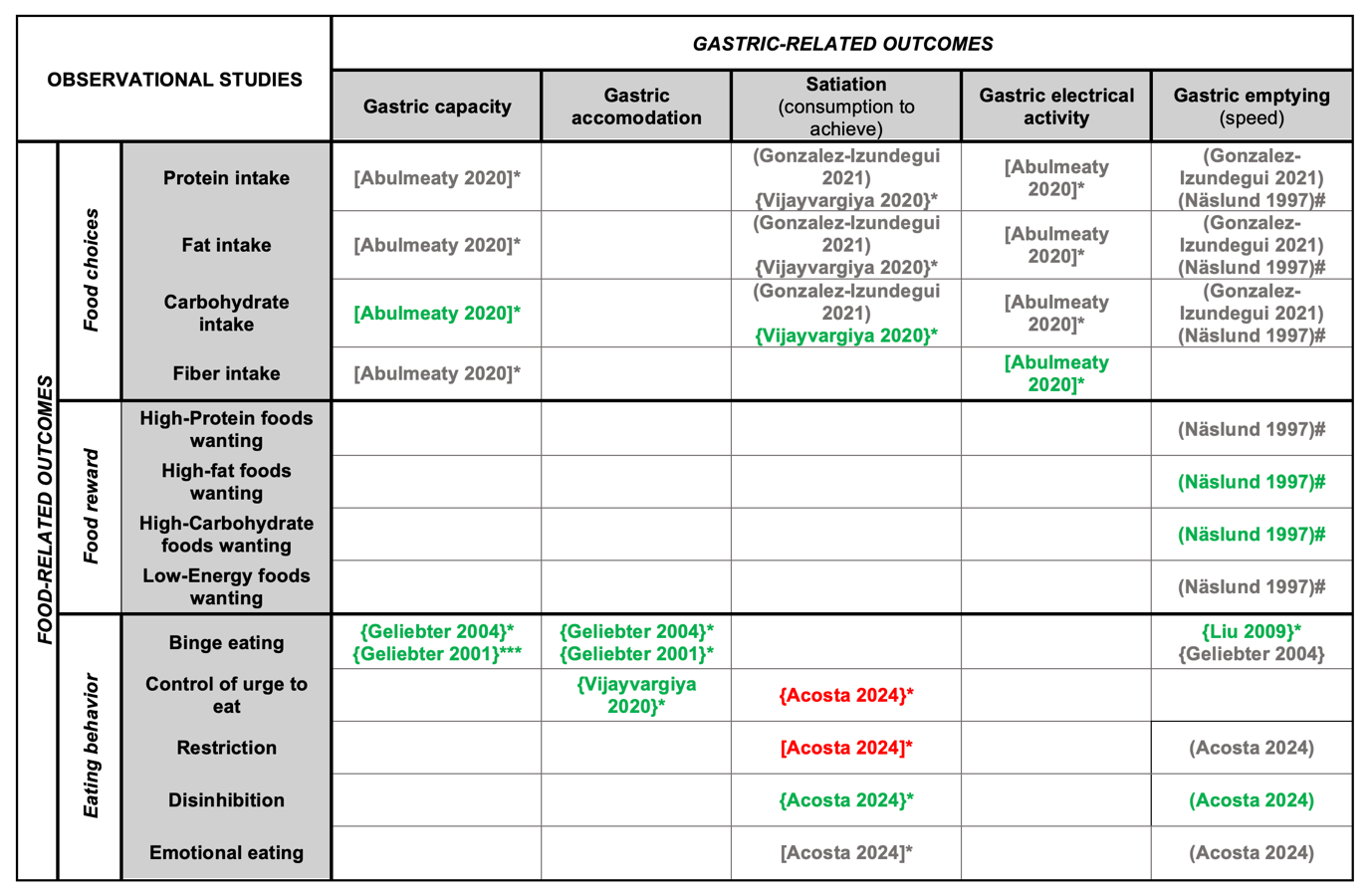
Study references in (parenthesis) = concomitant evolution of outcomes within a group, compared to other groups, but the relationship between the outcomes was not tested. Study references in [square brackets] = correlation assessed between the outcomes. Study references in {braces} = association using linear regression or ANOVA assessed between the outcomes. Study reference with hash = metabolic and bariatric surgery group. Green references = parallel evolution or positive correlation/association between the outcomes. Red references = inverse evolution or negative correlation/association between the outcomes. Grey references = No concomitant evolution or correlation/association between the outcomes. P-values are indicated with superscripted stars (*: ≤ 0.05; ***: ≤ 0.005).
Associations between food reward and gastric functions
One observational study, while not exploring correlations or associations between food reward and gastric functions, observed that patients who had jejuno-ileal bypass encountered an acceleration of gastric emptying in parallel with an increase in wanting for HF or HC foods (Näslund et al., 1997).
A single dose of cellulose capsules had no effect on wanting sweet, salty, savory or fatty foods (Berthold et al., 2008). However, an intragastric balloon worn on an empty stomach for two 30-second sessions was associated with reduced brain activation in areas involved in reward, such as the caudate, the amygdala or the substantia nigra in individuals living with obesity compared to “normo-weighted” subjects (Tomasi et al., 2009). Conversely, fasting gastric electrical stimulation via an implantable gastric stimulator increased brain activity in areas involved in reward, such as the right striatum (including the putamen and dorsal striatum) and the right orbitofrontal cortex (Wang et al., 2006).
Table 3 – Relationships between food-related outcomes and gastric-related outcomes in the interventional studies included in the review
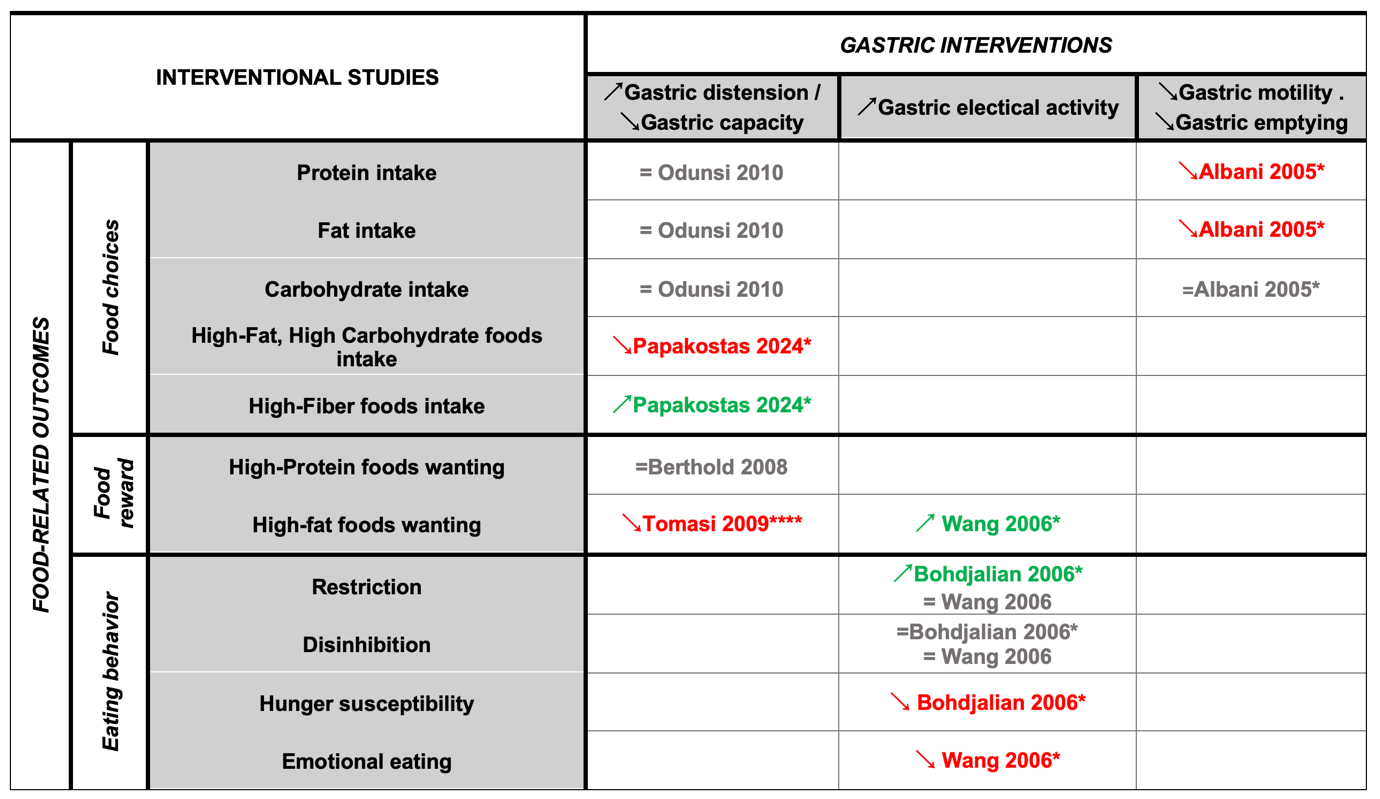
Gastric interventions leading to increased gastric distension and reduced gastric capacity were cellulose capsules, intragastric balloons. Gastric interventions leading to increased gastric electrical activity were implantable gastric stimulators. Gastric intervention leading to decreased gastric motility and gastric emptying speed was botulinum toxin intraparietal gastric injection. Green references = gastric intervention led to an increase in the observed food-related outcome. Red references = gastric intervention led to a decrease in the observed food-related outcome. Grey references = gastric intervention did not lead to changes in the observed food-related outcome. P-values are indicated with superscripted stars (*: ≤ 0.05; ****: ≤ 0.001).
Associations between disordered eating and gastric functions
Five observational studies have concurrently investigated disordered eating or eating disorders and gastric function (Acosta et al., 2024; Geliebter et al., 2004; Geliebter & Hashim, 2001; Liu et al., 2009; Vijayvargiya et al., 2020). They suggested that patients with obesity diagnosed with binge eating disorder had greater gastric capacity and accommodation (Geliebter et al., 2004; Geliebter & Hashim, 2001), and faster gastric emptying of solid foods (Liu et al., 2009), than patients with obesity and without binge eating disorder. However, the gastric emptying speed of liquid foods did not appear to be associated with binge eating (Geliebter et al., 2004). The urge to eat was positively associated with gastric accommodation capacity (Vijayvargiya et al., 2020). The urge to eat in response to negative emotions was negatively associated with CTS (Acosta et al., 2024). Food restriction was negatively correlated with CTS, while food disinhibition was positively associated with CTS (Acosta et al., 2024). Additionally, when a high CTS group was compared to a low CTS group among patients with obesity, the high CTS group with greater eating disinhibition also had faster gastric emptying of solid foods (Acosta et al., 2024).
Among the interventional studies, an increase in gastric electrical activity via implantable gastric stimulators worn for between 1 and 2 years reduced hunger sensitivity (Bohdjalian et al., 2006) and emotional eating (Wang et al., 2006).
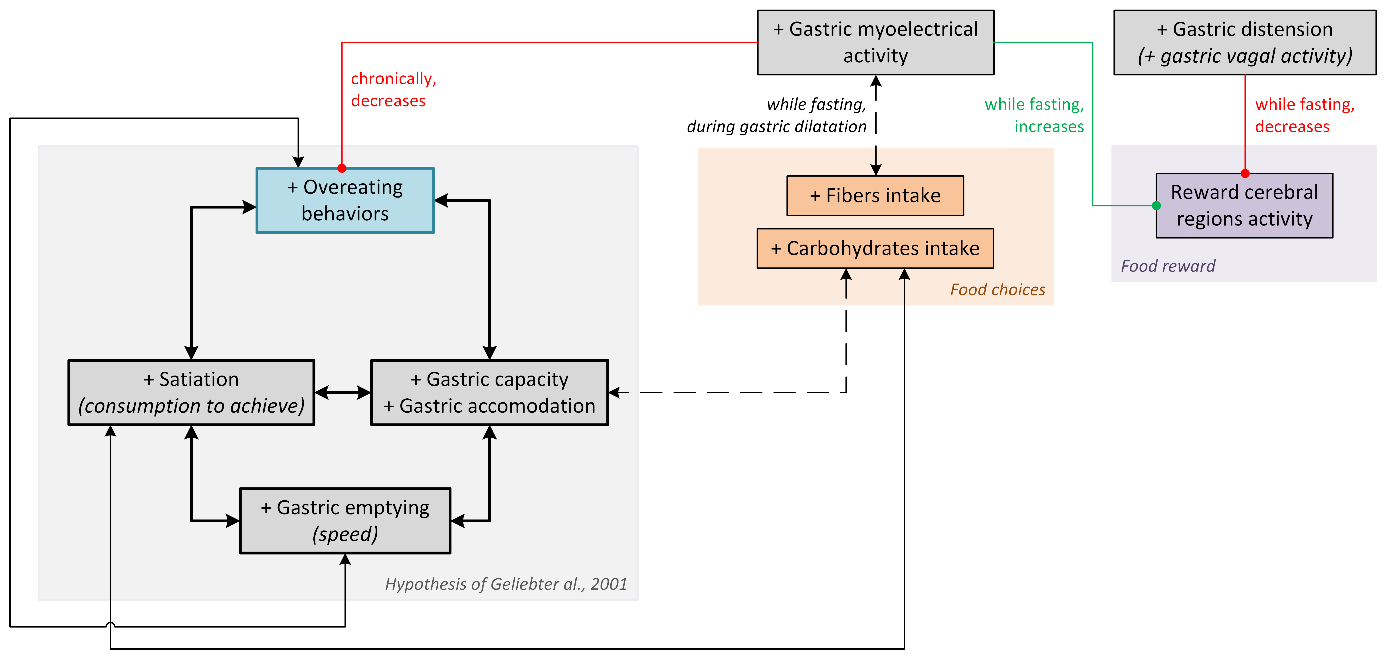
Figure 2 - Schema of the potential associations between food choices, food reward, eating behavior and gastric functions in people living with obesity. Adapted from the initial hypothesis of Geliebter et al. (Geliebter & Hashim, 2001), presented in the central light grey box using bold arrows. Gastric-related outcomes are in grey rectangles with black edges. Among the food-related outcomes, food choice parameters are in orange rectangles, food reward parameters are in purple rectangles, and the eating behavior parameter is in a blue rectangle. Black thin arrows refer to observational studies included in the scoping review: continuous arrows indicate associations, and dotted arrows indicate correlations. Round-tipped arrows refer to interventional studies: red arrows indicate a decrease, and the green arrow indicates an increase in the food-related outcomes observed following the gastric intervention.
Discussion
This is the first review to examine the potential relationships between mechanical and nervous gastric functions and food choices, food reward, and disordered eating behaviors in individuals with obesity (summarized in Figure 2). The number of studies that simultaneously examined gastric- and food-related outcomes was limited, and studies that explored correlations or associations between them were even fewer. Included studies often used different methodologies and targeted different gastric functions and food-related outcomes. This high heterogeneity constrains the capacity to derive certain conclusions and underscores the necessity for forthcoming investigations to employ widely accepted and empirically validated instruments.
Methods to measure gastric mechanical and nervous functions
Gastric emptying was mainly assessed by scintigraphy (Acosta et al., 2024; Gonzalez‐Izundegui et al., 2021; Liu et al., 2009; Näslund et al., 1997; Odunsi et al., 2010), a direct method, which is considered the gold standard because of its precision (Kar et al., 2015). Breath testing and blood acetaminophen assays are less precise indirect methods based on intestinal absorption, and may therefore be less suitable in individuals with absorptive disorders or for inter-group comparisons (Kar et al., 2015). Although easier and less costly to implement (Kar et al., 2015), their use in two selected inter-group studies should be interpreted cautiously (Berthold et al., 2008; Geliebter et al., 2004). Another valuable method is ultrasonography, which was not used in the studies selected for this review. However, this technique should be avoided in this population, as adipose tissue can impair imaging quality (Phillips et al., 2014).
Gastric capacity and accommodation were assessed using heterogeneous methods. The gastric barostat, used by Geliebter and colleagues (Geliebter et al., 2004; Geliebter & Hashim, 2001), remains the gold standard but is invasive and poorly tolerated (Febo-Rodriguez et al., 2021). SPECT provides comparable estimates of gastric volume changes (Febo-Rodriguez et al., 2021), but may be limited by scanner weight restrictions, as in Odunsi et al. (Odunsi et al., 2010). Drinking tests are easier to implement (Abulmeaty et al., 2022), but their validity as markers of gastric capacity is uncertain and may reflect gastric interoception more than gastric physiology (Brown et al., 2022; Jones et al., 2003; Van Dyck et al., 2021), Therefore, associations between “gastric capacity” and carbohydrate intake based on this method should be considered exploratory.
Gastric electrical activity was mainly measured by electrogastrography, a non-invasive method whose reliability may be affected by adipose tissue thickness and strict protocol requirements in obesity (Riezzo et al., 2013; Yin & Chen, 2013). Implantable gastric stimulators provide another measure but require surgery (Bohdjalian et al., 2006).
Finally, satiation was generally assessed with relatively homogeneous meal paradigms (Acosta et al., 2024; Gonzalez‐Izundegui et al., 2021; Odunsi et al., 2010; Vijayvargiya et al., 2020), although future studies should distinguish comfortable fullness from maximum or uncomfortable fullness more systematically (Flint et al., 2000). Overall, the heterogeneity and limitations of measurement methods constrain comparisons across studies and support the need for more standardized, validated approaches.
Food choices and gastric functions
Carbohydrates have a lower satiating effect than fiber or protein (Dougkas & Östman, 2016), although their satiating effect compared with fat remains debated (Chambers et al., 2015). The association between higher carbohydrate intake and greater calories to satiation (Vijayvargiya et al., 2020) is consistent with findings linking higher carbohydrate intake to greater gastric capacity in individuals with obesity (Abulmeaty et al., 2022). Conversely, intragastric balloon treatment was associated with reduced intake of high-carbohydrate and high-fat foods and increased intake of fiber-rich foods (Papakostas et al., 2024), a pattern resembling post-MBS changes, including greater intake of vegetables and poultry and lower intake of sweet and/or fatty foods (Guyot et al., 2021). Fiber intake was also positively associated with gastric electrical activity during water-load-induced gastric relaxation (Abulmeaty et al., 2022). These findings suggest that gastric distension, whether induced by an intragastric balloon (Papakostas et al., 2024) or water loading (Abulmeaty et al., 2022), may be associated with food choice patterns, possibly through vagal mechanoreceptor activation (Waise et al., 2018).
These results must be interpreted cautiously. Most studies relied on indirect dietary assessments (Abulmeaty et al., 2022; Albani et al., 2005; Näslund et al., 1997), food frequency questionnaires (Papakostas et al., 2024), and the known under-reporting of fatty and sugary foods (Redpath et al., 2021). Direct buffet-based measures reduce recall bias (Redpath et al., 2021), but were restricted to a single research group and paradigm (Gonzalez‐Izundegui et al., 2021; Odunsi et al., 2010; Vijayvargiya et al., 2020). Finally, reporting macronutrient intake in grams or kilocalories (Abulmeaty et al., 2022; Albani et al., 2005; Vijayvargiya et al., 2020) rather than as a percentage of total energy intake limits the interpretation of food choice independently from total intake. Overall, carbohydrates and fibers appear most consistently associated with gastric mechanical and nervous functions in obesity, but these associations remain speculative and largely unexplored after MBS.
Food reward and gastric functions
Gastric emptying and gastric distension may be linked to food reward in obesity, but the evidence remains very limited. The only observational study identified in a post-MBS context reported concomitant changes in gastric emptying speed and desire to eat high-carbohydrate and high-fat foods after jejunoileal bypass, without directly testing their association (Näslund et al., 1997). This contrasts with data from normo-weighted men, in whom faster gastric emptying was positively associated with liking for sweet foods and negatively associated with desire for fatty foods (Horner et al., 2016), highlighting the lack of data in obesity and after MBS. Experimental studies suggest that gastric distension may modulate reward-related brain responses. In individuals with obesity, fasting gastric distension induced by an intragastric balloon, a condition expected to activate vagal pathways involved in meal termination (Park & Camilleri, 2005; Waise et al., 2018), was associated with reduced activation of reward- and dopamine-related areas compared with normo-weighted individuals (Tomasi et al., 2009). This may reflect altered sensitivity to visceral satiety signals in obesity, potentially involving impaired vagal signaling (Strüven et al., 2021). Consistently, chronic vagus nerve activation reduced sweet cravings in obese minipigs (Val-Laillet et al., 2010). Conversely, implantable gastric stimulation activated reward-related regions, including the right orbitofrontal cortex and right striatum, in fasting individuals with obesity.(Wang et al., 2006) This is consistent with preclinical evidence showing that right, but not left, vagus nerve stimulation can activate the substantia nigra and induce dopamine release (Han et al., 2018). Overall, these findings suggest that gastric modulation of food reward may depend on feeding status and on the type of gastric or vagal signal involved, as summarized in Figure 2.
Disordered eating behavior and gastric functions
Overall, several studies showed that overeating behaviors such as binge eating and disinhibited eating have been associated with greater gastric capacity and accommodation, greater calories to satiation (CTS), and faster gastric emptying of solid foods (Acosta et al., 2024; Geliebter et al., 2004; Geliebter & Hashim, 2001; Liu et al., 2009; Vijayvargiya et al., 2020). This supports the idea of Geliebter and colleagues, who hypothesized that a larger stomach capacity leads to more binge eating, which in turn increases food intake, contributing to a larger stomach in a feedback loop process (presented in Figure 2) (Geliebter et al., 2004; Geliebter & Hashim, 2001).
Conversely, certain gastric functions are thought to reduce overeating behaviors: an artificial increase of gastric electrical activity while fasting and after a meal (using implantable gastric stimulators) has been associated with less emotional eating and less hunger susceptibility respectively (Bohdjalian et al., 2006; Wang et al., 2006), and CTS seems to be negatively associated with the belief of “control of the urge to eat in response to negative emotions” (Acosta et al., 2024). However, Acosta et al. used multiple linear regressions to show that disordered eating behaviors account for only 5% of the variability in CTS, while demographic, anthropometric, hormonal and body composition data account for 12 to 35% of this variability (Acosta et al., 2024). According to this study, eating behaviors cannot fully explain the inter-individual variance in satiation, measured through CTS.
In summary, overeating behaviors could be associated with altered gastric functions such as greater gastric capacity, accelerated gastric emptying, and delayed satiation. Implantable gastric stimulators could help to alleviate these overeating behaviors. The potential associations are summarized in Figure 2.
Strengths and limitations of the review
This review has several strengths. It addresses an interdisciplinary question that has not previously been synthesized, combining obesity, MBS, gastric physiology, food reward, sensory functions, and disordered eating outcomes, and using a broad search strategy across several databases and grey literature sources. The search was not restricted by language, and study selection involved independent reviewers with additional expertise in obesity and food reward.
Several limitations also need to be acknowledged. First, the evidence base was small, highly heterogeneous, and mainly cross-sectional, making causal inference impossible. Second, although participants of any age were eligible, all included studies were conducted in adults. This limits developmental interpretation because eating behavior, hormonal regulation, sex- and gender-related factors, and gastric physiology may vary by age. Third, biological sex was usually reported, but subgroup analyses by sex or gender were not conducted. Menstrual cycle phase and menopausal status were also not considered, despite their potential influence on eating-related and gastric-related outcomes (Grzymisławska et al., 2020; Hutson et al., 1989; McNeil et al., 2013; Pascal et al., 2022). Fourth, most studies defined obesity using BMI alone, although BMI does not capture body composition, fat distribution, or metabolic phenotype (Rubino et al., 2025; Sweatt et al., 2024). Finally, no included study jointly assessed gustatory or olfactory perception with gastric mechanical or nervous functions, despite plausible links through vagal signaling, gastric interoception, and sensory processing (Iatridi et al., 2021; Maharjan et al., 2018; Sperling et al., 2011).
The small number of included studies relative to the number of screened records should not be viewed only as a limitation of the review; it also indicates that the field is fragmented. Studies often assess either gastric physiology or eating-related outcomes, but rarely both within the same protocol and even more rarely after MBS. This fragmentation currently prevents firm conclusions about mechanisms linking gastric changes to food choices, food reward, sensory perception, and disordered eating.
Implications and future research directions
Future studies should use integrated longitudinal designs that measure gastric functions and eating-related outcomes before and after MBS or other gastric interventions. Priority areas include post-bariatric populations, sensory outcomes, food reward, loss-of-control eating, and standardized measures of satiation, gastric emptying, gastric accommodation, and gastric electrical activity. Research should also examine age, sex, gender, menopausal status, diabetes status, body composition, and medication exposure as potential moderators. From a clinical perspective, these findings support a more integrated view of eating behavior in obesity: overeating and food choices may partly reflect visceral and interoceptive signals, but they are also embedded in psychological, social, and metabolic contexts.
Conclusion
Although obesity and MBS are associated with alterations in food choices, food reward, gustation, olfaction or overeating behavior, the potential role of gastric mechanical and nervous functions in these alterations remains poorly understood. In obesity, greater gastric capacity, faster gastric emptying, and delay satiation may be associated with higher carbohydrate intake and overeating behaviors such as binge eating. Gastric interventions such as implantable gastric stimulator or intragastric may also modulate overeating behaviors or food reward, but the current evidence is too limited and heterogeneous to support causal conclusions. Future studies should combine validated eating-behavior, food-choice, reward, and sensory measures with gold-standard or widely validated gastric-function assessments, especially in longitudinal post-MBS designs. Such work is needed to clarify whether gastric mechanical and nervous functions represent modifiable mechanisms, clinical markers, or both in the complex relationship between obesity, MBS, and eating behavior.
Funding
Nina Ritsch reports that financial support was provided by the French National Research and Technology Agency and the Lyfe Institute Foundation. Sylvain Iceta reports a relationship with Quebec Health Research Fund that includes salary grant (https://doi.org/10.69777/312066).
Conflict of interests
Sylvain Iceta reports relationships with Takeda Canada Inc that include consulting or advisory, funding grants, and speaking or lecture fees. Sylvain Iceta reports relationships with Novo Nordisk Inc that include speaking or lecture fees. Sylvain Iceta reports relationships with Bausch Health Companies Inc Canada that includes consulting or advisory and speaking or lecture fees. However, these relationships are unrelated to the subject of the present study. The companies had no role in the study design, data collection, analysis, interpretation of the results, writing of the manuscript, or the decision to submit it for publication, and the findings of this study are not expected to affect their financial interests. The other authors declare that they have no known competing financial interests or personal relationships that could have appeared to influence the work reported in this paper.
Authors’ contributions
N.R.: conceptualization; data curation, formal analysis, investigation, visualization, writing - original draft; C.B.: data curation; F.B.: methodology, resources; J.-A.N.: data curation, validation, writing – review and editing; A.D.: data curation, validation, writing – review and editing; S.I.: conceptualization, data curation, funding acquisition, methodology, software, supervision, validation, writing – review and editing. All authors read and approved the final version of the manuscript.
Data, script and code availability
No original individual-level dataset, statistical script, command line, or simulation code was generated for this scoping review. The full search strategies and extracted information are provided in the Supplementary Information file. The review protocol was registered on the Open Science Framework and is available at https://osf.io/mdx9t/ (Ritsch et al., 2023).
Supplementary information
Supplementary information includes the detailed database search strategies, definitions of food-related and gastric-related outcomes, and supplementary tables describing study characteristics and extracted outcomes. Supplementary Information file is availlable at https://doi.org/10.5281/zenodo.21414058 (Ritsch et al., 2026).
Acknowledgments
Preprint version 2 of this article has been peer-reviewed and recommended by Peer Community In Nutrition (https://doi.org/10.24072/pci.nutrition.100106; Zeeni, 2026).