

 CC-BY 4.0
Introduction
More than 150 years after the American Civil War, symbols of the Confederate States of America remain a topic of emotional debate in the United States. Monuments exist to commemorate Confederate leaders; government buildings, schools, and parks have Confederate namesakes; and Confederate flags are flown on public properties (Southern Poverty Law Center, 2019). The 2015 Charleston, South Carolina mass shooting, the 2017 death of a counter protestor at the Unite the Right Rally in Charlottesville, Virginia, and the 2020 killing of George Floyd were catalysts to discussions about race relations in the United States and spurred the removal of Confederate symbols (Treisman, 2021). Recent efforts, however, have restored Confederate namesakes to schools in Virginia (Chappell, 2024) and commemorative plaques to monuments in North Carolina (Knoepp, 2025). Most recently, an April 2025 executive order called for the restoration of monuments and statues (Sarmiento, 2025) that would likely include the Confederate memorials that have been removed since 2015.
How do individuals explain the appearance of Confederate symbols in their communities? What effects do the presence of these symbols have on interracial interactions? The purpose of this research was to investigate the consequences of beliefs about Confederate symbols on interracial interactions. Specifically, this work examined if willingness to help White or Black persons was predicted by beliefs that the Confederate flag symbolizes racist attitudes, a rebellious nature, or remembrance of the sacrifices made by Southern ancestors.
Beliefs about Confederate Symbols
Previous research on beliefs about Confederate symbols primarily focuses on a two-sided debate wherein individuals believe that the symbols represent either racism or Southern heritage and tend to recruit participants from Southern regions of the United States (e.g., Glaser, 2006; Leib, 1995; Leib et al., 2000; Lippard, 2017; Orey, 2004; Reingold & Wike, 1998; Sinclair-Chapman, 2018; Strother et al., 2017; Wright & Esses, 2017). Yet, the Confederate flag and other Confederate symbols are displayed in non-Southern regions of the United States (Wellihoff, 1994; Southern Poverty Law Center, 2019) and outside of the United States (e.g., Clark, 2022; BBC news, 2015; Speiser, 2015). The proud Southern heritage argument is less applicable when Confederate memorials are found in regions of the world that were not part of the Confederate States of America and when the Confederate flag is worn or flown by a person without Southern heritage and whose ancestors did not fight in the Civil War. In this light, recent research has examined beliefs that the Confederate flag is a symbol of remembrance (Southern heritage) or racism while also proposing that there is a third side to this debate: rebellion (McManus et al., 2025). In the rebellion argument the flag symbolizes a rebellious nature, defiance to authority, independence, and an anti-government stance while distancing itself from racist connotations.
Previous research indicates that greater support for the Confederate flag is associated with higher levels of racism (Cooper et al., 2021; Huffmon et al., 2017; Orey, 2004; Reingold & Wike, 1998; Strother et al., 2017; Wright & Esses, 2017). Additionally, beliefs that the Confederate flag is a symbol of remembrance or rebellion were associated with greater old-fashioned and contemporary racism, greater discomfort around Black Americans, a denial that racism is a problem in the United States, and adherence to beliefs about racial hierarchies (i.e., social dominance orientation, right-wing authoritarianism, Protestant work ethic, and system justification) (McManus et al., 2025).
The purpose of the current work was to then examine the consequences of beliefs about the Confederate flag. If beliefs that the Confederate flag symbolizes remembrance or rebellion are associated with racist attitudes, are they also associated with greater discrimination in an interracial helping situation? While the flag may symbolize a rebellion against government, a commemoration of the sacrifices of ancestors, or a diverse sign associated with racism, violence, and intimidation, it is important to examine how these symbolic meanings are associated with intergroup behaviors. If a person feels that they can rationalize wearing or flying the Confederate flag because it is a tribute to their ancestry or is a nod to rebellion (neither of which they may perceive to be associated with racism), how is this related to interracial behavior? Is exposure to seemingly non-racist ideas that the Confederate flag stands for remembrance or rebellion associated with discriminatory behavior in an intergroup helping situation?
The justification-suppression model of prejudice (Crandall & Eshleman, 2003) may be helpful in understanding how individuals separate Confederate symbols from racist meaning. This model indicates that contemporary social norms generally prohibit racist language and actions. These norms serve to suppress prejudices that an individual may have toward social groups. However, certain situations create justifications that allow prejudices to be expressed in a manner that appears to be motivated by reasons other than racism. In the context of the current work, if wearing or flying the Confederate flag can be justified with perceived non-racist ideologies—such as those involving remembrance or rebellion—then it is more likely that the flag will be worn or displayed. By attributing behaviors to Southern ancestry or a general rebel spirit, individuals distance themselves from the racial tensions otherwise associated with the flag and may therefore feel that their actions are not associated with race, prejudice, or discrimination.
Discrimination in Helping Situations
The current research examined if exposure to arguments that the Confederate flag is a symbol of remembrance, rebellion, or racism influenced discriminatory helping. We employed a helping paradigm consistent with Crosby et al. (1980): White participants were presented with a situation where they were asked to help either a White or Black person and discrimination occurred if participants were more likely to help the White than the Black person. White individuals may be more likely to help White compared to Black persons in certain situational contexts (for reviews see Crosby et al., 1980; Saucier et al., 2005). Crosby et al. (1980) reviewed “differential help giving” (p. 547) in unobtrusive experimental studies where participants were presented with situations where a White or Black person needed help. They operationalized discrimination as “when individuals from one group (e.g., whites) receive significantly more help than individuals from the other group” (p. 549). This literature review found that White persons were less likely to help Black than White persons in approximately 40% of the reviewed studies and that discrimination was more likely to occur in remote, rather than face-to-face situations. More recent research suggests that these patterns of discrimination also can exist in virtual environments (Gamberini et al., 2015) and are likely independent of racial attitudes (Kunstman & Plant, 2008; McManus et al., 2019).
These previous research studies have employed several theoretical perspectives that help explain why people from one social group might receive more help than those in another group. These include social norms concerning ingroup favoritism and social identity theory (Tajfel, 1974; Tajfel et al., 1971) wherein greater feelings of similarity and ingroup solidarity lead to a greater propensity to help those who belong to the same racial group (Gamberini et al., 2015). Additionally, some studies have utilized the justification-suppression model (Crandall & Eshleman, 2003) to examine how certain situational factors that allow for the justification of prejudice (Gamberini et al., 2015; Saucier et al., 2005). This research suggests less help may be provided to outgroup members than ingroup members when individuals are able to use situational factors (e.g., time pressure) to justify not helping (e.g., I didn’t help because I didn’t have time; see Saucier et al., 2005 for review). Finally, aversive racism theory (Gaertner & Dovidio, 2000) describes how aversive emotions may lead individuals to avoid persons of different races; in helping situations, this avoidance of outgroup members can result in not providing help (Kunstman & Plant, 2008; McManus et al., 2019; Saucier et al., 2005).
Pilot Study Predictions
Following the justification-suppression model of prejudice, it could be argued that the rebellion and remembrance arguments about the Confederate flag create a perceived justification for the expression of prejudice which may predict discrimination. In the initial pilot study, it was predicted that those exposed to arguments that the Confederate flag stands for remembrance or rebellion would show discrimination in that they would be less willing to help a Black than a White person. The racism arguments on the other hand were a reminder of egalitarian norms, which would suppress prejudice and were predicted to be associated with less discrimination. Additionally, a measure of White guilt was included as an exploratory measure in the pilot study to examine how this variable influenced the relationships between arguments about the Confederate flag and discrimination. It was anticipated that greater levels of White guilt would be associated with less discrimination.
Pilot Study Methods
Participants
Participants from the United States were recruited from Amazon Mechanical Turk1. Participants (N = 187) were primarily male (63.6%) with an average age of 35.48 (SD = 11.11) and most had received a bachelor’s degree (63.5%).
Materials
Unless otherwise noted, participants responded to each of the items below using a 1 (strongly disagree) to 9 (strongly agree) scale. Necessary items were reverse coded before average composite variables were calculated so that higher values reflect a greater representation of each construct. Copies of materials are provided in the Appendix.
Confederate Flag Arguments Manipulation
Participants were assigned to one of three conditions wherein they were exposed to an argument about the Confederate flag. The arguments were embedded into a fictional blog post created for this study. The author of the blog post argued that the Confederate Flag stands for either (a) racism, hatred, and intimidation, (b) heritage, pride, and sacrifice, or (c) rebellion, independence, and freedom. Each argument was accompanied by four supporting points and ended with expressing approval (or disapproval) of wearing or flying the Confederate flag and opposition (or support) for removing Confederate flags and monuments from public spaces. After reading one of the arguments, the participants were asked to indicate whether they agreed with the author of the blog post by selecting yes or no.
White Guilt (Swim & Miller, 1999)
Participants reported how much guilt they associate with their race (5 items, α = .88; I feel guilty about the benefits and privileges that I receive as a White American).
Demographics and Social Desirability
Participants reported their age, race/ethnicity, sex, highest level of education achieved, and likelihood of engaging in socially desirable behaviors (Haghighat, 2007).
Interracial Helping Manipulation (McManus et al., 2019)
Participants were assigned to one of two conditions wherein either a Black or White person asked for help. The participants were presented with a situation where a researcher introduced himself as either Andrew Smith or Tyronne Harris and indicated he needed help getting participants for his research project. To further emphasize the race of the person asking for help, a short researcher bio followed the request for help; this bio included a short description of his academic and personal interests as well as a photograph.
Following the manipulation, participants were asked to respond to items assessing their willingness to help (How much do you want to help by participating in this study?), their beliefs about how beneficial the research would be to science (How beneficial to science do you think this study is?), and the perceived value of the study (How valuable do you think this study is?)2.
Procedure
After providing consent to participate, participants reported their likelihood of socially desirable responding (Haghighat, 2007). Next, participants were assigned to one of three conditions where they read arguments in a blog post stating the Confederate flag stood for racism, remembrance, or rebellion. After reading one of three arguments, they reported their agreement with the author’s argument, completed items from the white guilt scale (Swim & Miller, 1999), and reported their demographics. Participants were then told that their participation in the study was complete, but were asked to read about another research study they may want to participate in. They then read a script from either a White or Black researcher asking for help (McManus et al., 2019) and reported their willingness to help.
After completing these measures, participants were directed to a debriefing script where they were informed that a primary goal of the research study was to investigate how exposure to arguments about the Confederate flag influenced willingness to provide help. Participants were further informed that they would not be contacted to participate in a future study. Finally, participants were reminded of the contact information for the principal investigator should they have any questions or concerns. Study procedures followed APA ethical guidelines.
Pilot Study Results3
How much do you want to help by participating in this study?
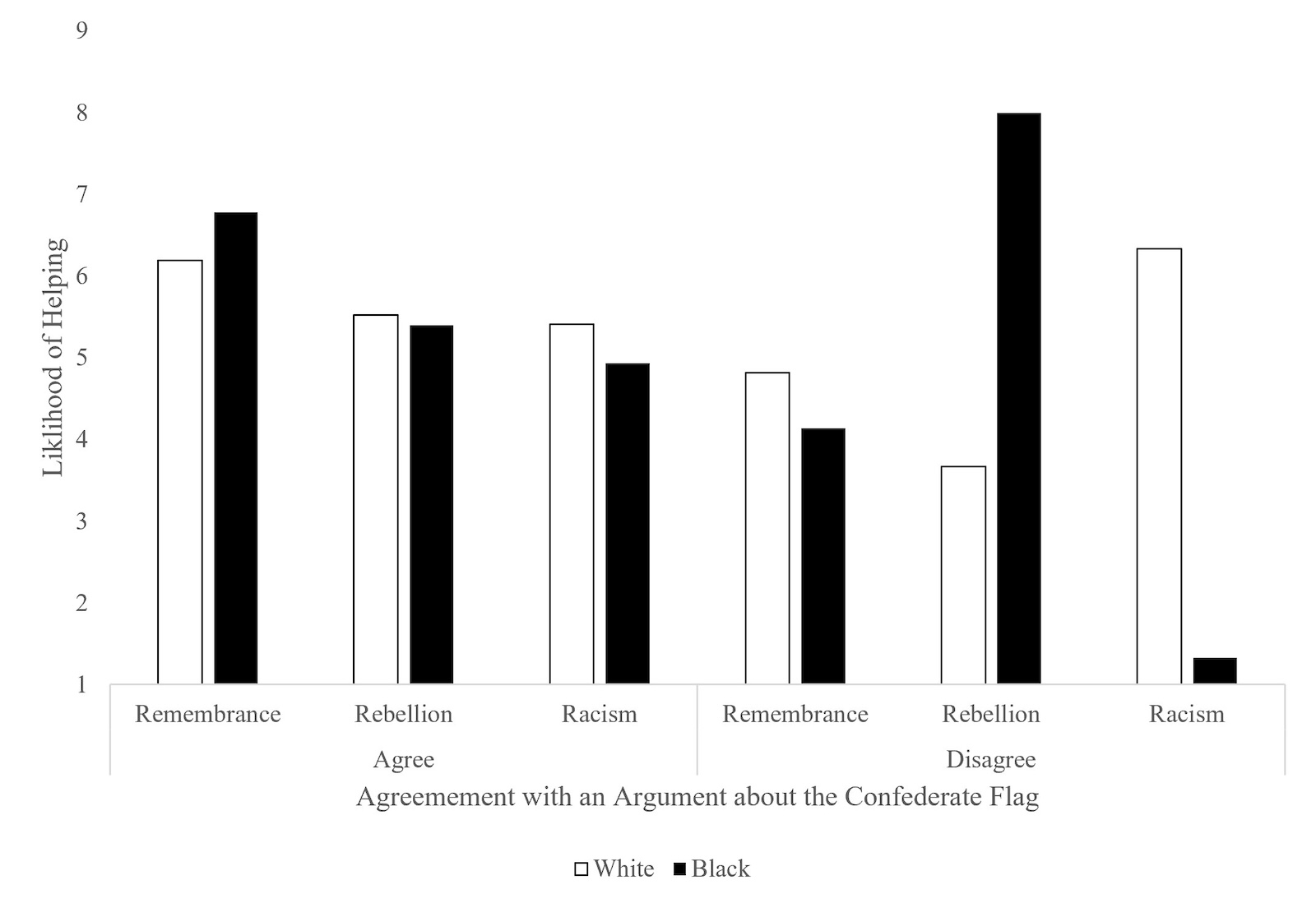
Data were analyzed using a 3 (Flag Argument Condition: Racism, Rebellion, Remembrance) x 2 (Agreement with Argument: Yes or No) x 2 (Race Condition: Black or White) ANOVA (Table 1). Social desirability was controlled for in the analysis. Simple effects analyses (Cohen et al., 2003, 2013; Cohen & Cohen, 1983) were used to probe significant interactions (see Figure 1 for illustrative break-down).
Table 1 - The Effects of Arguments about the Confederate Flag, Agreement with the Argument, and Race of Researcher Needing Help on Helping in the Pilot Study
Variable | Type III SS | df | MS | F | p-value |
|---|---|---|---|---|---|
Social Desirability | 72.29 | 1 | 72.29 | 11.33 | .001 |
Argument about Flag Condition | 28.24 | 2 | 14.12 | 2.21 | .11 |
Agreement with Argument | 15.08 | 1 | 15.08 | 2.36 | .13 |
Race Condition | 0.33 | 1 | 0.33 | 0.05 | .82 |
Argument x Agreement | 18.11 | 2 | 9.06 | 1.42 | .24 |
Argument x Race | 70.15 | 2 | 35.08 | 5.50 | .005 |
Agreement x Race | 0.11 | 1 | 0.11 | 0.02 | .89 |
Argument x Agreement x Race | 54.17 | 2 | 27.08 | 4.24 | .02 |
Error | 1097.45 | 172 | 6.38 |
3 (Confederate Flag Argument: Remembrance, Rebellion, or Racism) x 2 (Agreement with Argument: Yes or No) x 2 (Race Condition: White or Black): (F (2, 172) = 4.24, p = .02, ηp2 = .05) | ||
|---|---|---|
Split by Agreement to examine 3 (Flag Argument) x 2 (Race Condition) interaction | ||
Yes (Agree with Argument) 3 (Flag Argument) x 2 (Race Condition) not significant (F (2, 120) = 0.31, p = .74, ηp2 = .005); does not need to be further decomposed |
| No (Disagree with Argument) 3 (Flag Argument) x 2 (Race Condition) significant (F (2, 51) = 6.25, p = .004, ηp2 = .20) |
Split by Race (only when participants disagree with the argument) to examine the main effect of Flag Argument | ||
White Main effect of Flag Argument not significant (F (2, 42) = 2.03, p = .14, ηp2 = .09); does not need to be further decomposed |
| Black Main effect of Flag Argument significant (F (2, 8) = 7.24, p = .02, ηp2 = .64) |
Bonferroni-Post Hoc Comparisons to compare differences between Flag Argument Conditions (only when participants disagree with the argument and are asked to help the Black researcher) | ||
No significant differences between the remembrance and racism (p = .21) arguments or between the remembrance and rebellion arguments (p = .11) |
| Significant difference between the racism and rebellion arguments (Mdiff = -6.68, p = .02): less likely to help a Black person if they disagreed that the Confederate flag stands for racism (M = 1.33, SD = 0.58) than if they disagreed that the flag stands for rebellion (M = 8.00, SD = 1.41) (Figure 2) |

Figure 1 - Illustrative break-down of a significant three-way interaction with Pilot Study findings
There was a significant three-way interaction (F (2, 172) = 4.24, p = .02, ηp2 = .05). To interpret this interaction, we first compared the effects of agreement with the argument (i.e., agreed or disagreed) on the two-way interaction between the argument condition and race condition. When participants agreed with the argument about the Confederate flag, the two-way interaction between the argument and race was not significant (F (2, 120) = 0.31, p = .74, ηp2 = .005). However, when they disagreed with the argument they read about the Confederate flag, there was a significant two-way interaction between argument and race (F (2, 51) = 6.25, p = .004, ηp2 = .20).
To further decompose the significant two-way interaction between argument and race in the conditions in which they disagreed with the argument they read, we compared the effects of the researcher’s race (i.e., Black or White) on the arguments about the Confederate flag. The argument about the flag made no difference on the extent to which they wanted to help the White researcher (F (2, 42) = 2.03, p = .14, ηp2 = .09). However, the argument influenced intention of helping the Black researcher (F (2, 8) = 7.24, p = .02, ηp2 = .64). Bonferroni post hoc comparisons of the Black researcher conditions indicated a significant difference between the racism and rebellion arguments (Mdiff = -6.68, p = .02) but not between remembrance and racism (p = .21) or remembrance and rebellion arguments (p = .11). This indicates that participants were much less likely to indicate that they would help a Black experimenter if they disagreed with an article stating the Confederate flag stands for racism (M = 1.33, SD = 0.58) than if they disagreed with an article stating that the flag stands for rebellion (M = 8.00, SD = 1.41) (Figure 2).
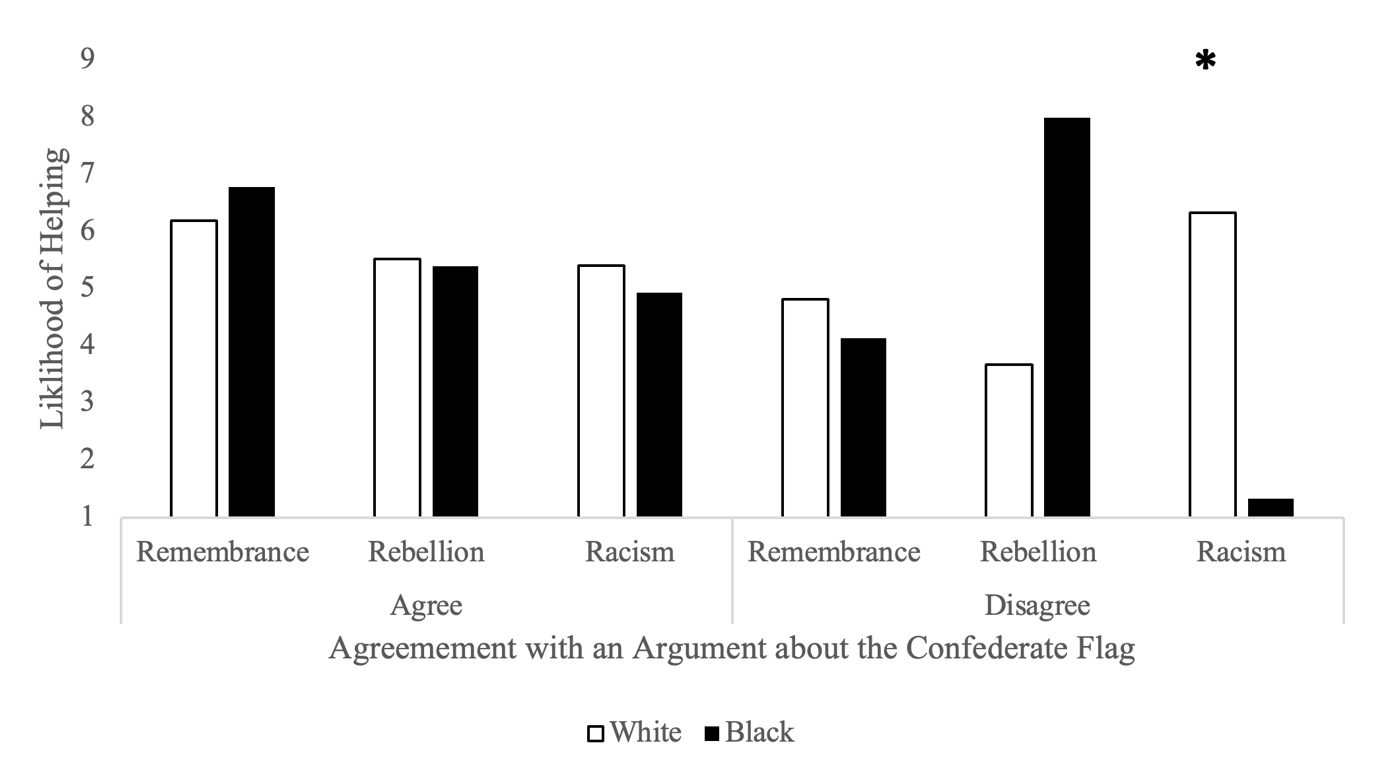
Figure 2 - Participants’ likelihood of helping based on arguments about the Confederate flag, agreement with the argument, and race of the person requesting help.
White Guilt
To examine the extent to which the three-way interaction was influenced by White guilt, a 3 (Flag Argument Condition: Racism, Rebellion, Remembrance) x 2 (Agreement with Argument: Yes or No) x 2 (Race Condition: Black or White) ANOVA was conducted where White guilt was entered as a covariate (Baron & Kenny, 1986). Full mediation occurred if the mediator was significantly related to the dependent measure and if the three-way interaction was no longer significant when the mediator was entered into the analysis. White guilt was significantly associated with the likelihood of helping (F (1, 168) = 31.49, p < .001). The three-way interaction between the argument condition, argument agreement, and race condition was still significant (F (2, 168) = 2.98, p = .05), but the overall effect was reduced with the inclusion of white guilt in the analysis, suggesting partial mediation.
Pilot Study Discussion
Participants were exposed to arguments about the Confederate flag to examine the extent to which these arguments predicted discrimination in a helping situation. Findings revealed that whether the participants agreed with the argument about the Confederate flag was associated with their intent to help a White or Black experimenter. Those who disagreed with the argument that the flag is a symbol of racism were less willing to help a Black than White person. Those who disagreed that the flag is a symbol of rebellion, on the other hand, were more willing to help a Black than White person. The emotional responses that one has toward the Confederate flag (Holyfield et al., 2009; Sinclair-Chapman, 2018) may be related to interracial interactions and helping decisions.
In the instance where participants read arguments indicating that the Confederate flag stands for racism and they disagreed with these arguments (presumably because they have positive feelings about the flag), they were much less likely to report that they would help the Black researcher than the White researcher. These results suggest that arguments indicating that the flag stands for racism may have elicited a backlash effect for participants who support the flag. A lesser willingness to help the Black researcher may be reflective of feelings associated with experiencing reactance (Brehm, 1981). Because psychological reactance was not measured in the pilot study, this was only a conjecture but provided direction and inspiration for the next study.
An opposing effect was found in instances where participants disagreed with arguments that the Confederate flag stands for rebellion. Here, they were much more likely to report that they would help the Black than White researcher. After reading that the flag stands for rebellion, those who have negative associations with the flag overcompensated and reacted in a way that is consistent with bend-over-backwards effects (Aberson & Ettlin, 2004; Byrd et al., 2015). The exploratory mediator analysis provides initial insight into the emotional reactions of participants in this condition: Reading that the Confederate flag stands for rebellion elicited greater feelings of White guilt, which then motivated the participant’s willingness to help the Black researcher to a greater extent than the White researcher. White guilt was also included in the next study.
Revising the Initial Predictions
The pilot study predictions were not supported by the findings. These initial predictions stated that exposing participants to an argument about the flag would influence discrimination; neither individuals’ personal beliefs about the flag were considered nor how those beliefs would predict their emotional reactions to the argument. The relationships appear to be more nuanced than initially predicted. Emotional reactions to the argument may be a key factor in predicting discrimination. Those who disagreed with the arguments about the Confederate flag were the most sensitive and those reactions influenced the extent to which they intended to help the Black researcher compared to the White researcher. Those who read an argument that fit with their beliefs about the Confederate flag, on the other hand, did not appear to have experienced strong emotional reactions that needed to be managed through later action.
Study 1: Predictions and Theoretical Explanations
Study 1 was designed to refine, replicate, and extend the relationships discovered in the pilot study. The results of the pilot study demonstrated that differences in willingness to help White and Black persons was more likely when participants were confronted with arguments about the Confederate flag that they disagreed with. The justification-suppression model of prejudice (JSM; Crandall & Eshleman, 2003), described earlier, remains relevant for these predictions. An individual’s beliefs in racial equality may become more salient when they are confronted with arguments that the Confederate flag symbolizes remembrance or rebellion. In this instance, the increased salience of anti-racist beliefs may suppress the likelihood of discrimination toward Black persons. Conversely disagreement with arguments that the flag symbolizes racism may provide greater access to justifications for not helping a Black person. The following research questions and hypotheses were proposed in line with those initial findings and the JSM.
A. Are beliefs about the Confederate flag associated with racial discrimination? Do beliefs about the Confederate flag predict discrimination? More specifically, if a person sees an argument about the Confederate flag that contradicts their personal beliefs, will it influence their decision to help Black or White persons?
H1a: Compared to those who disagree with arguments that the flag stands for remembrance or rebellion, those who disagree with arguments that the Confederate flag stands for racism will be less likely to help Black than White persons.
H1b: Compared to those who disagree with arguments that the flag stands for racism, those who disagree with arguments that the Confederate flag stands for remembrance or rebellion will be more likely to help Black than White persons.
Emotional Reactions to Confederate Symbols
The results of the pilot study suggested that emotional reactions to arguments about the Confederate flag that are contrary to an individual’s personal beliefs are important predictors of their later behavior. Emotions such as guilt or those associated with reactance (e.g., anger, frustration) may influence participants’ decision to differentially help White and Black persons. Whether an individual supports or opposes Confederate symbols, research demonstrates that there are strong emotional connections to memorializing the Confederacy (DeZalia & Moeschberger, 2014; Jameson, 2024; Leib & Webster, 2007; Orey et al., 2021; Sinclair-Chapman, 2018; Talbert, 2022). Further, it is likely that individuals will be confronted with arguments about these symbols that they disagree with; for example, they may read or hear news that monuments are coming down or being restored; they may debate with family, friends, neighbors, or strangers on the internet; those who protest may meet opposition and counter protesters.
Therefore, a second objective of this research was to examine the extent to which participants’ emotional reactions to reading an argument about the Confederate flag were related to their willingness to help White and Black persons. Specifically, this work examined the extent to which emotional reactions such as discomfort (Devine et al., 1991), negative emotions toward others (Devine et al., 1991), reactance (Brehm, 1981), and White guilt (Swim & Miller, 1999) were related to differential willingness to help after exposure to arguments about the Confederate flag.
Aversive Racism Theory
Emotional states can predict discrimination (e.g., Dovidio & Hebl, 2005; Talaska et al., 2008), especially negative emotional states such as discomfort and negative feelings toward others (Devine et al., 1991). These ideas are rooted in aversive racism theory (Gaertner & Dovidio, 2000) which asserts that when individuals experience greater aversive emotions in interracial interactions, they are motivated to reduce their discomfort and may do so through behaviors such as avoidance. In interracial helping situations, this avoidance results in discrimination wherein White individuals are less likely to help outgroup members than ingroup members (Kunstman & Plant, 2008; McManus et al., 2019; Pearson et al., 2009; Personette, 2023). This study examined the extent to which arguments about the Confederate flag’s symbolism influenced discomfort and negative feelings toward others and whether these negative emotional states predicted discrimination in an interracial helping situation.
Psychological Reactance Theory
Likewise, reactance is a state that individuals experience when they feel their freedoms are being restricted, often resulting in negative emotions such as anger and frustration, and motivates the person to seek out ways to reassert their freedom (Brehm, 1981; Brehm & Brehm, 2013; Ma et al., 2019; Miron & Brehm, 2006; Reynolds-Tylus et al., 2021; Rosenberg & Siegel, 2018; Steindl et al., 2015). The results of the pilot study showed that those who disagreed with the argument that the Confederate flag stands for racism were more likely to discriminate against a Black person asking for help. It was speculated that this was a backlash effect consistent with psychological reactance theory wherein participants felt negative emotions and acted contrarily to reassert their freedom. Previous research has found that participants who experienced greater anger and resentment toward politically correct messaging were more likely to behave in a discriminatory manner (Plant & Devine, 2001). Reactance is associated with greater discrimination in simulated hiring decisions (Paryavi et al., 2019), the denial that racism exists (Lapierre & Aubrey, 2022), and the undermining of diversity training efforts (Dobbin & Kalev, 2016). This research tested this conjecture by examining the extent to which participants experienced emotions associated with reactance (e.g., anger, frustration) and felt that their freedoms were restricted after they read an argument about the Confederate flag.
White Guilt
White guilt is a feeling that affects those with greater awareness of White privilege and who are cognizant of racial injustice (Swim & Miller, 1999). To alleviate race-related guilt, Whites may demonstrate greater support for policies and reparative actions that attempt to create greater racial equality (Dull et al., 2021; Habib et al., 2025; Swim & Miller, 1999). The pilot study included a measure of White guilt which was associated with a greater likelihood of helping a Black than White person for those who disagreed with arguments that the flag stands for rebellion. In this study, White guilt was again examined in relation to exposure to race-related arguments about the Confederate flag and whether this guilt predicted willingness to help White and Black persons.
The following research questions and hypotheses are tested in this research study.
B. If beliefs about the Confederate flag predict racial discrimination, why? Which emotional reactions motivate their decisions?
If participants are more likely to show discrimination toward Black persons after seeing arguments about the Confederate flag that contradict their personal beliefs, to what extent do emotional reactions such as discomfort, negative emotions toward others, reactance, and White guilt predict discrimination?
H2a-c: Compared to those who disagree with arguments that the flag stands for remembrance or rebellion, those who disagree with arguments that the Confederate flag stands for racism will be less likely to help Black than White persons because of feelings associated with (a) discomfort, (b) negative emotions toward others, and (c) reactance.
H2d: Compared to those who disagree with arguments that the flag stands for racism, those who disagree with arguments that the Confederate flag stands for remembrance or rebellion will be more likely to help Black than White persons because of feelings associated with White guilt.
Methods
Participants
White participants from the United States (N =425)4 were recruited from Prolific5. Participants were primarily female (53.9.%) with an average age of 45.34 (SD = 13.31) and most had received a bachelor’s degree or higher (58.1%).
Materials
Copies of the measures are provided in the Appendix.
Confederate Flag Arguments Manipulation
Using the materials from the Pilot Study, participants were randomly assigned to one of three conditions wherein they were exposed to a blog post where the author argued that the Confederate Flag stands for either (a) racism, hatred, and intimidation, (b) heritage, pride, and sacrifice, or (c) rebellion, independence, and freedom. After reading one of the arguments, participants were asked to indicate whether they agreed with the author of the blog post by selecting yes or no.
Emotional Reactions to Confederate Flag Arguments
First, participants were asked to report how uncomfortable the blog post made them feel by responding to nine items (e.g., distressed, uneasy, tense) using a 1 (strongly disagree) to 9 (strongly agree) scale (Devine et al., 1991). Responses to the nine items were averaged into a composite variable wherein higher scores represented higher levels of discomfort after reading the blog post (α = .97). Second, three items indicated how negatively they felt toward others after reading the blog post (e.g., irritated with others) and were responded to on a 1 (strongly disagree) to 9 (strongly agree) scale (Devine et al., 1991). An average score of the three items was calculated to represent higher levels of negative emotions toward others after reading the blog post (α = .97). Third, participants responded to seven items assessing their level of reactance after reading the blog post (e.g., To what extent do you see this situation as a restriction of freedom?) using a 1 (not at all) to 9 (extremely) scale (adapted from Sittenthaler et al., 2015). Responses to the seven items were averaged into a composite variable with higher scores representing higher levels of reactance in response to the blog post (α = .88). Finally, participants reported how much guilt they associate with their race (5 items; I feel guilty about the benefits and privileges that I receive as a White American) using a 1 (strongly disagree) to 9 (strongly agree) scale (Swim & Miller, 1999). After reverse coding one item, an average composite variable was calculated so that higher values reflect a higher level of White guilt after reading the blog post (α = .94).
Interracial Helping Manipulation and Likelihood of Helping (McManus et al., 2019)
As in the Pilot Study, participants were randomly assigned to one of two conditions wherein either a Black or White researcher indicated that he needed help getting participants for his research project. Participants were asked to respond to an item assessing their willingness to help (How much do you want to help by participating in this study?) on a 1 (I really don’t want to) to 9 (I really want to) scale.
Demographic Items and Social Desirability
Participants reported their age, race or ethnicity, sex, their highest level of education achieved, the US state that they currently live in in addition to the likelihood of engaging in socially desirable behaviors (Haghighat, 2007). Participants were also asked to respond to attention check and manipulation check items6.
Procedure
As was the case in the pilot study, the study procedures consisted of two major parts, collected at a single time. In part one, participants were randomly assigned to read one of three fictitious blog posts, wherein the writer expressed they believed that the Confederate flag stands for remembrance, rebellion, or racism. After reading the post, participants indicated their agreement with the writer, reported their emotional reactions following the post (i.e., discomfort, negative emotions toward others, reactance, and White guilt), and responded to demographic items.
In part two, participants were asked about their willingness to help either a Black or a White researcher by participating in his study. Because participants may have been exposed to commentary about racial issues in the first part of the study, it was possible for them to make connections between the first part of the study and the second where they may have been asked to help a person of a different race. To reduce this possibility, after participants completed the first part of the study, they were told their participation in the study was complete, but we wanted them to know about another study in which they may want to participate. They were then randomly assigned to read a script from a Black or White researcher and reported their interest in helping.
Before starting the study, participants read informed consent information and indicated their agreement to participate in the study. After the study was completed, participants read a debriefing script which informed them of deception and reminded them of the contact information for the principal investigator should they have questions about the study or their participation. All participant data were anonymous. Study procedures followed APA ethical guidelines.
Study Design
Question | Hypothesis | Sampling plan | Analysis Plan | Observed Outcome |
|---|---|---|---|---|
A. If a person sees an argument about the Confederate flag that contradicts their personal beliefs, will it influence their decision to help Black or White persons? | H1a: Compared to those who disagree with arguments that the flag stands for remembrance or rebellion, those who disagree with arguments that the Confederate flag stands for racism will be less likely to help Black than White persons. | G*Power (3.1.9.7) was used to estimate an a priori effect size for an ANCOVA with twelve groups and one covariate. This analysis indicated that a sample of 417 would be needed for a small effect size (.175) at an α of .05, and power of .90 (Faul et al., 2007). Although efforts were made to reduce the possibility, it was anticipated that some participants’ data would be excluded from analysis (see exclusion criteria). Accounting for excluded data, 520 participants were recruited through Prolific for this study. A power calculator for mediation analysis was consulted (Qin, 2024). For this analysis, the effect sizes were set to small (βs = .14 and R2s = .02, p. 1746), the distributions were assumed to be normal (skewness and kurtosis set to 0), significance level was set to .05, and the K (replications per sample) and Q (Monte Carlo draws per replication) were both set to 1,000 (p. 1751). This analysis calculated that a sample of 389 would be needed at .80 power. | A 3 (Confederate Flag Argument: Remembrance, Rebellion, or Racism) x 2 (Agreement with Argument: Yes or No) x 2 (Race Condition: White or Black) between-groups ANCOVA where social desirability was entered as a covariate was conducted to test each hypothesis. The three-way interaction tested the hypothesis. Simple effects analyses were planned to follow significant interactions (Cohen & Cohen, 1983; Cohen et al., 2003) to decompose and interpret the effects. Significant main effects were planned to be followed with Bonferroni post-hoc comparisons and an examination of average scores. SPSS was used to conduct each analysis. | Neither H1a nor H1b were supported. The three-way interaction between the argument about the flag, agreement with the argument, and the race of the researcher asking for help was not significant (F (2, 406) = 1.89, p = .15, ηp2 = .009). Simple effects analyses were not conducted as there were no significant interactions. |
H1b: Compared to those who disagree with arguments that the flag stands for racism, those who disagree with arguments that the Confederate flag stands for remembrance or rebellion will be more likely to help Black than White persons. | ||||
B. If participants show discrimination toward Black persons after seeing arguments about the Confederate flag that contradict their personal beliefs, to what extent do emotional reactions such as discomfort, negative emotions toward others, reactance, and White guilt predict discrimination? | H2a: Compared to those who disagree with arguments that the flag stands for remembrance or rebellion, those who disagree with arguments that the Confederate flag stands for racism will be less likely to help Black than White persons because of feelings associated with discomfort. | To examine the extent to which participants’ emotional reactions mediate the relationship between disagreement with arguments about the Confederate flag and helping a Black person, separate analyses were planned to be conducted for each mediator (i.e., discomfort, negative feelings toward others, reactance, and White guilt). Data would have only been selected for analysis if participants did not agree with the argument (No) and if the participant was randomly assigned to the condition where the Black person asked for help. This analysis would have then included the Confederate flag argument (Remembrance, Rebellion, or Racism) as the independent variable, emotional reactions as mediators, and helping as the dependent variable. To conduct this analysis, PROCESS in SPSS would have been used (Hayes, 2022). The X variable (argument condition) would have been dummy coded so that two variables represented the conditions: D1 (remembrance = 1, rebellion = 0, racism = 0) and D2 (remembrance = 0, rebellion = 1, racism = 0). If the 95% bootstrapped confidence intervals (with 5,000 bootstrapped samples) of the indirect effects did not include zero, then this test would have allowed for the conclusion that the effect of exposure to an argument about the Confederate flag on helping was mediated by emotional reactions (Hayes, 2017). | Because the three-way interaction between argument, agreement, and race was not significant, there was not an effect to mediate. Hypotheses H2a-d were not supported. | |
H2b: Compared to those who disagree with arguments that the flag stands for remembrance or rebellion, those who disagree with arguments that the Confederate flag stands for racism will be less likely to help Black than White persons because of feelings associated with negative emotions toward others. | ||||
H2c: Compared to those who disagree with arguments that the flag stands for remembrance or rebellion, those who disagree with arguments that the Confederate flag stands for racism will be less likely to help Black than White persons because of feelings associated with reactance. | ||||
H2d: Compared to those who disagree with arguments that the flag stands for racism, those who disagree with arguments that the Confederate flag stands for remembrance or rebellion will be more likely to help Black than White persons because of feelings associated with White guilt. |
Results7
Planned Analyses
Hypothesis 1a-b: To test the prediction that seeing messages about the Confederate flag that contradict their personal beliefs will influence a participant’s willingness to help a White or Black researcher, a 3 (Confederate Flag Argument: Remembrance, Rebellion, or Racism) x 2 (Agreement with Argument: Yes or No) x 2 (Race Condition: White or Black) between-groups ANCOVA were conducted where social desirability was entered as a covariate. Inconsistent with predictions, the three-way interaction between the argument about the flag, agreement with the argument, and the race of the researcher asking for help was not significant (F (2, 406) = 1.89, p = .15, ηp2 = .009).
Additionally, as shown in Table 2, there were no significant two-way interactions and the main effects for the argument about the flag and the agreement with the argument were not significant. There was a significant main effect for race condition (F (1, 406) = 3.96, p = .05, ηp2 = .010): participants were more likely to report they would help the Black researcher (M = 5.88, SD = 2.56) than the White researcher (M = 5.31, SD = 2.76).
Table 2 - The Effects of Arguments about the Confederate Flag, Agreement with the Argument, and Race of Researcher Needing Help on Helping in Study 1
Variable | Type III SS | df | MS | F | p-value | partial η2 |
|---|---|---|---|---|---|---|
Social Desirability | 38.68 | 1 | 38.68 | 5.62 | .02 | .014 |
Argument about Flag Condition | 19.48 | 2 | 9.74 | 1.42 | .24 | .007 |
Agreement with Argument | 10.00 | 1 | 10.04 | 1.45 | .23 | .004 |
Race Condition | 27.27 | 1 | 27.27 | 3.96 | .05 | .010 |
Argument x Agreement | 10.36 | 2 | 5.18 | 0.75 | .47 | .004 |
Argument x Race | 14.67 | 2 | 7.33 | 1.07 | .34 | .005 |
Agreement x Race | 9.22 | 1 | 9.22 | 1.34 | .25 | .003 |
Argument x Agreement x Race | 26.01 | 2 | 13.01 | 1.89 | .15 | .009 |
Error | 2793.48 | 406 | 6.88 |
Hypothesis 2a-d: This set of hypotheses aimed to test the extent to which emotional reactions to disagreeing with an argument about the Confederate flag mediated a participant’s willingness to help a White or Black researcher. Because the three-way interaction between argument, agreement, and race (H1), was not significant, mediator analyses were not conducted.
Exploratory Analyses
Because the three-way interaction between argument condition, agreement with argument, and race condition did not significantly predict differential intent to help, mediator analyses were not conducted. However, we still wanted to examine the extent to which emotional reactions to the argument predicted willingness to help and the extent to which argument condition and agreement with argument predicted the emotional reactions. These exploratory analyses provide some insights into participants’ reactions to the study manipulations.
Emotional Reactions and Helping
Correlational analyses were conducted to examine the extent to which each of the emotional reactions were related to willingness to help. Intent to help was not significantly correlated with feelings of discomfort (r = .03, p = .58), negative emotions toward others (r = -.01, p = .85), or White guilt (r = .07, p = .15). Those who experienced greater reactance, however, were more likely to report that they wanted to help (r = .09, p = .05).
Argument about the Confederate Flag and Agreement with Argument as Predictors of Emotional Reactions
To test the extent to which the arguments and agreement with the arguments influenced participants’ emotional responses, 3 (Confederate Flag Argument: Remembrance, Rebellion, or Racism) x 2 (Agreement with Argument: Yes or No) between-groups ANCOVAs were conducted where social desirability was entered as a covariate. Simple effects analyses (Cohen et al., 2003, 2013; Cohen & Cohen, 1983) were used to probe significant interactions. Separate analyses were conducted for each of the emotional reactions.
Discomfort. The two-way interaction between argument and agreement was significant (F (2, 407) = 42.99, p < .001, ηp2 = .17). Participants reported greater discomfort when they disagreed with the remembrance argument (M = 6.19, SD = 1.77) than when they agreed (M = 2.16, SD = 1.52), (F (1, 145) = 194.15, p < .001, ηp2 = .57). Greater discomfort was also reported when they disagreed with the rebellion argument (M = 5.53, SD = 2.12) than when they agreed (M = 2.20, SD = 1.30), (F (1, 134) = 94.20, p < .001, ηp2 = .41). Participants reported similar levels of discomfort when they disagreed (M = 4.04, SD = 1.94) and agreed (M = 4.48, SD = 2.27) with the racism argument (F (1, 126) = 1.01, p = .32, ηp2 = .01).
Negative Emotions toward Others. There was a significant two-way interaction between argument and agreement (F (2, 412) = 58.18, p < .001, ηp2 = .22). Participants reported greater negativity toward others when they disagreed with the remembrance argument (M = 5.78, SD = 2.39) than when they agreed (M = 2.18, SD = 1.66), (F (1, 144) = 89.57, p < .001, ηp2 = .38). Greater negativity toward others was also reported when they disagreed with the rebellion argument (M = 5.49, SD = 2.44) than when they agreed (M = 2.11, SD = 1.70), (F (1, 136) = 73.24, p < .001, ηp2 = .35). Conversely, participants reported higher negativity toward others when they agreed (M = 5.96, SD = 2.52) than disagreed (M = 3.58, SD = 2.57) with the racism argument (F (1, 130) = 22.27, p < .001, ηp2 = .15).
Reactance. Argument and agreement significantly predicted reactance (F (2, 406) = 10.90, p < .001, ηp2 = .05). Participants reported higher reactance when they disagreed with the remembrance argument (M = 4.67, SD = 1.78) than when they agreed (M = 2.74, SD = 1.58), (F (1, 143) = 43.70, p < .001, ηp2 = .23). Higher reactance was also reported when they disagreed with the rebellion argument (M = 4.20, SD = 1.79) than when they agreed (M = 2.78, SD = 1.67), (F (1, 133) = 19.78, p < .001, ηp2 = .13). Participants reported similar levels of reactance when they disagreed (M = 3.69, SD = 1.99) and agreed (M = 3.98, SD = 2.20) with the racism argument (F (1, 129) = 0.47, p = .50, ηp2 = .004).
White Guilt. There was a significant two-way interaction between argument and agreement on participants’ level of White guilt (F (2, 408) = 44.64, p < .001, ηp2 = .18). Participants reported greater White guilt when they disagreed with the remembrance argument (M = 5.15, SD = 2.38) than when they agreed (M = 3.10, SD = 1.97), (F (1, 145) = 39.97, p < .001, ηp2 = .22). Greater White guilt was also reported when they disagreed with the rebellion argument (M = 5.18, SD = 2.43) than when they agreed (M = 2.59, SD = 1.93), (F (1, 132) = 41.22, p < .001, ηp2 = .24). Conversely, participants reported higher White guilt when they agreed (M = 4.79, SD = 2.56) than disagreed (M = 2.21, SD = 1.84) with the racism argument (F (1, 129) = 28.83, p < .001, ηp2 = .19).
Discussion
Overall, these data did not support predictions that disagreement with arguments about the Confederate flag would predict discrimination in a helping situation. Participants were more likely to indicate that they would help the Black participant, but willingness to help was independent of exposure to arguments about the Confederate flag. Exploratory analyses demonstrated that disagreement with the remembrance and rebellion arguments were associated with greater discomfort, negative feelings toward others, reactance, and White guilt. Agreement with the racism argument was related with greater negative feelings toward others and White guilt.
This suggests that the Confederate flag argument manipulations were effective in producing emotional reactions in participants, but neither the manipulations nor the emotions influenced willingness to help. These findings are consistent with work demonstrating that there are strong emotional connections to individuals’ support for, or opposition to, the presence of Confederate symbols (DeZalia & Moeschberger, 2014; Jameson, 2024; Leib & Webster, 2007; Orey et al., 2021; Sinclair-Chapman, 2018; Talbert, 2022) but not those demonstrating that emotions predict discrimination (e.g., Dovidio & Hebl, 2005; Talaska et al., 2008).
Comparison of Pilot Study and Study 1
The failure to replicate the pilot study findings could lead to the conclusion that there is no relationship between beliefs about Confederate symbols and discrimination. A power analysis was not conducted prior to the Pilot, resulting in a smaller and insufficiently powered sample in the Pilot (N = 187) compared to Study 1 (N = 425). Additionally, participants were recruited from different platforms. Given recent concerns about the reliability of data collected on MTurk (e.g., Peer et al., 2022), Prolific was used to collect data for Study 1 (Palan & Schitter, 2018). Given that the pilot study was underpowered and data collected from a less reliable source, the findings from the Pilot may therefore be spurious and the effects may not exist in the experimental context. Although further replication would be needed in order to validate these findings, this could reflect an instance where although beliefs about Confederate symbols are connected to racist attitudes (Cooper et al., 2021; Huffmon et al., 2017; McManus et al., 2025; Orey, 2004; Reingold & Wike, 1998; Strother et al., 2017; Wright & Esses, 2017), the beliefs about Confederate symbols and racial attitudes may not be related to behaviors (i.e., willingness to help a researcher by participating in his study). The extent to which attitudes predict behavior is complex (Ajzen et al., 2018; Glasman & Albarracín, 2006; Phipps et al., 2025) and this study’s findings could reflect an attitude-behavior discrepancy.
A secondary consideration that ostensibly could have influenced the findings was the time of data collection. In October 2020, when data were collected for the Pilot study, the world was affected by the COVID shutdown and, in the United States, the Black Lives Matter movement was receiving greater attention following the murders of Breonna Taylor (March 2020) and George Floyd (May 2020). In February 2026, at the time of Study 1 data collection, immigration issues were at the forefront of news stories as US Immigration and Customs Enforcement targeted immigrant populations, especially those from Mexico and South America. It is therefore possible that this Zeitgeist increased salience of specific racial relationships in the United States at the time of data collection and impacted the results of this research. Comparing the social context present at the time of data collection allows for consideration of whether there is a link between beliefs about Confederate symbols and discrimination and under which circumstances the link is more likely. Continued testing of these speculations would be needed to reach a more nuanced understanding of whether there are relationships between beliefs about Confederate symbols and discrimination.
Limitations and Future Directions
To further explore whether specific racial tensions impacted the results, an important future study could ask participants to help a Latino researcher in addition to the Black and White researchers. Those who believe the Confederate flag stands for remembrance or rebellion were reported to have less warm feelings toward Mexicans than those who believe it stands for racism (McManus et al., 2025), which suggests that these beliefs about the flag are associated with negative attitudes toward other social groups. This study would need to be conducted while immigration issues remain at the forefront of discussions in the US to examine if exposure to the experimental manipulations would influence differences in helping the Latino researcher compared to the Black and White researchers.
Another way this could be tested in a future study would be to provide participants with a news brief that highlights either the Black Lives Matter (BLM) movement or immigration raids before engaging with the main study materials to examine the extent to which reminders of these social issues might impact decisions to help Latino, Black, or White researchers. Increasing the salience of BLM, may affect helping the Black researcher whereas priming stories of immigration raids may influence helping the Latino researcher.
Another consideration regarding the study’s design is that participant’s agreement with the arguments in the blog post and their emotional reactions to the post are their natural reactions and not experimentally manipulated, which limits the ability to establish causal conclusions. This is especially relevant for the agreement with the argument variable; because participants were not randomly assigned to this variable, this created unequal cell sizes across conditions (see Table 3). Participants seemed to agree more with the racism argument (n = 101) than the remembrance (n = 51) or rebellion (n = 50) arguments, and disagree more with the remembrance (n = 98) and rebellion (n = 90) than racism (n = 35) arguments. Future research could prescreen participants to understand their beliefs about Confederate Symbols and use block randomization procedures to assign them to conditions where they would read arguments that they would either agree or disagree with.
Table 3 - Participants per Condition
I agree with the author of the blog post. | Race Condition | Total | |||
|---|---|---|---|---|---|
White | Black | ||||
Yes | Argument Condition | Remembrance | 30 | 21 | 51 |
Rebellion | 27 | 23 | 50 | ||
Racism | 57 | 44 | 101 | ||
Total | 114 | 88 | 202 | ||
No | Argument Condition | Remembrance | 41 | 57 | 98 |
Rebellion | 37 | 53 | 90 | ||
Racism | 19 | 16 | 35 | ||
Total | 97 | 126 | 223 | ||
Total | Argument Condition | Remembrance | 71 | 78 | 149 |
Rebellion | 64 | 76 | 140 | ||
Racism | 76 | 60 | 136 | ||
Total | 211 | 214 | 425 | ||
An additional limitation to be considered is the helping manipulation used in these studies. Given that there a myriad of ways in which helping scenarios can be introduced in studies (Crosby et al., 1980; Saucier et al., 2005), the current study demonstrates that beliefs did not influence differential willingness to help in this specific experimental context. Whether the participants self-reported their intention to help a researcher by participating in a study could be considered a low-stakes, low emergency environment. Implementing behavioral outcomes and a helping scenario with greater, higher stakes impact such as signing a petition that would provide funding to a charity supporting a social group, may increase the importance and relevance of the helping task for the participant.
The implementation of the helping task at the end of the study should also be carefully considered. While we introduced the helping task as an unrelated request from the rest of the study, it is possible that participants made connections between the study manipulations. The inclusion of suspicion probes in future research would then be important to identifying participants whose responses may have been influenced by their connections.
Future study ideas, whether they involve the addition of another social group, or a different helping scenario, could also benefit from the addition of a control condition where participants are exposed to arguments that have nothing to do with the Confederate flag or racial issues. The addition of this group would allow for a clearer analysis of the effects of Confederate symbols on differential helping.
Conclusions
The American Civil War ended 160 years ago. Confederate symbols can be found across the United States, however, and their meaning continues to be debated. Previous research has demonstrated that support for the flag is associated with harmful social attitudes like racism. The current research demonstrates that exposure to opposing beliefs about Confederate symbols is associated with differential reactions to interracial helping scenarios (Pilot Study) and emotional reactions (Study 1). Future work should continue to examine how exposure to arguments about Confederate symbols, especially arguments that contradict participants’ beliefs, impact decisions to help members of stigmatized social groups.
Acknowledgements
Preprint version 3 of this article has been peer-reviewed and recommended by PCI Registered Reports at Stage 2 (https://doi.org/10.24072/pci.rr.102500; Neequaye, 2026a) and Stage 1 (https://rr.peercommunityin.org/articles/rec?id=1087; Neequaye, 2026b).
Funding
Research was supported by the Board of Associates McCardell Professional Development Grant awarded to the first author by the Hood College Faculty Development Committee.
Conflict of interest disclosure
The authors declare that they comply with the PCI rule of having no financial conflicts of interest in relation to the content of the article.
Data, scripts, code, and supplementary information availability
Data are available online: https://doi.org/10.17605/OSF.IO/5XASQ (McManus & Webb, 2026b)
Scripts and code were not used; items and scoring of each variable are described in the methods and appendicies: https://doi.org/10.17605/OSF.IO/5XASQ (McManus & Webb, 2026a)
Appendicies are available online: https://doi.org/10.17605/OSF.IO/5XASQ (McManus & Webb, 2026a)
Supplementary information is available online: https://doi.org/10.17605/OSF.IO/5XASQ (McManus & Webb, 2026c)
- ↩︎
Initially, 257 persons participated in the study; however, because our study objectives concern the attitudes of White Americans, 50 participants were removed from data analysis because they either indicated they were not White or did not indicate their race. Another 19 participants’ data were removed from analysis after they failed to correctly respond to an item assessing their ability to follow instructions and one was removed for incomplete responding.
- ↩︎
As the primary dependent measure is helping, the reported results will focus on this variable. The findings for the other dependent measures (perceived benefit to science and value) are reported in the supplemental materials.
- ↩︎
data for the Pilot Study can be found on OSF (https://osf.io/5xasq/files/rauw3?view_only=f9b678d647c140728876c66237c1d82f)
- ↩︎
G*Power (3.1.9.7) was used to estimate an a priori effect size for an ANCOVA with twelve groups and one covariate. This analysis indicated that a sample of 417 would be needed for a small effect size (.175) at an α of .05, and power of .90 (Faul et al., 2007). A small effect size was selected as smaller effects are generally found in social psychology research (Schäfer & Schwarz, 2019).
- ↩︎
Initially, 520 persons participated in the study. Participants (n = 95) were removed from data analysis for not meeting inclusion or exclusion criteria, failed manipulation or attention checks, or incomplete responding (see supplemental materials for more details: https://osf.io/5xasq/files/ecd9x?view_only=f9b678d647c140728876c66237c1d82f).
- ↩︎
Full descriptions of the attention check and manipulation checks are included in the Inclusion and Exclusion Criteria in the Supplemental Materials.
- ↩︎
Data can be found on OSF (https://osf.io/5xasq/files/6uszq?view_only=f9b678d647c140728876c66237c1d82f)