

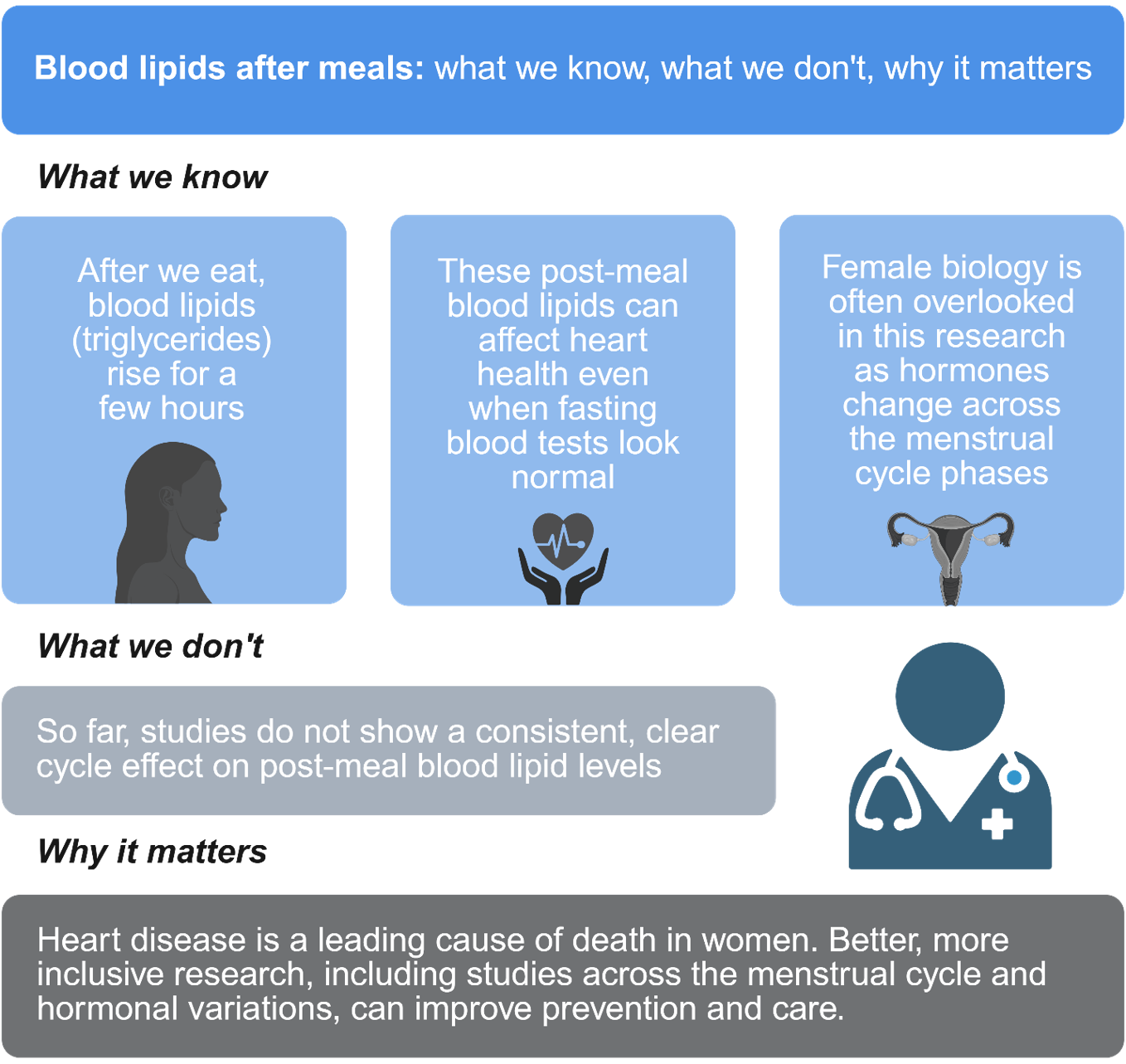
 CC-BY 4.0
Introduction
Living organisms rely on energy sources to sustain life, and triglycerides are the most energy-dense substrate. Triglycerides are lipophilic molecules made of one glycerol and three fatty acids, obtained either through dietary intake or synthesized in the liver via lipogenesis (Nye et al., 2008). After consuming dietary fats (e.g., cholesterol, phospholipids, and triglycerides), intestinal-borne triglyceride-rich lipoproteins are transiently produced and released into the bloodstream across all vertebrate species with a gastrointestinal tract and internal organs such as the liver (Bauer et al., 2005). Many of these triglycerides are subsequently recycled by the liver and re-released into systemic circulation through hepatic triglyceride-rich lipoproteins. In healthy individuals, circulating triglyceride concentrations typically peak two to four hours after a meal and return to baseline within about six hours (Dubois et al., 1998). This period, during which food is digested and absorbed, is known as the postprandial state. The accompanying transient rise in circulating triglyceride concentrations is commonly referred to as postprandial lipemia, also known as postprandial triglyceridemia or postprandial triglyceride excursions.
Modern humans spend much of their waking hours in the postprandial state, assuming three meals are consumed per day at roughly five-hour intervals (Berry et al., 2020). During this time, arterial blood vessels continuously transport triglyceride-rich lipoproteins originating from both the intestine and the liver. In addition to triglycerides, these lipoproteins carry phospholipids, free and esterified cholesterol, and various proteins. As tissues hydrolyze the triglyceride content of triglyceride-rich lipoproteins, these particles become progressively enriched in their other constituents, forming triglyceride-rich lipoprotein remnants. Both the parent lipoproteins and their remnants may interact with the vascular endothelium and, over time, contribute to lipid accumulation within the arterial wall, a key process in the development of atherosclerosis (Zilversmit, 1979). Consequently, individuals consuming diets high in fat and cholesterol, and thus experiencing greater postprandial triglyceride excursions compared with those consuming low-fat diets, are at increased risk of atherosclerosis. Consistent with this, a substantial body of evidence demonstrates that elevated postprandial concentrations of triglyceride-rich lipoproteins and their remnants are independent risk factors for atherosclerotic cardiovascular disease, beyond the contribution of fasting lipids and fasting cholesterols (Nordestgaard & Varbo, 2014).
While statins and related pharmaceutical therapies have significantly lowered fasting cholesterol and lipid concentrations, progress in lowering postprandial triglyceride excursions has been more limited (Borén et al., 2020; Ference et al., 2017; Langsted & Nordestgaard, 2015). Current evidence supports regular physical activity, weight management, dietary changes, and certain medications as effective strategies, with insulin resistance, visceral adiposity, and individual genetic variation in regulators of triglyceride-rich lipoprotein metabolism emerging as key factors explaining individual variability (Bozzetto et al., 2020; Evans et al., 2000; Freese et al., 2014; Klop et al., 2013; Paglialunga & Cianflone, 2007; Takeda et al., 2023a, 2023b; Vergès et al., 2018). Progress in this field has likely been hampered by the resource-intensive nature of postprandial studies, which require extended monitoring, multiple blood samples, specialized facilities, and greater commitment from participants and staff than fasting measurements, thereby increasing both complexity and cost. Although the peak of research on postprandial triglycerides may have occurred around a decade ago (see Figure 1 for more details), ongoing research remains essential. Atherosclerotic cardiovascular disease, partly driven by high blood lipid levels, remains the leading cause of death worldwide, highlighting the importance of better understanding and targeting postprandial lipid metabolism as a modifiable risk factor (Joseph et al., 2017; World Heart Federation, 2024).
Equitable research that benefits society requires collective efforts involving diverse populations across age, ethnicity, biological sex (e.g., female, male, intersex), and gender (e.g., women, men, transgender, non-binary) (Washington et al., 2023). A persistent challenge in human physiology research, including studies of postprandial lipemia, is the entrenched belief that studying females introduces excessive variability due to hormonal fluctuations across the menstrual cycle, thereby reducing statistical power (James et al., 2023; Miller, 2014). As a result, females have historically been underrepresented in research. Yet, given that approximately half of the global population is female, overlooking these influences is neither scientifically justified nor socially responsible. This point is reinforced by the increasing number of funding agencies mandating diversity, equity, and inclusion in research design (European Commission, 2025; Government of Canada, 2025; National Institutes of Health, 2021; UK Research & Innovation, 2025). This gap is particularly consequential because elevated triglyceride concentrations confer a greater cardiovascular risk in females than in males, and female lipid metabolism is known to shift across the lifespan (Miller et al., 2011; van Oortmerssen et al., 2025). In this context, advancing our understanding of how menstrual cycle phases impact postprandial triglyceride metabolism earlier in life is essential for optimizing study design, refining therapeutic approaches, and improving clinical assessments of cardiometabolic risk. A conceptual overview of this review’s central research question and key variables is presented in Figure 2.
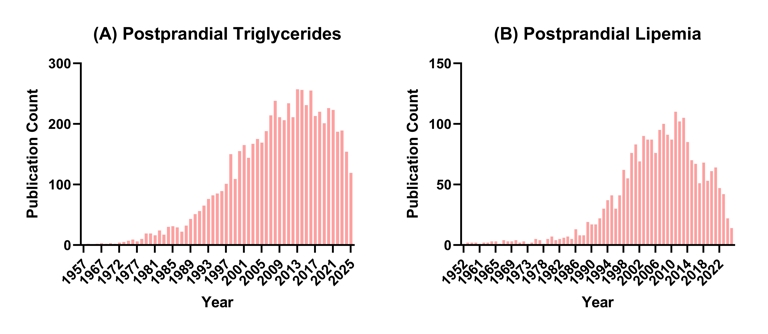
Figure 1 - Timeline of PubMed publications related to “postprandial triglycerides” (Panel A) and “postprandial lipemia” (Panel B) according to search results on September 19, 2025.
Accordingly, the objective of this narrative review is to provide an overview of postprandial triglyceride metabolism, highlight biological sex-related differences, examine the potential influence of menstrual cycle phases on postprandial triglyceride excursions, and outline future research directions. To improve translational relevance, we also include perspectives from a community clinician and a patient partner, offering complementary insights into the practical implications of postprandial lipemia for patient care and the lived experiences of cardiometabolic disease prevention. While detailed resources are available on many of these topics, our goal is to present a synthesis that serves as an accessible reference for students, researchers, and lifelong learners interested in postprandial lipemia. To support bilingual dissemination and accessibility, a French version of the manuscript (Appendix A) is included in the Supplementary File. Notably, this review does not adhere to systematic review or critical review methods; rather, it is conceived as a narrative review according to the typology of Grant & Booth, 2009.
Postprandial triglyceride metabolism
Once dietary fats (e.g., cholesterol, phospholipids, triglycerides) reach the small intestine, bile salts and pancreatic lipases emulsify them into micelles (i.e., spherical clusters of fat), which are absorbed by enterocytes lining the intestinal wall (Bauer et al., 2005). Within enterocytes, lipids are re-esterified and packaged with apolipoprotein B-48 (apoB-48) to form nascent chylomicrons, a class of triglyceride-rich lipoproteins (Martins et al., 1994). Chylomicrons are secreted into the lymphatic system and enter the bloodstream via the thoracic duct, bypassing hepatic portal circulation in the liver, as they are too large to pass through the pores of the blood capillaries in the intestinal villi (Feingold, 2000; Randolph & Miller, 2014). As their triglyceride content is hydrolyzed by the enzyme lipoprotein lipase (LPL) on the capillary endothelium, chylomicrons are converted into remnants that are cleared by the liver (Redgrave, 2004).

Figure 2 - Conceptual overview of the review’s central research question and key variables. This narrative review examines whether and how menstrual cycle phases (orange box; exposure) influence postprandial plasma triglyceride concentrations (red box; primary outcome). Female ovarian hormones (estrogen and progesterone) and their downstream regulators (lipoprotein lipase [LPL], apolipoprotein C-III [ApoC-III], angiopoietin-like proteins [ANGPTLs], hepatic lipase, and insulin sensitivity) are considered as proposed mediating pathways (blue box). Cardiovascular disease risk is presented as the distal clinical context motivating the question (grey box). Created with Canva.com.
LPL plays a key role in clearing triglycerides from the bloodstream and delivering fatty acids to tissues for energy or storage. Since various tissues vary in their lipid requirements and capacity, LPL activity is tightly regulated to manage substantial fluctuations in triglyceride-rich lipoprotein secretion. This involves a complex regulatory network, predominantly mediated by posttranslational modifications of several extracellular proteins, ensuring dynamic modulation of LPL activity under varying physiological conditions (Kersten, 2014; Zhang & Zhang, 2024). These regulatory proteins fall into two main groups. The first group includes apolipoproteins (e.g., apoC-II and apoC-III), which are mostly produced in the liver and bind to various lipoprotein particles, including those rich in triglycerides. Among these, apoC-II and apoC-III, both primarily synthesized in the liver, play opposing roles: apoC-II activates LPL, whereas apoC-III inhibits LPL activity and delays the clearance of triglyceride-rich lipoproteins (Gordts et al., 2016; Kinnunen et al., 1977; Taskinen et al., 2022). Insulin and polyunsaturated fatty acids are both key repressors of apoC-III expression, while glucose, fructose, and saturated fatty acids stimulate its expression (Aguilar-Recarte et al., 2021). The second group consists of angiopoietin-like proteins (e.g., ANGPTL3, ANGPTL4 and ANGPTL8). ANGPTL3, which is continuously secreted by the liver, suppresses LPL activity in muscle and the heart during the postprandial state via an endocrine mechanism (Sylvers-Davie & Davies, 2021). Conversely, during fasting, adipocyte-produced ANGPTL4 inhibits LPL in adipose tissue through a local paracrine action. In the postprandial period, ANGPTL8 forms a complex with ANGPTL3 and ANGPTL4, enhancing ANGPTL3 inhibition of muscle LPL and releasing ANGPTL4’s inhibition of adipose tissue LPL, thus favouring lipid storage in adipose tissue (Sylvers-Davie & Davies, 2021; Zhang & Zhang, 2024).
In parallel, the liver continuously synthesizes very-low-density lipoproteins (VLDL), a class of triglyceride-rich lipoproteins characterized by apolipoprotein B-100 (apoB-100) (Segrest et al., 2001). The triglyceride content of VLDL reflects hepatic fatty acid availability, which is determined by both exogenous sources (e.g., dietary fat from chylomicron remnants) and endogenous pathways (e.g., de novo lipogenesis and non-esterified fatty acid [NEFA] delivery) (Nielsen & Karpe, 2012). As VLDL particles undergo hydrolysis, they are remodelled into intermediate-density lipoproteins (IDL) and eventually low-density lipoproteins (LDL) (Nordestgaard et al., 2010).
Circulating triglyceride concentrations, therefore, reflect the dynamic balance between the production and clearance of triglyceride-rich lipoproteins (see Figure 3 for a schematic summary). This balance is strongly influenced by hormonal and nutritional factors, which determine whether the fatty acids derived from intravascular triglyceride hydrolysis by LPL will be used for subsequent oxidation and/or storage (Basu & Goldberg, 2020; Kersten, 2014; Packard et al., 2020). When LPL activity is impaired, clearance is delayed, leading to exaggerated or prolonged triglyceride excursions (Young et al., 2019). Notably, LPL is a highly conserved protein among mammals and plays a central role in systemic lipid metabolism (Wu et al., 2021). Genetically inherited defects in LPL, such as those observed in familial chylomicronemia syndrome, result in severe hypertriglyceridemia and lipotoxic complications, including xanthomas, lipemia retinalis, and pancreatitis (Santamarina-Fojo, 1998). Accumulating evidence from epidemiological and genetic studies supports a causal relationship between elevated plasma triglyceride concentrations and triglyceride-rich lipoproteins and their remnants, and the risk of atherosclerotic cardiovascular disease (Ginsberg et al., 2021). In the fasting state, triglyceride concentrations exceeding 1.7 mmol/L (>150 mg/dL) are widely recognized as clinically relevant for atherosclerotic cardiovascular disease risk. In contrast, severe hypertriglyceridemia, defined by triglyceride concentrations >10 mmol/L (>880 mg/dL), confers a substantial risk of acute pancreatitis, with the risk increasing markedly at levels >20 mmol/L (Ginsberg et al., 2021).
Biological sex-related differences in triglyceride metabolism
Lipid metabolism varies significantly between females and males. For example, premenopausal females generally exhibit a less atherogenic adipose tissue distribution, more favourable circulating lipid profiles, and lower fasting triglyceride concentrations than males. These sex-related differences in lipid biology have been extensively reviewed elsewhere (Beaudry & Devries, 2019; Chang et al., 2018; Chella Krishnan et al., 2018; Goossens et al., 2021; Valencak et al., 2017; Wang et al., 2011; Williams, 2004). Goossens et al., 2021 for example, explored sexual dimorphism across tissues involved in lipid metabolism and its implications for cardiometabolic health. Building on these foundations, this section discusses the differences in the metabolism of triglyceride-rich lipoproteins and their remnants, and their importance in relation to atherosclerotic cardiovascular disease.
Females generally display lower postprandial triglyceride excursions (i.e., smaller transient rises in blood triglyceride concentrations following a meal) than males (Goulet et al., 2024; Knuth & Horowitz, 2006; Pramfalk et al., 2015; Votruba & Jensen, 2006). However, this advantage is not observed when males and females are matched for visceral adipose tissue (Couillard et al., 1999). Proposed mechanisms underlying the female postprandial advantage include decreased intestinal lipid absorption, reduced hepatic lipid biosynthesis, and/or enhanced peripheral tissue clearance. To date, there is no evidence of sex-based differences in intestinal lipid absorption or apolipoprotein B-48 synthesis. Using isotope-labelled tracers, Horton et al., 2002 showed that the initial rate of dietary lipid appearance in the circulation did not differ between females and males, suggesting that intestinal absorption is not the key determinant. Instead, their work demonstrated that females exhibit faster dietary lipid clearance, largely through greater skeletal muscle triglyceride uptake, which contributes substantially to the female postprandial advantage (Horton et al., 2002).

Figure 3 - Summary of postprandial triglyceride-rich lipoprotein metabolism. Dietary fats are absorbed by the intestine and emulsified by bile acids (Step 1), then converted into chylomicrons (triglyceride-rich apoB-48 particles; Step 2), which are hydrolyzed by endothelium-bound lipoprotein lipase (LPL; Step 3), releasing non-esterified fatty acids (NEFA) into circulation (Step 4), which are taken up by peripheral tissues (mainly adipose tissue; Step 5). The liver produces very-low-density lipoproteins (VLDL; triglyceride-rich apoB-100 particles; Step 8), which are then hydrolyzed by LPL (Step 9), releasing NEFA into circulation (Step 10), which are also taken up by peripheral tissues (Step 11). The hydrolysis of chylomicrons and VLDL leads to the accumulation of their remnants (e.g., chylomicron remnants, intermediate-density lipoprotein [IDL], low-density lipoprotein [LDL]; Steps 6, 12, and 13), which are recycled by the liver (Steps 7 and 14) into bile salts, cholesterol esters, high-density lipoprotein (HDL), VLDL, and others. During the postprandial state, LPL is tightly regulated by angiopoietin-like protein 8 (ANGPTL8), along with ANGPTL3 and ANGPTL4, as well as other factors such as insulin, apolipoprotein C-II (apoC-II), and apoC-III. Adapted from Lopez-Miranda et al., 2007. Created with BioRender.com.
During fasting, circulating triglyceride concentrations are primarily determined by VLDL production and clearance. On average, females exhibit lower fasting total triglyceride concentrations than males, a difference explained by higher VLDL concentrations in males (Carlson, 1960; Carlson & Ericsson, 1975; Freedman et al., 2004; Mittendorfer et al., 2016). Notably, sex differences in VLDL dynamics are complex. For example, while females have approximately 70% higher VLDL-triglyceride secretion rates, they also demonstrate 70% higher triglyceride clearance rates, resulting in lower net triglyceride concentrations than males (Magkos et al., 2007). Moreover, females secrete fewer apoB-100 particles, leading to the production of VLDL particles with higher triglyceride content per particle and generally larger VLDL particle size than their male counterparts. Larger triglyceride-rich lipoprotein size may itself facilitate clearance, as lipoproteins with greater triglyceride content may be more susceptible to hydrolysis by LPL (Fisher et al., 1995). A summary of the biological sex-related differences in triglyceride metabolism is illustrated in Figure 4.
The clearance and residence time of triglyceride-rich lipoproteins and their remnants are crucial in determining atherosclerotic risk. While females and males display similar apolipoprotein B-100 clearance rates, females have shorter residence times (Magkos et al., 2007). This represents a protective mechanism, since prolonged residence of VLDL or IDL increases remnant cholesterol exposure to the arterial wall, promoting lipid accumulation and atherosclerotic plaque formation (Nordestgaard & Varbo, 2014). Despite this relative advantage, atherosclerotic cardiovascular disease remains the leading cause of death worldwide in both sexes, and elevated triglyceride concentrations are a significant risk factor, more so in females than in males (Miller et al., 2011). The mechanisms underlying this disproportionately greater triglyceride-related risk in females remain incompletely understood. Contributing factors may include the tendency for elevated triglycerides to co-occur with low HDL-cholesterol and small, dense LDL particles, the post-menopausal loss of hormone-mediated clearance of triglyceride-rich lipoproteins, and sex-related differences in coronary artery calibre and microvascular function (Prasad et al., 2019; Smith et al., 2014; Waheed et al., 2020; Wang et al., 2011). These hypotheses warrant further mechanistic investigation.
The interpretation of sex-related differences in postprandial triglyceride metabolism is further complicated by lifestyle factors that themselves modulate this response, including physical activity. A meta-analysis of 76 studies demonstrated that a single prior bout of exercise produces a moderate reduction in the postprandial triglyceride response (Cohen’s d ≈ −0.60), with the magnitude of the effect scaling with the energy expenditure of the exercise bout and the resulting energy deficit (Freese et al., 2014). Importantly, the same meta-analysis reported that females exhibit a substantially larger reduction in the total triglyceride response to exercise than males (d = −0.96 vs −0.57), indicating that the postprandial lipid response to exercise is itself sexually dimorphic (Freese et al., 2014). These effects must be considered alongside well-documented sex differences in habitual physical activity, which, on average, is lower in females than in males. Because a recent exercise bout substantially lowers postprandial triglyceride concentrations, any cross-sex comparison that does not standardize or measure pre-test activity may confound a sex-specific response with a sex-specific exposure. Dietary factors operate similarly: meal composition, prior dietary patterns (e.g., Mediterranean-style versus Western diets), and habitual energy intake all modify the postprandial triglyceride response, and prior dietary intake varies systematically across menstrual cycle phases (e.g., energy and macronutrient intake increase in the luteal phase) (Bozzetto et al., 2020; Davidsen et al., 2007; Hirschberg, 2012). These considerations argue for explicit standardization of, or statistical adjustment for, physical activity and recent dietary intake in studies of sex- and menstrual cycle-related differences in postprandial triglyceride metabolism.

Figure 4 - Schematic summary of biological sex-related differences in body composition, lipid metabolism, and circulating lipid profile. Relative differences are indicated using directional arrows. Compared with males, females generally exhibit greater total and subcutaneous adipose tissue mass (relative to total body mass), smaller visceral adipose depots (relative to total body mass), lower skeletal muscle mass (relative to total body mass), higher insulin sensitivity, enhanced hepatic triglyceride secretion and clearance, larger triglyceride-rich lipoprotein particles, greater skeletal muscle triglyceride uptake, higher lipid oxidation and lipolysis, and lower de novo lipogenesis. Corresponding differences in circulating fasting lipid profiles typically include higher HDL cholesterol and lower LDL cholesterol, VLDL cholesterol, chylomicron cholesterol, triglycerides, and fatty acids in females (adapted from Goossens et al., 2021). Panels A and B show representative postprandial plasma insulin and total triglyceride responses to a high-fat meal (59% of kcal from fat) in females (blue) and males (green), with shaded regions indicating the 95% confidence interval (adapted from Goulet et al., 2024). For a similar insulinemic challenge, females generally exhibit a smaller postprandial rise in circulating triglycerides than males. Created with BioRender.com.
Cyclical variations in female reproductive hormones
The menstrual cycle encompasses three interrelated physiological processes: the ovarian, hormonal, and endometrial (uterine) cycles (Elliott-Sale et al., 2025). These cycles are coordinated through dynamic fluctuations in estrogen, progesterone, luteinizing hormone (LH), and follicle-stimulating hormone (FSH) (see Figure 5 for a schematic summary).

Figure 5 - Overview of cyclical variations in female reproductive hormones and associated physiological changes. Panel A) Circulating concentrations across the menstrual cycle phases, highlighting the luteinizing hormone (LH) surge, estrogen rise, follicle-stimulating hormone (FSH), and progesterone variations preceding and following ovulation. Panel B) Morphological progression of ovarian follicles throughout the follicular and luteal phases, from the primary follicle to the corpus albicans. Panel C) Corresponding changes in the endometrial lining, showing the menstrual, proliferative, and secretory phases. Notably, the follicular phase of the ovarian cycle coincides with the menstrual and proliferative phases of the endometrial cycle, whereas the secretory phase coincides with the luteal phase. Adapted from Elliott-Sale et al., 2025. Created with BioRender.com.
The ovarian cycle describes the maturation and release of an oocyte and is governed primarily by LH and FSH. At the end of one cycle, a modest rise in FSH promotes follicular development. As follicles grow, they secrete estrogen, which exerts negative feedback on FSH. The dominant follicle, resilient to this suppression, continues to produce estrogen, triggering an LH surge that induces ovulation. The ruptured follicle transforms into the corpus luteum, which secretes both progesterone and estrogen. These hormones suppress further FSH and LH secretion, stabilizing the luteal phase. In the absence of fertilization, the corpus luteum degenerates into a corpus albicans, ovarian hormone concentrations fall, and FSH and LH rise again to initiate a new cycle (Farage et al., 2009).
The endometrial cycle reflects cyclical remodelling of the uterine lining under the influence of ovarian hormones. During the menstrual phase (marked by the onset of menstrual bleeding), the endometrium sheds in response to declining estrogen and progesterone concentrations. The proliferative phase, characterized by rising estrogen concentrations, promotes regeneration and thickening of the uterine lining. Following ovulation, elevated progesterone from the corpus luteum drives the secretory phase, during which glandular and vascular development prepare the uterus for implantation. In the absence of fertilization, progesterone withdrawal triggers the breakdown of the endometrium and menstruation, initiating the next cycle (Farage et al., 2009).
Hormonal contraceptives, menopause, and hormonal replacement therapy can alter these cyclical patterns. Most hormonal contraceptives contain synthetic estrogen and/or synthetic progesterone (progestin), maintaining stable hormone concentrations and suppressing endogenous FSH and LH via negative feedback (Lacasse et al., 2024). This prevents ovulation from occurring and causes lighter or no bleeding at all. Conversely, menopause is characterized by declining ovarian function, reduced estrogen and progesterone production, and compensatory elevations in FSH and LH (Rasul et al., 2025). Consequently, post-menopausal females cease experiencing menses, as ovarian function declines and ovulation no longer occurs (Strelow et al., 2024). Symptoms commonly associated with menopause, such as hot flashes, night sweats, and vaginal dryness, can be relieved using hormonal replacement therapy, which restores estrogen and/or progesterone concentrations, although ovulation and menses do not resume (Cameron et al., 2024).
Accurate classification of the menstrual cycle phases is essential for research and should rely on direct biochemical verification rather than calendar estimation (Elliott-Sale et al., 2025). Calendar-based tracking or app-assisted scheduling can be useful for planning sample collection; however, indirect markers such as basal body temperature are unreliable in controlled experimental settings (Hampson & Young, 2007). Although basal body temperature is a cost-effective alternative that can be performed by the participant, it is susceptible to being confounded by external factors, such as time of day, environmental influences, fevers from infection, emotional stress, alcohol intake, and changes in oral contraceptive use, which can affect basal body temperature (Steward & Raja, 2023). Notably, basal body temperature typically rises after ovulation due to progesterone’s thermogenic effect, but the magnitude of this shift (~0.3-0.7°C) is small, highly variable, and retrospective. Recent methodological guidelines therefore discourage the use of basal body temperature for phase classification, instead recommending verification of circulating estrogen and progesterone concentrations and urinary LH concentrations by biochemical analysis (Janse De Jonge et al., 2019).
Without appropriate measurements, the presence of menses might lead to a false identification of a normal cycle (referred to as eumenorrheic), as bleeding can occur in irregular (oligomenorrheic) cycles. In such cases, hormone disturbances go undetected (Elliott-Sale et al., 2025). Quantification of estradiol (the most biologically active form of estrogen) and progesterone by venous sampling remains the gold standard (Janse De Jonge et al., 2019; Schlie et al., 2025). Multiple time-point measurements are recommended to verify hormonal peaks and avoid misclassification (Anckaert et al., 2021). Additionally, urinary LH tests should be employed to verify ovulation, as menstrual bleeding can occur in anovulatory cycles (Schlie et al., 2025). Given the inter- and intra-individual variability of menstrual cycle phases, researchers should clearly define “normal” cycles in their protocols and acknowledge that individual hormone trajectories often diverge from population-mean curves (Alliende, 2002; Fehring et al., 2006).
Potential interactions between the menstrual cycle phases and postprandial triglyceride excursions
Although this review did not employ a systematic approach and some relevant articles may therefore be excluded from our narrative, relatively few studies have examined postprandial triglyceride excursions across menstrual cycle phases. The earliest study, published in 1992 by Wendler et al., 1992, compared the follicular phase with the luteal phase following a 780-kcal high-fat meal (58% of calories from fat). Using the total area under the curve over six hours, they reported no significant differences in triglyceride concentrations between the phases. In 2005, Uranga et al. also found no differences in triglyceride concentrations between the follicular and luteal phases over a 24-hour period with 14 measurements. This was observed after a mixed isotope-labelled meal (27% of calories from fat) in the morning, followed by two additional meals at lunch and dinner, all of which provided the same energy substrate distribution and totalled the energy requirement estimated to maintain a stable body weight. In contrast, Gill et al., 2005 conducted a study published in 2005 using a high-fat meal providing 70 kJ per kilogram of body mass (~67% of calories from fat) and observed lower postprandial triglyceride concentrations in the luteal phase than in the follicular phase. These differences were evident in both total area under the curve and in lower triglyceride concentrations at 2, 3, and 4 hours postprandially. More recently, in 2021, Tzeravini et al. reported lower postprandial triglyceride concentrations during the luteal phase than the follicular phase at 2, 3, 4, and 5 hours following a high-fat meal (81% of calories from fat); however, these phase-dependent differences were no longer evident when comparisons were performed using median rather than mean values, and no differences were observed in incremental area under the curve between menstrual cycle phases.
Taken together, these findings illustrate heterogeneity in the reported influence of the menstrual cycle phase on postprandial triglyceride excursions. The observed effects vary not only across studies but also across analytical approaches within studies, and may partially reflect methodological differences such as study meal composition, caloric load, and the duration and frequency of blood sampling (see Table 1 for more details). At present, the evidence does not clearly support a consistent effect of the menstrual cycle phase on postprandial triglyceride excursions. However, differences in postprandial triglyceride metabolism across the menstrual cycle phases could plausibly arise from fluctuations in female ovarian hormones. The hypothesis is both supported and challenged by studies reporting either modulatory effects or no measurable influence of estrogen, progesterone, or progestin on whole-body and regional lipid metabolism. However, most of this evidence is derived from studies conducted under fasting conditions or resting conditions, which limits its direct applicability to the postprandial state.
Given that triglyceride clearance relies mainly on the hydrolysis of triglyceride-rich lipoproteins, it is reasonable to consider LPL (the key enzyme driving this process) as a potential contributor to any menstrual cycle-related differences in postprandial triglyceride excursions. LPL is an endothelium-bound enzyme responsible for hydrolyzing triglyceride-rich lipoproteins, including liver-derived VLDL and intestinal-borne chylomicrons formed from dietary fats. Because the enzyme is anchored to the vascular endothelium, its circulating concentration (and thus its abundance on tissue membranes) can be assessed in two ways: pre-heparin, which reflects the predominantly inactive circulating form, and post-heparin, measured after intravenous heparin administration, which releases the active enzyme into circulation. LPL activity is a major determinant of triglyceride clearance and tissue uptake. Although post-heparin concentrations correlate strongly with in vitro measures of LPL activity (r = 0.75–0.80), they remain an indirect proxy for in vivo activity (Tornvall et al., 1995). Furthermore, the enzyme’s activity does not consistently predict tissue triglyceride uptake, underscoring the influence of additional regulatory factors such as regional blood flow, fatty acid transport proteins, and local metabolic demands (Mårin et al., 1990). In particular, a mismatch between LPL-mediated hydrolysis and tissue fatty acid uptake capacity can result in spillover of non-esterified fatty acids into the systemic circulation. This process could plausibly vary across menstrual cycle phases if fatty acid transporter expression or activity is hormonally regulated.
Table 1 - Summary of the studies assessing the influence of the menstrual cycle phase on postprandial triglyceride excursions.
|
Reference |
||||
|---|---|---|---|---|
|
Participant characteristics |
||||
|
Participants (n) |
13 |
10 |
11 |
25 |
|
Age (years) |
21 – 28 (min – max) |
32 ± 2 (mean ± SD) |
25.7 ± 5.7 (mean ± SD) |
19 – 45 (min – max) |
|
BMI (kg/m2) |
20.6 ± 0.4 (mean ± SEM) |
22.2 ± 0.4 (mean ± SD) |
22.7 ± 4.3 (mean ± SD) |
22.3 ± 2.8 (mean ± SD) |
|
Study design |
||||
|
Type of meal |
High-fat |
Mixed |
High-fat |
High-fat |
|
Percentage of calories from fat (%) |
58 |
27 |
~ 67 |
81 |
|
Preliminary |
12-hour overnight fast; recorded dietary intake over the period of one menstrual cycle |
12-hour overnight fast; isocaloric diet provided one week before; no vigorous exercise 2 days before |
12-hour overnight fast; recorded dietary intake 2 days before; no alcohol 1 day before; no planned physical activity 3 days before |
10-12-hour overnight fast; isocaloric Mediterranean diet provided for 2 days before; no alcohol 2 days before; no physical activity 3 days before |
|
Menstrual cycle tracking method |
Basal body temperature |
Not defined |
Basal body temperature |
Basal body temperature |
|
Follicular phase classification |
Within 8 days of the onset of menstrual bleeding |
Not defined |
Within 6 days of the onset of menstrual bleeding |
During menstruation or at most 2 days after its end |
|
Luteal phase classification |
Between day 4 after the assumed time of ovulation and 2 days before the next predicted onset of menstrual bleeding |
Not defined |
Midway between the assumed time of ovulation and the next predicted onset of menstrual bleeding |
Within 7 days before the expected beginning of the next cycle |
|
Hormonal confirmation by biochemical analysis |
None |
Progesterone |
Progesterone |
None |
|
Triglyceride excursion quantification method |
AUC |
Means of each time point |
AUC and means of each time point |
iAUC, means and medians of each time point |
|
Postprandial excursion |
||||
|
Monitoring time |
6 hours |
24 hours |
6 hours |
6 hours |
|
Total triglycerides |
No difference |
No difference |
~24 % higher AUC in the follicular phase; higher at 2, 3, and 4 hours in the follicular phase |
No difference in iAUC; higher at 2, 3, 4 and 5 hours in the follicular phase |
Note: This table may not include all relevant studies, as the narrative review did not employ a systematic approach. Abbreviations: area under the curve (AUC), incremental area under the curve (iAUC), body mass index (BMI), standard deviation (SD), standard error of the mean (SEM).
Studies comparing LPL activity between the follicular and luteal phases during fasting generally report no differences in either pre-heparin or post-heparin plasma concentrations of the enzyme (Magkos et al., 2007; Tikkanen et al., 1986). Likewise, in vitro assessments of lipolysis and LPL activity in femoral or abdominal adipose tissue have found no phase-related changes (Rebuffé-Scrive et al., 1985). Notably, these studies were conducted under fasting conditions or in vitro. Conducting analogous postprandial studies is more resource-intensive, requiring prolonged monitoring, multiple blood sampling points, and greater involvement from participants and staff. Moreover, measuring post-heparin LPL during postprandial lipemia poses methodological challenges. For example, administering heparin postprandially would artificially decrease circulating triglyceride concentrations by accelerating lipolysis and increasing NEFA concentrations (Yang et al., 1999).
One early investigation from 1979 offers a contrasting perspective by examining the LPL activator property of plasma collected from participants during each menstrual cycle phase (Mendoza et al., 1979). Using an in vitro model with milk-derived LPL, Mendoza et al., 1979 reported that plasma obtained during the luteal phase had a significantly greater capacity to activate the milk-derived LPL, reflecting an increased hydrolysis of triglyceride-rich lipoproteins, compared with plasma collected during the follicular phase. Collectively, these findings suggest that potential menstrual cycle-related differences in postprandial triglyceride metabolism cannot be readily explained by changes in LPL abundance alone. Instead, any effects may arise from phase-dependent alterations in the environment surrounding the enzyme, including differences in LPL regulatory proteins such as ApoC-III and ANGPTLs, as well as other factors such as insulin and local tissue metabolic demands.
Insulin is a central regulator of postprandial triglyceride metabolism, coordinating the balance between triglyceride-rich lipoprotein production, intravascular lipolysis, and tissue NEFA uptake (Saltiel & Kahn, 2001). In the postprandial state, insulin suppresses adipose tissue lipolysis, thereby reducing circulating NEFA availability for hepatic VLDL synthesis, while simultaneously promoting LPL-mediated triglyceride clearance in insulin-sensitive tissues such as skeletal muscle and adipose tissue (Luo & Liu, 2016). These actions are further modulated by ANGPTL3 and ANGPTL4, which inhibit LPL (Sylvers-Davie & Davies, 2021). Dysregulation of insulin signalling or ANGPTL activity, therefore, prolongs the residence time of triglyceride-rich lipoproteins and may exaggerate postprandial triglyceride excursions (Howard, 1999; Sylvers-Davie & Davies, 2021). Insulin sensitivity itself exhibits modest but measurable variation across the menstrual cycle phases (Bingley et al., 2008; González-Ortiz et al., 1998; Pulido & Salazar, 1999; Valdes & Elkind-Hirsch, 1991; Yeung et al., 2010). Longitudinal data from the BioCycle Study (a prospective study that followed 259 females between 18 and 44 years of age for two menstrual cycles between 2005 and 2007) demonstrated small yet significant increases in fasting insulin and Homeostasis Model Assessment of Insulin Resistance (HOMA-IR) from the mid-follicular phase into the early and mid-luteal phases (Wactawski-Wende et al., 2009; Yeung et al., 2010). These changes were driven primarily by alterations in circulating insulin rather than glucose (Wactawski-Wende et al., 2009; Yeung et al., 2010). These fluctuations were positively associated with estrogen and progesterone concentrations, while FSH and sex hormone-binding globulin were inversely associated with insulin resistance. Although the magnitude of these cycle-related changes was small and unlikely to produce large independent effects on postprandial triglyceride responses, subtle phase-dependent differences in insulin sensitivity could nonetheless interact with LPL regulators such as ANGPTLs to influence triglyceride clearance kinetics during the postprandial period. The relevance of this interaction may extend beyond the menstrual cycle as the prevalence of insulin resistance rises. For instance, type II diabetes is associated with a disproportionately greater excess cardiovascular risk in females than in males, including approximately 44% higher relative risk of coronary heart disease and a 27% higher relative risk of stroke (Peters et al., 2014a, 2014b). This aligns with evidence showing that the premenopausal advantage conferred against postprandial triglyceride excursions is attenuated or lost following the onset of type II diabetes (Masding et al., 2003).
Other factors that influence postprandial triglyceride excursions and could plausibly vary across menstrual cycle phases include the rate of appearance or secretion of triglyceride-rich lipoproteins or fatty acids, hepatic lipase activity (another enzyme involved in the hydrolysis of triglyceride-rich lipoproteins), and shifts in metabolic demands such as lipid storage or substrate oxidation. Using isotope-labelled tracers, Magkos et al., 2007 reported no differences between the follicular and luteal phases in fasting VLDL-triglyceride and VLDL-apoB-100 concentrations, secretion rates, or mean residence times. They also observed no differences in VLDL subclass distribution, plasma free fatty acid concentrations or rates of appearance, whole-body substrate oxidation, or plasma concentrations of LPL and hepatic lipase (measured without heparin administration) (Magkos et al., 2007). These findings differ from a separate study that collected post-heparin samples and found lower hepatic lipase activity during the luteal phase compared with the follicular phase, while LPL activity remained unchanged (Tikkanen et al., 1986).

Figure 6 - Schematic summary of the possible difference in postprandial triglyceride concentrations between the menstrual cycle phases (left panel), the methodological variability that may partly explain the heterogeneous findings across studies (middle panel), and the plausible mechanisms by which female ovarian hormone fluctuations might alter postprandial triglyceride concentrations across the menstrual cycle phases (right panel). Created with BioRender.com.
The potential influence of the menstrual cycle phase on postprandial triglyceride concentrations is partly supported by studies examining hormone replacement therapy and hormonal contraceptives that use similar female ovarian hormones such as estrogen, progesterone, or progestin. For example, oral estrogen raises fasting triglyceride concentrations by increasing VLDL production, whereas transdermal and intranasal estrogen may have a lesser or no effect on triglyceride concentrations (Baksu et al., 2007; Goodman, 2012; Wang et al., 2011). In contrast, a stable-isotope study showed that transdermal estrogen accelerates VLDL clearance (Smith et al., 2014). Furthermore, evidence from studies using animal and cellular models indicates that estrogen regulates hepatic triglyceride production, adipose lipolysis, and muscle fatty acid uptake through estrogen receptor alpha, and helps maintain insulin sensitivity (D’Eon et al., 2005; Ellis et al., 1994; Heine et al., 2000; Pedram et al., 2013; Zhu et al., 2013, 2014). Progesterone, however, shows more variable effects, with some studies suggesting increased adipose LPL activity or hepatic lipogenesis, while others show little effect on circulating triglycerides (Beck, 1977; Darj et al., 1992; Jeong et al., 2024; Shirling et al., 1981). Together, lower estrogen and progesterone concentrations in the follicular phase may contribute to higher postprandial triglyceride concentrations than in the luteal phase, although this remains speculative due to limited evidence (see Figure 6 for a schematic summary). Caution should also be exercised when extrapolating fasting physiology to the postprandial state and when extrapolating findings from exogenous hormone administration to endogenous hormone fluctuations. Studies specifically designed to evaluate postprandial metabolism, with rigorous hormonal validation, remain necessary to clarify the influence of menstrual cycle phases on postprandial triglyceride excursions.
Future research directions
Future research on lipid metabolism must move beyond the traditional emphasis on fasting lipid profiles and better characterize the clinical relevance of triglyceride-rich lipoproteins and their remnants in the postprandial state (see Box 1 for key unresolved questions). These particles substantially contribute to the “residual risk” of atherosclerotic cardiovascular disease, remaining as high as 50%, even in patients receiving optimized LDL-cholesterol-lowering statin therapies (Nakamura et al., 2016; Rikhi & Shapiro, 2022; Vallejo-Vaz et al., 2020). Elevated concentrations of postprandial triglyceride-rich lipoproteins and their remnants are now understood as major contributors to this residual risk (Chait et al., 2020; Nordestgaard & Varbo, 2014; Sascău et al., 2021), prompting efforts to standardize testing methods for postprandial lipid profiles and establish clear reference values for improved diagnosis and risk stratification.
Box 1 - Key unresolved questions.
Mechanisms of hormonal action in the postprandial state. By what mechanisms do estrogen and progesterone modulate postprandial (as distinct from fasting) triglyceride metabolism, and are these effects mediated primarily through lipoprotein lipase regulation, hepatic triglyceride-rich lipoprotein production, fatty acid transporter capacity, insulin sensitivity, or a combination of these?
Postprandial triglyceride dynamics across the female life course. How do postprandial triglyceride responses change across adulthood, from reproductive years, through pregnancy and lactation, to the menopausal transition and post-menopause?
Menopause, the female postprandial advantage, and cardiovascular risk. Does the attenuation of the premenopausal female postprandial advantage at menopause contribute to the accelerated rise in cardiovascular disease risk observed in females, and is this trajectory modifiable through lifestyle or pharmacological intervention?
Disentangling confounders from genuine cycle effects. To what extent do phase-dependent variations in habitual diet, physical activity, and insulin sensitivity confound apparent menstrual-cycle effects on postprandial triglycerides, and can rigorously standardized protocols isolate the independent contribution of hormonal fluctuations?
Feasibility of postprandial assessment. Can ambulatory or continuous lipid-monitoring technologies (analogous to continuous glucose monitoring) make repeated postprandial triglyceride assessment feasible across menstrual cycle phases, both in controlled studies and in real-world clinical settings?
Personalized approaches are increasingly necessary, given substantial inter-individual variability in postprandial responses driven by genetics, dietary composition, adiposity, insulin sensitivity, circadian rhythms, and biological sex. Future studies should examine how these factors interact with menstrual cycle phases to influence postprandial lipid responses. Emerging therapies, including RNA-silencing agents and monoclonal antibodies targeting apoC-II, apoC-III, or ANGPTLs, which show promise in improving postprandial lipid handling, warrant evaluation under controlled postprandial conditions and across menstrual cycle phases (Biolo et al., 2025; Canfora & Pierno, 2024). Lifestyle interventions remain foundational, emphasizing dietary patterns such as the Mediterranean diet, regular physical activity, and sleep optimization. Additionally, modulation of the gut microbiota is emerging as a potential avenue for reducing postprandial lipemia, reflecting growing interest in the microbiome’s role in lipid metabolism (Yu et al., 2019).
Mechanistic research should further investigate how postprandial lipid metabolism interfaces with endothelial function, inflammation, and tissue-specific insulin action. Emphasis should be placed on pathways regulated by LPL, apoC-II, apoC-III, ANGPTL3/4/8, and hepatic lipid production, as these may plausibly vary with menstrual hormones yet remain untested in postprandial settings. Advanced methodologies, including untargeted lipidomics, stable isotope tracers, and computational modelling, are enabling unprecedented insights into the complex dynamics of lipid processing after meals. Collectively, these developments point toward a holistic, personalized, and proactive approach to managing postprandial lipid metabolism, aiming to reduce cardiometabolic risk and prevent atherosclerotic cardiovascular disease and related metabolic disorders.
To advance both research and clinical practice, future work should prioritize high-level evidence synthesis, including systematic reviews and meta-analyses that incorporate risk-of-bias assessment and methodological quality evaluation. Such efforts are critical for determining the robustness and reproducibility of reported findings, informing standardized protocols, and distinguishing genuine physiological patterns from study artifacts. These tasks were beyond the scope of the present narrative review but represent essential next steps for the field. Future research should also include a wider variety of perspectives to enhance translational impact and adhere to strict methodological standards. This includes verifying menstrual cycle phases biochemically; using standardized, replicable meal challenges with a clear rationale; ensuring adequate sample sizes; controlling for confounding factors such as physical activity, sleep, and recent dietary intake; and incorporating mechanistic explanations, such as LPL regulators, triglyceride-rich lipoprotein subclasses, and insulin responses. As outlined in Box 2, integrating clinician and patient perspectives can help shape research priorities, refine study designs, and improve knowledge translation.
Box 2 - Rationale, recruitment, and methods for integrating clinician and patient perspectives.
Rationale. The integration of both clinician and patient perspectives in this narrative review was intentional and reflects a growing recognition that translational relevance in human physiology research requires input from multiple partners. From a clinical standpoint, menstrual-cycle variability in lipid metabolism remains commonly overlooked in routine practice, despite its potential implications for cardiovascular risk assessment and the interpretation of laboratory results. From an ethical perspective, meaningful patient engagement is essential because it provides a deeper understanding of the health situations and lived experiences of actual patients, including those who have been historically underrepresented in research. This approach to engaging knowledge-users in research is supported and encouraged by the Government of Canada’s Tri-Council research funding agencies, which emphasize the importance of culturally safe, respectful, and appropriate research practices.
Recruitment. The clinician and patient partner engaged in this narrative review were recruited through the Institut du Savoir Montfort, a hospital-based leader in French-language research and education in Canada. Communication between the clinician and members of the University of Ottawa’s Behavioural and Metabolism Research Unit was facilitated by a research coordinator at the Institut du Savoir Montfort. The patient partner was recruited through the COFFRE initiative (Communautés Ontariennes Francophones Facilitant la Recherche Équitable), which aims to strengthen the involvement of Francophones in health research in Ontario, Canada. Eligibility criteria for patient partner selection included being 46 years of age or older, having a female biological sex at birth, and being an active user of the healthcare system. Three individuals expressed interest in participating, and the final selection was based on responses to a follow-up email that assessed candidates’ confidence and comfort with the review topic and required tasks.
Methods. The clinician and patient partner perspectives presented in this review were authored directly by two of the coauthors (P.A. and N.B., respectively) in their respective roles. As such, these sections represent individual professional and lived-experience contributions to a narrative review and were not intended as, and should not be interpreted as, qualitative research findings. Each contributor was invited to write a short reflection of a few hundred words and was provided with a set of guiding prompts (e.g., how postprandial lipid metabolism is considered in everyday care; challenges of cost, access, and adherence; how sex and menstrual cycle phases are addressed in practice; and, for the patient partner, lived experience of navigating dietary, lifestyle, and cardiovascular health across reproductive life stages). Contributors were free to address these prompts selectively and to write in their own words and voice. Both were encouraged, where relevant, to connect their reflections to the scientific literature in order to bridge lived and clinical experience with the review’s scientific context. The resulting perspectives are therefore presented as first-person authored contributions.
Community clinician perspective
From a clinician’s standpoint, the approach to lipid testing has evolved considerably across Canada in recent years. In the 2000s, fasting profiles were the standard recommendation for assessing lipid and cholesterol levels. However, there has been a gradual shift toward non-fasting lipid testing, particularly following the 2016 Canadian Cardiovascular Society Guidelines for the Management of Dyslipidemia, which stated that fasting blood work is no longer routinely required except in cases of marked hypertriglyceridemia (Anderson et al., 2016). This change reflects growing recognition that non-fasting samples are equally predictive of cardiovascular risk in the general population.
In routine practice, clinicians rarely consider a patient’s menstrual cycle phase when interpreting lipid results, mainly because high-quality evidence demonstrating clinically meaningful variation is lacking. Yet, clinicians are aware that lipid concentrations change across major reproductive life stages, such as menopause, when total and LDL-cholesterol levels tend to rise, thereby increasing the risk of cardiovascular disease, as demonstrated in the long-term, multigenerational Framingham Heart Study (Kannel et al., 1976). Lipid profiles may also differ during pregnancy and lactation, though data remain limited (Cibickova et al., 2022; Lippi et al., 2007). To my knowledge, few studies have rigorously examined cyclical changes in lipid metabolism across menstrual phases, and none provide guidance sufficient to influence clinical decision-making. This gap reinforces the need for well-designed studies as outlined in this review.
In discussions with patients, cardiovascular risk is typically estimated using the Framingham Risk Score, which incorporates total cholesterol and high-density lipoprotein cholesterol as key predictors of risk (Bosomworth, 2011). Notably, triglycerides are not explicitly considered in the scoring model, leaving their impact on cardiovascular risk often underappreciated. In North America, current practice emphasizes maintaining triglyceride levels below 1.7 mmol/L, particularly following a myocardial infarction (Babadagli et al., 2023; Canalizo-Miranda et al., 2013; Miller et al., 2011). Among pharmacological options, icosapent ethyl (brand name Vascepa® in the United States and Canada) has demonstrated both triglyceride-lowering and cardiovascular mortality benefits in the REDUCE-IT trial (Bhatt et al., 2019). This study provided evidence that targeting residual hypertriglyceridemia with icosapent ethyl reduces major cardiovascular events, including cardiovascular death, in patients with established atherosclerotic cardiovascular disease or diabetes with additional risk factors who were already receiving guideline-directed statin therapy and exhibited well-controlled LDL-cholesterol (Bhatt et al., 2019). By contrast, other lipid-lowering agents such as fibrates and niacin effectively reduce circulating triglyceride concentrations but have not been associated with reductions in cardiovascular or all-cause mortality (AIM-HIGH Investigators et al., 2011; Jun et al., 2010).
Practical challenges remain in applying these findings. Medication cost, accessibility, and the limited number of therapies with proven mortality benefit continue to constrain treatment options. Encouragingly, from my clinical perspective, recent years have seen growing awareness and dialogue, particularly among female patients, regarding the lack of sex-specific evidence in cardiovascular medicine. Institutions such as the Ottawa Heart Institute, Canada’s largest cardiovascular health center, have begun developing dedicated programs in female cardiovascular health, reflecting a necessary shift toward more inclusive and representative research and care (University of Ottawa’s Heart Institute, 2023).
Patient partner perspective
From my perspective as a patient partner, navigating heart and lipid health is both a personal concern and a generational issue, one that reflects the broader need for research that meaningfully includes women across reproductive life stages. As the global population ages, cardiovascular risk is becoming increasingly prevalent, particularly among older adults (Qu et al., 2024). In my case, now approaching 80 years of age and with a hereditary predisposition to stroke, I have closely monitored my lipid profile over the recent years. Despite maintaining balanced eating habits aligned with national dietary guidelines, my physician recently observed a modest rise in blood lipids and cholesterol, a pattern she also noted among many of her patients, particularly those who are Francophone and living in the eastern Ontario region of Canada.
Reflecting on my own health journey, from the onset of menstruation to pregnancy to menopause, I have witnessed how hormonal transitions influence body composition, energy levels, and perceptions of well-being. During adolescence, monthly cycles brought transient bodily discomfort and weight fluctuations that shaped my awareness of body image and health. As I grew older, I became increasingly aware of the association between excess adiposity and elevated lipid concentrations (Bengtsson et al., 1993; DiPietro et al., 1999), and how even modest changes in weight can impact overall cardiovascular risk (Willett et al., 1995). Managing these fluctuations required continuous attention to diet and lifestyle.
My awareness of lipid health was also shaped by observing the experiences of my mother, who navigated a dozen pregnancies and lived until 96 years of age. Her physician emphasized the importance of diet, highlighting key nutrients for vascular and fetal health, such as omega-3 fatty acids, vitamin E, and magnesium. As a career registered nurse, these early lessons influenced how our family approached meal preparation, guided by evolving national dietary recommendations, which continue to emphasize whole foods and plant-forward eating patterns to support cardiovascular health (Health Canada, 2021). Although weight-maintenance strategies and commercial diets have become more prominent in adulthood, many have proven difficult to sustain over the long term, consistent with evidence demonstrating the limited effectiveness of repeated weight-loss attempts in maintaining long-term cardiometabolic improvements (Rhee, 2017).
Participating in discussions with researchers about my lived experience has reinforced the importance of including diverse female perspectives in cardiovascular research. Sex-based representation in study populations is essential if future recommendations are to be scientifically robust, inclusive, and relevant to patients across different reproductive life stages. From my experience as both a patient and a former caregiver, I have found that clear and empathetic communication is crucial in clinical settings. Patients often rely on emotional cues and simplified explanations to understand their diagnoses, and overly technical language can hinder comprehension and erode trust. In my nursing practice, “plain language” also meant ensuring that terminology was accessible and culturally appropriate, particularly when caring for patients from Francophone backgrounds. For example, I would often check whether individuals were comfortable with the use of English medical terms, such as “stroke,” alongside their French equivalents (“accident vasculaire cérébral”), to avoid confusion. This was important because patients ultimately interact with many healthcare professionals, some of whom operate only in English and others who are bilingual. Visual aids, plain language, and opportunities to ask questions may improve understanding and support sustained behavioural change. Ultimately, I believe that patients who are provided with accessible information and who adopt disciplined, proactive habits are more likely to remain motivated and adhere to medical recommendations over time.
Life-course and epidemiological perspective
The relevance of postprandial triglyceride metabolism extends beyond the reproductive years that have been the focus of this review. Owing to secular increases in reproductive lifespan and overall longevity, females now spend a substantial proportion of their lives (approaching 40%) in the postmenopausal state (Lobo et al., 2014). This period is characterized by the loss of estrogen-mediated vascular protection and a concomitant rise in cardiovascular disease risk. Against this backdrop, a small but consistent body of evidence indicates that postprandial lipemia worsens across the menopausal transition. For example, in an oral fat-loading study, postmenopausal females exhibited greater postprandial triglyceride and chylomicron-remnant responses than premenopausal females matched for age and body mass index; notably, the difference in incremental triglyceride response persisted even when groups were additionally matched for fasting triglyceride concentrations (van Beek et al., 1999). Subsequent work has reinforced this observation, reporting reduced postprandial triglyceride clearance after menopause, independent of body mass index, and higher postprandial triglyceride concentrations in postmenopausal than premenopausal females at the population level (Santosa & Jensen, 2015; Zaman et al., 2012).
These postprandial changes occur within a broader shift toward a more atherogenic profile at menopause. The decline in endogenous estrogen during the menopausal transition is associated with increases in total cholesterol, low-density lipoprotein cholesterol, and triglycerides, together with unfavourable changes in high-density lipoprotein cholesterol and lipoprotein(a) (Kannel et al., 1976; van Oortmerssen et al., 2025). Collectively, these changes contribute to the elevated risk of atherosclerotic cardiovascular disease observed in postmenopausal females. The mechanisms driving this increased risk remain incompletely understood and likely reflect the combined influence of diminished estrogen and chronological aging (van Oortmerssen et al., 2025). Importantly, the magnitude of the lipid response appears to scale with the extent of hormonal change: whereas the influence of menstrual cycle phase on postprandial triglycerides is small and inconsistent across the available studies, the larger and more sustained hormonal shift of menopause is associated with a more clearly detectable deterioration in postprandial lipemia.
Taken together, these observations position menstrual cycle-related variations in postprandial triglyceride metabolism within a longer trajectory spanning the female reproductive lifespan. This life-course view resonates with the perspectives shared by our contributing clinician and patient partner. The clinician noted that lipid concentrations are known to change across major reproductive life stages (rising with menopause and differing during pregnancy and lactation), yet these transitions remain insufficiently characterized in ways that inform clinical decision-making. The patient partner, reflecting on her own passage from menstruation through pregnancy to menopause, described firsthand how hormonal transitions shaped her body composition, lipid profile, and cardiovascular concerns across decades. Together, these perspectives converge with the physiological evidence to underscore that a comprehensive understanding of lipid metabolism across the female lifespan (from the cycling years through the menopausal transition) is essential for accurate cardiovascular risk assessment and for the design of inclusive, clinically relevant research.
Conclusion
In this narrative review, we synthesized current evidence on the physiology of postprandial triglyceride metabolism and examined how biological sex and menstrual cycle-related hormonal fluctuations may influence postprandial triglyceride excursions. We also outlined the key pathways that could theoretically mediate menstrual cycle phase-dependent differences in postprandial responses. Perspectives from a clinician and a patient partner further highlighted how gaps in mechanistic understanding translate into uncertainty in both clinical practice and patient experience. In our view, advancing rigorous and inclusive physiological research will be essential for improving study representativeness, refining cardiovascular risk assessment, and optimizing therapeutic strategies.
Acknowledgements
During the preparation of this manuscript, the authors used ChatGPT 5 and Grammarly for the purposes of translating, rephrasing, editing, and improving sentences. The authors have reviewed and edited the output and take full responsibility for the content of this publication.
Preprint version 2 of this article has been peer-reviewed and recommended by Peer Community in Health & Movement Sciences (https://doi.org/10.24072/pci.healthmovsci.100272; Al-Khazraji, 2026).
Funding
This research received no external funding. Nicholas Goulet is financially supported by a Vanier Canada Graduate Scholarship funded by the Natural Sciences and Engineering Research Council of Canada (NSERC) and is also a Student Researcher under the Research Affiliate Program at Health Canada. Sydney Lyndon is financially supported by a Canada Graduate Research Scholarship – Master’s program funded by NSERC. Pascal Imbeault is financially supported by a Research Chair in Physical and Mental Comorbidities at the Institut du Savoir Montfort (2017-022-Chair-PIMB), an Association of Fundraising Professionals grant from the Association Médicale Universitaire de l’Hôpital Montfort (2025-A12-OSAMONTFORT), and an NSERC Discovery Grant (RGPIN-2019-04438).
Conflict of interest disclosure
The authors declare that they have no financial conflicts of interest in relation to the content of the article. Nicholas Goulet became a member of the Peer Community in Health & Movement Sciences Managing Board during the review and recommendation process, but did not influence or take part in the peer review or editorial decisions for this article.
Data, scripts, code, and supplementary information availability
A French-language version of the current manuscript is available online: https://doi.org/10.5281/zenodo.22014973 (Goulet et al., 2026).